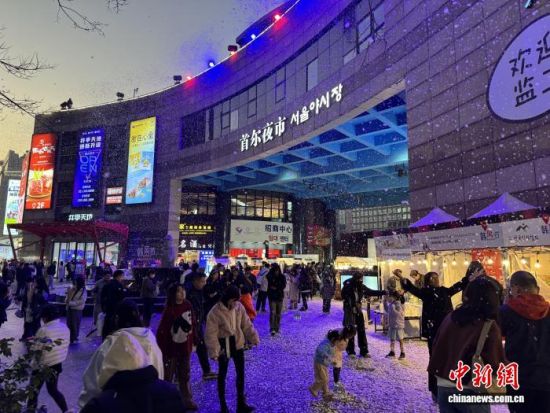
A Food Street Where Chinese and Korean Cultures Meet
Every evening at six, the lights along Hongquan Road in Shanghai’s Minhang district flicker on one by one. The sizzle of pork belly on grills in Korean barbecue restaurants, mingled with the sounds of conversations in Chinese and Korean, creates the street’s unique soundtrack.
This is Shanghai’s “Seoul Night Market,” also known as “Korea Street.” Stretching less than a kilometer, this block has become a trendy destination for Koreans in Shanghai to experience a taste of home alongside local Shanghai life.
When one Korean resident first visited the Seoul Night Market, he was struck by the blended scene: a Korean barbecue shop next door to a Chinese tea house, bilingual signs in Chinese and Korean everywhere… This atmosphere of cultural fusion made him decide to stay.
“I really never thought I’d put down roots here for so long,” he said in fluent Chinese. Starting with involvement in managing several restaurants, his career became tightly linked to this street. Now, he not only understands the intricacies of running a Korean restaurant in China, but his life is anchored here. Having become a “Shanghai son-in-law,” he jokes that he has now lived in Shanghai longer than in his hometown.
“This taste is just like the Seoul in my memory.” When running his restaurant, he cherishes this simple feedback from customers the most. His personal journey also reflects the evolution of “Korea Street”—from a base providing hometown flavors for Koreans in Shanghai, to a window for Chinese people to experience Korean life, and now into a unique district with an even mix of Chinese and Korean patrons and a blended culture.
At the beginning of 2026, the Shanghai Seoul Night Market transformed its entire central courtyard into a “Winter Living Room.”
The management of “Korea Street” stated that it has gradually developed into a representative Shanghai district of multicultural fusion and an important window for friendly people-to-people exchanges. By regularly hosting events like Korean culture festivals, traditional food experiences, and art exhibitions, it continuously promotes mutual understanding and cultural resonance between the peoples of China and Korea.
Today, new stories on “Korea Street” continue to emerge. Young entrepreneurs are bringing new-style Korean beauty stores and creative cultural spaces that blend the aesthetics of both countries, attracting Chinese and Korean visitors to explore. This street has surpassed its initial definition as a “food destination” to become a continuously growing “cultural organism.”
It was introduced that in the future, the district will adopt a more open and inclusive approach. Focusing on areas like cultural display and distinctive consumption, it will further enrich China-Korea themed businesses, introduce more premium dining, trendy retail, and cultural experiences, and plan a series of in-depth cultural activities to provide citizens and tourists with a more vibrant space for exchange.
Hongquan Road
Hongquan Road is a historic street in Wuhan, China, located near the famous Yellow Crane Tower. It is known for its traditional architecture and cultural significance, having been a commercial hub during the Ming and Qing dynasties. Today, it serves as a popular pedestrian area where visitors can experience local snacks, crafts, and the historical atmosphere of old Wuhan.
Seoul Night Market
The Seoul Night Market is a modern, recurring event series launched in 2015 by the Seoul Metropolitan Government to revitalize public spaces and promote local culture. Held at iconic locations like the Han River parks and Dongdaemun Design Plaza, it features food stalls, handmade crafts, and live performances, blending traditional elements with contemporary urban life.
Korea Street
“Korea Street” typically refers to a district in a non-Korean city known for its concentration of Korean businesses, restaurants, and cultural shops. While there are many around the world (like in Los Angeles, Osaka, or Sydney), a prominent example is **Koryo-mal Gil (고려말길) in Incheon’s Chinatown**, which historically emerged in the late 19th century as a settlement for ethnic Koreans in China who later returned to Korea. Today, such streets serve as vibrant hubs for Korean food, products, and community, celebrating both traditional and modern Korean culture abroad.
Winter Living Room
The “Winter Living Room” is a conceptual or artistic installation, often associated with the annual Icehotel in Jukkasjärvi, Sweden. It is a unique, ephemeral suite carved entirely from ice and snow each winter, featuring sculpted furniture and intricate designs that melt away each spring. This tradition, which began in 1989, transforms the Arctic landscape into a temporary, immersive art gallery and lodging experience.
Korean culture festivals
Korean culture festivals are vibrant public events that celebrate the nation’s rich heritage, often featuring traditional music (like pansori), dance (such as fan dances), food (like kimchi and tteokbokki), and hanbok attire. Their modern proliferation, both within South Korea and globally, stems from efforts following the Korean War to preserve and promote national identity and cultural pride. Today, these festivals serve as dynamic platforms for sharing both historical traditions and contemporary Korean pop culture (K-pop, dramas) with the world.
traditional food experiences
“Traditional food experiences” refer to immersive culinary activities that connect people with a region’s history and culture through its authentic dishes and preparation methods. These experiences often have deep roots, preserving recipes and techniques passed down through generations, reflecting local ingredients, historical influences, and communal values. They serve as a living history, offering insight into a place’s identity, from daily life to festive traditions.
art exhibitions
Art exhibitions are curated displays of visual artworks, historically emerging from the private collections of royalty and the wealthy during the Renaissance before becoming public institutions like museums and galleries in the 18th century. Today, they serve as vital platforms for artists to present their work, for cultural dialogue, and for public education, ranging from major international biennales to small local shows. They document artistic movements, challenge societal norms, and reflect the evolving tastes and ideas of their times.
Korean beauty stores
Korean beauty stores, such as global chains like Olive Young and specialized boutiques, are retail hubs dedicated to the expansive K-beauty industry, which emphasizes innovative skincare and cosmetics. Their modern prominence stems from South Korea’s rapid economic development and cultural export wave (Hallyu) since the late 20th century, though their roots lie in traditional Korean herbal and beauty practices. Today, they are celebrated worldwide for offering a vast array of products, from sheet masks to cushion compacts, often featuring advanced technology and unique ingredients.