China’s Large Vessels to Enter Era of Autonomous ‘Pods’
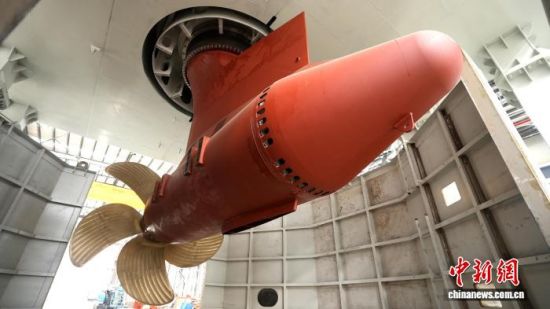
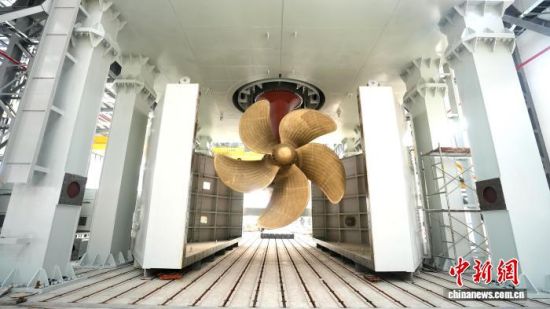
On December 1st, the S-POD series of marine podded propulsors, independently developed, designed, and manufactured by the 704 Research Institute, was launched globally in Shanghai. Among them, the first domestically produced high-power T-type podded propulsor made its debut. The launch of the S-POD series marks a successful breakthrough in international technological barriers in this field for the country, achieving 100% domestic production and fully ushering in a new era of independent development.
After 18 years of development, the power rating of the podded propulsors developed by the institute has increased from 400 kilowatts to 10 megawatts. A complete product spectrum and technical standard system for the S-POD series has been formed, with over 20 patents applied for and 5 national standards and specifications compiled. Possessing full independent intellectual property rights, this development ends the history of complete reliance on imports.
The first domestically produced high-power T-type podded propulsor has a power of 10 megawatts, equivalent to the traction power of an 8-carriage Fuxing high-speed train. Its technical performance is on par with international advanced levels, breaking foreign monopolies. This signifies a milestone innovation for China in the field of high-power podded propulsion technology, propelling China’s large ships into the independent “pod” era.
The podded propulsor is currently the world’s most advanced new type of marine electric propulsion device. It serves as the “propulsion hub” of a ship’s power system and is a core piece of equipment for high-end vessels such as large cruise ships, research vessels, and icebreakers. This propulsion device adopts a “pod” structural design, integrating the motor and propeller within a single housing suspended beneath the hull. It can rotate 360 degrees for vector propulsion, bringing revolutionary changes to ship propulsion. Compared to traditional propulsion systems, it offers advantages such as superior ship maneuverability, high operational efficiency, low maintenance costs, and reduced energy consumption.
It is reported that the 2-megawatt class podded propulsor developed by the institute has already been applied on the intelligent unmanned systems mother ship “Zhuhai Yun” and the scientific research and training support vessel “Tongji,” demonstrating excellent performance. Recently, a new order for a polar research vessel has been secured. The institute’s pod development team has received honors including the 2021 “Shanghai Employee Innovation Studio” title, the 2023 First Prize for Scientific and Technological Progress from the Chinese Society of Naval Architects and Marine Engineers, and the Second Prize for Scientific and Technological Progress from the China State Shipbuilding Corporation.
704 Research Institute
The 704 Research Institute, officially known as the **China Aerospace Science and Industry Corporation (CASIC) Fourth Academy**, is a major Chinese state-owned research and development institution primarily focused on solid-fuel rocket engines and missile technology. It was established in 1965 under the code name “704” as part of China’s strategic defense and space program during the Cold War era. Today, it remains a key center for advanced aerospace propulsion and defense systems.
S-POD series
The “S-POD series” refers to a line of modern, autonomous, rotating passenger pods developed by the Chinese company CRRC Zhuzhou Institute. Introduced in the 2020s, these futuristic vehicles are designed for smart city transit, using trackless optical guidance to navigate urban environments. They represent a recent innovation in public transportation aimed at reducing congestion and providing flexible, on-demand mobility.
Fuxing high-speed train
The Fuxing (meaning “rejuvenation”) is a series of high-speed electric trains in China, developed domestically and launched in 2017. It represents a major advancement in China’s rail technology, achieving operational speeds of up to 350 km/h (217 mph) on lines like the Beijing-Shanghai route. The train series symbolizes China’s technological independence and the rapid expansion of its national high-speed rail network, which is now the world’s largest.
Zhuhai Yun
“Zhuhai Yun” (珠海云) is the name of China’s first intelligent, unmanned scientific research vessel, launched in 2022. It is designed as a mobile marine laboratory to conduct autonomous oceanographic surveys and support the development of ocean science and technology. The vessel represents a significant advancement in China’s maritime research capabilities, operating with remote control and autonomous navigation systems.
Tongji
“Tongji” most commonly refers to **Tongji University** in Shanghai, China. Founded in 1907 by the German physician Erich Paulun as “Tongji German Medical School,” it initially focused on Western medicine for the local Chinese community. It has since evolved into a prestigious comprehensive university, renowned for its strengths in engineering, architecture, and urban planning.
Shanghai Employee Innovation Studio
The Shanghai Employee Innovation Studio is a modern initiative launched by the Shanghai municipal government and trade unions to foster workplace creativity and skill development among employees. Established in recent years as part of a broader push to advance a culture of innovation and craftsmanship, it provides a dedicated space and resources for workers to collaborate on technical improvements and practical inventions.
Chinese Society of Naval Architects and Marine Engineers
The Chinese Society of Naval Architects and Marine Engineers (CSNAME) is a national academic organization founded in 1951, dedicated to advancing the science and technology of ship and ocean engineering in China. It serves as a key platform for professionals in the field to exchange research, set technical standards, and promote the development of the maritime industry.
China State Shipbuilding Corporation
The China State Shipbuilding Corporation (CSSC) is a major state-owned enterprise and the world’s largest shipbuilding group, formed in 1999 through the consolidation of China’s major shipbuilding assets. Its history is rooted in China’s long maritime tradition and modern industrial development, playing a crucial role in advancing the country’s naval and commercial shipping capabilities. Today, CSSC designs and builds a wide range of vessels, from commercial cargo ships to advanced naval warships, driving innovation in the global maritime industry.