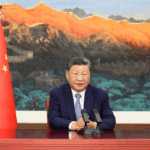
Xi Jinping Issues Important Instructions on the Work of Central State-Owned Enterprises
Li Qiang Attends and Addresses the Meeting of Central State-Owned Enterprise Leaders
■ Since the 18th National Congress of the Communist Party of China, central state-owned enterprises have earnestly implemented the decisions and deployments of the Party Central Committee, actively served national strategies, and played a backbone and pillar role in the national economy.
■ On the new journey, central state-owned enterprises must fully recognize the responsibilities and missions they shoulder, better serve the overall work of the Party and the country, serve high-quality economic and social development, serve the safeguarding and improvement of people’s livelihoods, bravely undertake social responsibilities, and contribute greater strength to the modernization of China. They must focus on their main responsibilities and core businesses, continuously optimize the layout of the state-owned economy, effectively enhance core functions, and improve core competitiveness. They must be grounded in the real economy, strengthen research and development in key core technologies, and promote the deep integration of technological innovation and industrial innovation. They must further deepen reforms, improve the modern enterprise system with Chinese characteristics, refine corporate governance structures, strive to resolve deep-seated problems constraining enterprise development, and work hard to build world-class enterprises. They must coordinate development and security, effectively prevent and defuse risks, and continuously consolidate the foundation for the safe development of enterprises.
■ It is necessary to uphold and strengthen the Party’s overall leadership, strengthen the construction of enterprise leadership teams, consolidate the responsibility for governing the Party strictly, integrate Party leadership into all aspects of corporate governance, and promote the deep integration of Party building work with production and operations. It is necessary to improve systems, strengthen oversight, resolutely punish corruption, persistently rectify the “four forms of decadence,” and strive to create a clean and upright political ecosystem.
Since the 18th National Congress of the Communist Party of China, central state-owned enterprises have earnestly implemented the decisions and deployments of the Party Central Committee, actively served national strategies, and played a backbone and pillar role in the national economy.
On the new journey, central state-owned enterprises must fully recognize the responsibilities and missions they shoulder, better serve the overall work of the Party and the country, serve high-quality economic and social development, serve the safeguarding and improvement of people’s livelihoods, bravely undertake social responsibilities, and contribute greater strength to the modernization of China. They must focus on their main responsibilities and core businesses, continuously optimize the layout of the state-owned economy, effectively enhance core functions, and improve core competitiveness. They must be grounded in the real economy, strengthen research and development in key core technologies, and promote the deep integration of technological innovation and industrial innovation. They must further deepen reforms, improve the modern enterprise system with Chinese characteristics, refine corporate governance structures, strive to resolve deep-seated problems constraining enterprise development, and work hard to build world-class enterprises. They must coordinate development and security, effectively prevent and defuse risks, and continuously consolidate the foundation for the safe development of enterprises.
It is necessary to uphold and strengthen the Party’s overall leadership, strengthen the construction of enterprise leadership teams, consolidate the responsibility for governing the Party strictly, integrate Party leadership into all aspects of corporate governance, and promote the deep integration of Party building work with production and operations. It is necessary to improve systems, strengthen oversight, resolutely punish corruption, persistently rectify the “four forms of decadence,” and strive to create a clean and upright political ecosystem.
The meeting of central state-owned enterprise leaders was held. The important instructions were conveyed at the meeting.
The important instructions put forward clear requirements and ardent hopes for central state-owned enterprises, are highly strategic and instructive, and further point the direction for the work of central state-owned enterprises. It is necessary to study and comprehend them deeply and ensure their implementation.
The period of the “15th Five-Year Plan” is a critical time for laying a solid foundation and exerting full force to basically achieve socialist modernization. Central state-owned enterprises must unify their thinking and actions with the Party Central Committee’s scientific assessment of the situation and its decisions and deployments, further clarify their position and orientation, and earnestly shoulder their responsibilities and missions. They must provide strong guarantees in advancing major infrastructure construction, accelerate the renewal of traditional infrastructure and its digital and intelligent transformation, and appropriately advance the development of new types of infrastructure. They must act as the main force in achieving independent and controllable industrial and supply chains, develop emerging and future industries in line with their main responsibilities and core businesses, ensure the supply of energy resources, and enhance the resilience of industrial chains. They must strengthen foundational support in advancing high-level self-reliance and self-improvement in science and technology, strengthen applied basic research, and improve the quality of supply of key common technologies. They must take proactive actions in