If implemented correctly, PPP not only helps the State reduce budget burdens but also brings very specific benefits to the people: faster projects, better quality, and less waste.
The State establishes public interest and standards in PPP projects
When granting more authority to private investors in projects, the core challenge of public policy is not choosing between control or deregulation, but designing the correct role-sharing mechanism.
The State cannot do the job of enterprises, but it also cannot stand aside.
The appropriate approach is for the State to focus on establishing the public interest, the ultimate goals, and mandatory standards, while enterprises are granted full authority to choose the optimal methods to achieve those goals.
The State should not intervene, does not need to provide detailed instructions or micromanage.
In principle, responsibilities and authorities must be clearly established from the outset. Infrastructure investment cooperation contracts, especially Public-Private Partnership (PPP) models, need to clearly define output indicators such as progress, quality, operational readiness, and service standards… instead of delving too deeply into controlling every technical item or cost.
The monitoring mechanism should also be results-based, with transparent, independent checkpoints, and tightly linked to sufficiently strong reward and penalty mechanisms. If an enterprise does things correctly and well, they must benefit; conversely, if there are delays or failure to meet standards, sanctions must be clear and sufficiently deterrent.
Simultaneously, to protect the public interest, the State needs to maintain the role of an objective referee. Matters related to price adjustments, fees, contract extensions, or scope changes must be handled according to principles committed to from the beginning, with a transparent and predictable dispute resolution mechanism.
From the perspective of enterprises, when participating in infrastructure projects, what they expect most is not necessarily preferential tax reductions, but a stable and reliable policy environment. Streamlined procedures are necessary to reduce time costs and opportunity costs.
Enterprises are willing to accept market risks and operational risks, provided that risks related to policy, planning, or changes in the rules of the game are allocated reasonably to the party with a better ability to control those risks.
If risks are allocated to the right place, enterprises can then focus on what they do best, such as management, construction, and efficient operation.
Expecting a new infrastructure landscape thanks to PPP
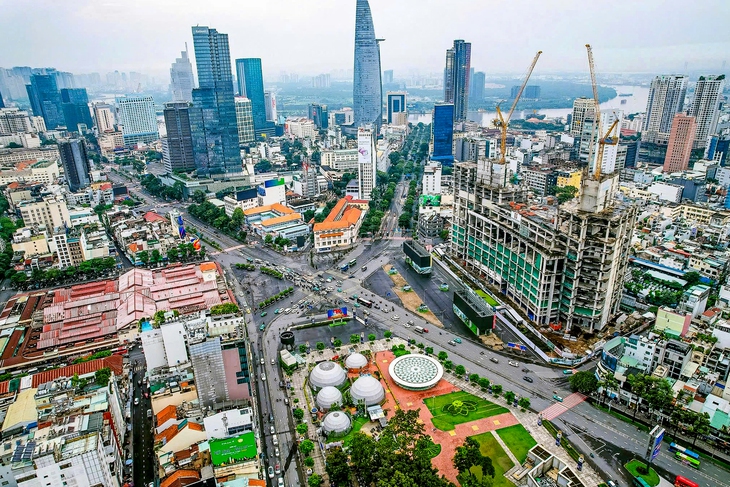
If the public and private sectors coordinate truly smoothly and effectively, what the people and the city can expect is a completely new look in the urban infrastructure landscape of Ho Chi Minh City in the coming decade.
The first and most easily perceived difference lies in progress. If roles are clearly defined, procedures are simplified, and responsibility is tied to results, construction time can be significantly shortened, reducing the recurring theme of delays and cost overruns.
This not only helps people benefit from projects sooner but also reduces the social costs arising from delays, such as congestion, pollution, or disruptions to daily life and production.
Along with speed is better cost control. If enterprises are granted proactive authority in design, technology selection, and construction organization, they have the incentive to optimize costs throughout the project’s lifecycle, instead of focusing only on the construction phase.
A clear, transparent, and results-based contract mechanism also helps limit the situation of repeated project adjustments, thereby reducing the risk of cost overruns as seen in many previous public investment projects.
More importantly, an effectively operated public-private partnership model can also contribute to enhancing the competitiveness and governance capacity of Vietnamese enterprises. When participating in large-scale infrastructure projects, enterprises have the opportunity to accumulate experience in managing complex projects, master technology, technical standards, and modern financial management methods, especially the opportunity to accumulate capital.
For Ho Chi Minh City, the greater benefit lies in infrastructure not only being built faster but also being integrated and operated more efficiently. Transportation,