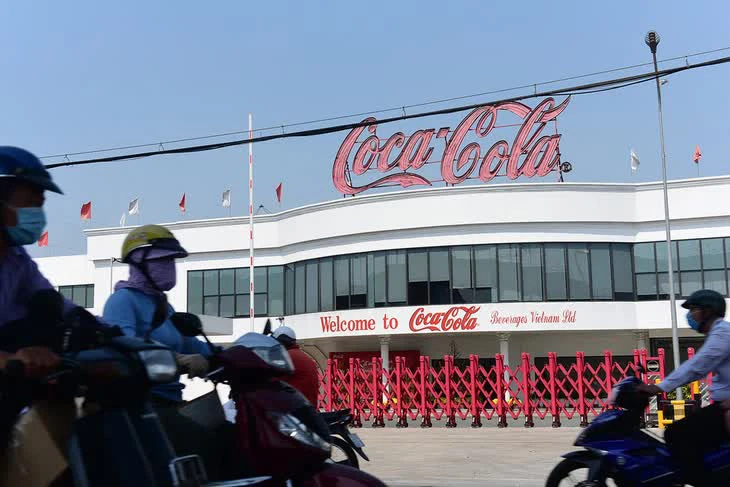
Today, November 27, the Ho Chi Minh City People’s Court rejected Coca-Cola Vietnam’s lawsuit against the Tax Department, upholding the decision to collect over 821 billion VND in back taxes and penalties.
Coca-Cola Vietnam’s lawsuit dismissed
Previously, based on comprehensive audit results spanning from 2019 and cross-referencing Coca-Cola Vietnam’s operational records from 2007-2015, the General Department of Taxation (now the Tax Department) determined that Coca-Cola Vietnam’s previously declared losses needed adjustment – “reducing losses” by over 762 billion VND, while collecting over 471 billion VND in back taxes, plus penalties and late payment fees, totaling over 821.4 billion VND.
The reason Coca-Cola Vietnam failed to declare and fulfill tax obligations in accordance with tax laws and related regulations was due to continuous losses over many years…
After unsuccessful appeals, Coca-Cola Vietnam filed a lawsuit against the Tax Department in court.
The trial of Coca-Cola Vietnam took place on November 6 and continued today, November 27.
During today’s hearing, the trial panel carefully reviewed documents, evidence, audit records, and legal arguments from both sides.
The People’s Procuracy representative affirmed that the tax authority’s decision to collect back taxes and impose penalties was well-founded, recommending the court dismiss Coca-Cola Vietnam’s lawsuit.
As a result, the trial panel rejected Coca-Cola Vietnam’s lawsuit, maintaining the decision to collect back taxes and impose penalties.
This afternoon, Coca-Cola Vietnam responded to the court’s ruling.
Coca-Cola Vietnam stated that it respects the judicial process and the ruling of the Ho Chi Minh City People’s Court in resolving tax-related matters. Coca-Cola Vietnam is collaborating with legal advisors to determine next steps while ensuring full compliance with tax obligations and current laws.
“Our operations in Vietnam align with Coca-Cola’s global business principles, maintaining ethical standards and recognized industry practices, including the proper use of legitimate and deductible business expenses,” Coca-Cola Vietnam affirmed.
Coca-Cola Vietnam reported continuous losses for many years
Previously, Coca-Cola Vietnam was ranked first on the Ho Chi Minh City Tax Department’s list of companies suspected of transfer pricing due to continuous loss declarations over many years. From 2012 backward, the company consistently reported “massive” losses, only beginning to report profits from 2013.
Specifically, in 2013, Coca-Cola Vietnam reported a profit of 150 billion VND and continued with 350 billion VND profit in 2014. However, since companies can carry forward losses for five years, despite profits in these two years, Coca-Cola Vietnam still hadn’t paid corporate income tax at that time.
According to tax authorities, the “secret” enabling this company to continuously report losses lay in raw material costs, primarily flavorings imported directly from the parent company at very high prices.
On average, raw material costs accounted for over 70% of cost of goods sold, particularly reaching 80-85% of cost of goods sold in 2006-2007. By the end of 2012, Coca-Cola’s accumulated losses had reached 3,768 billion VND, exceeding the group’s initial investment of 2,950 billion VND.
The General Department of Taxation has penalized Coca-Cola Vietnam 821 billion VND because the company declared incorrectly, resulting in underpayment of taxes as required by regulations