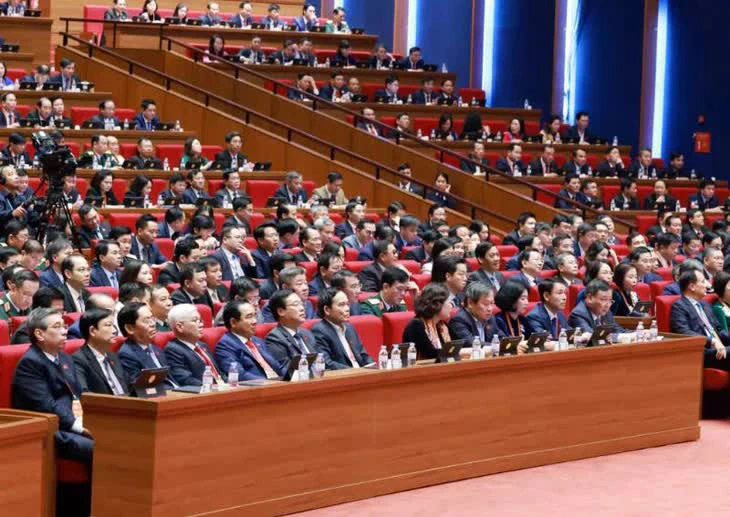
The 14th National Congress is taking place at a time of many positive developments in the country. After nearly four decades of reform, Vietnam has accumulated new strength and potential, entering a development phase with higher aspirations and a longer-term vision.
Amidst this momentum, the people expect a more effective government; businesses anticipate a transparent, stable environment to invest with confidence; and the youth believe in opportunities to advance through capability and creativity.
From these expectations, a common value is becoming clear: social trust – the most important spiritual foundation for every step of sustainable development.
Social trust is not a fleeting emotion, nor can it be created by slogans or promises. It is an invisible institution, formed from the repeated experiences of the people with how the system operates.
When policies are consistent, trust is reinforced. When the apparatus is transparent, trust deepens. When authority is accompanied by clear responsibility, trust becomes sustainable.
Conversely, even prolonged hiccups in implementation can erode trust very quickly, without the need for any public complaint.
From this perspective, society is paying particular attention to the 14th Congress not only for the development goals set, but for how the Party confronts itself. One notable point is the spirit of facing limitations and shortcomings head-on.
In the Review Report of the Central Committee’s term, the fact that Politburo Member, Standing Secretary of the Secretariat, on behalf of the Politburo, seriously drew lessons from shortcomings in inspection, supervision, and Party discipline work in recent times is not merely an internal procedure.
It is a very clear political message: The Party does not shirk responsibility, does not hide shortcomings, and is ready to self-rectify to improve.
In modern political life, frankness is itself a resource for building trust. When people see the highest responsible individuals dare to speak directly and truthfully about what has not been achieved, society senses a serious and receptive attitude.
Trust does not come from “having no mistakes,” but from how one deals with mistakes. Drawing lessons is not to stop at words, but to open the way for substantive adjustments in action.
However, trust is only truly nurtured when those commitments enter real life. People do not measure trust by the length of reports but by very specific changes: are procedures simpler; are decisions faster; is responsibility clearer…
Good governance is governance that makes people worry less about “how the apparatus works” so they can focus on labor, creativity, and building their own future.
Therefore, the journey to consolidate social trust ultimately passes through very ordinary things: a file processed on time; a decision signed with proper authority; an official who dares to act and take responsibility; a delegation of authority clear enough to prevent work from being stalled; and public discipline strict enough so that dedication is not lost.
Great trust is built from small improvements, which must be repeated consistently and be visible in daily life.
It must also be clarified that consolidating trust is not the task of a single moment or a single congress. It is a long journey, requiring perseverance and continuous self-renewal.
The 14th Congress does not “bestow” trust upon society, but shapes a method for building trust: speaking truthfully to act truthfully; power tightly bound to responsibility; and leadership linked to setting an example and self-criticism.
Precisely from the positive movements that have been and are being initiated, the 14th Congress contributes importantly to consolidating social trust.
When that trust is present and spreads in daily life, it will become a powerful spiritual resource, silent yet enduring, supporting the country to stride firmly on the development path ahead.
The organizing committee conducted a test of 300 high-altitude fireworks along with the entire pyrotechnic system lasting about 5 minutes, during the full rehearsal of the special art program “Under the Glorious Party Flag” celebrating the Party’s 14th Congress.