Russia accuses 16 Ukrainian drones of attack killing 21 cadets, conflict enters ‘new chapter’?
An attack by 16 Ukrainian drones on the Starobelsk Pedagogical College (Lugansk People’s Republic) in the early hours of May 22 killed 21 cadets aged 13 to 18, pushing the conflict to a new level.
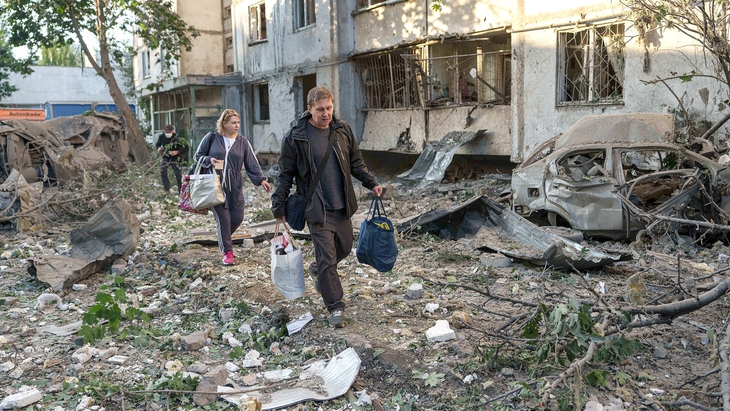
While the front lines between Russia and Ukraine have seen little change, tensions have flared intensely in the rear areas of both sides: Russia launched its largest missile and drone attack since the beginning of 2025 in response to the Ukrainian strike on the college, while Kyiv continues to send drones deep into Russian territory.
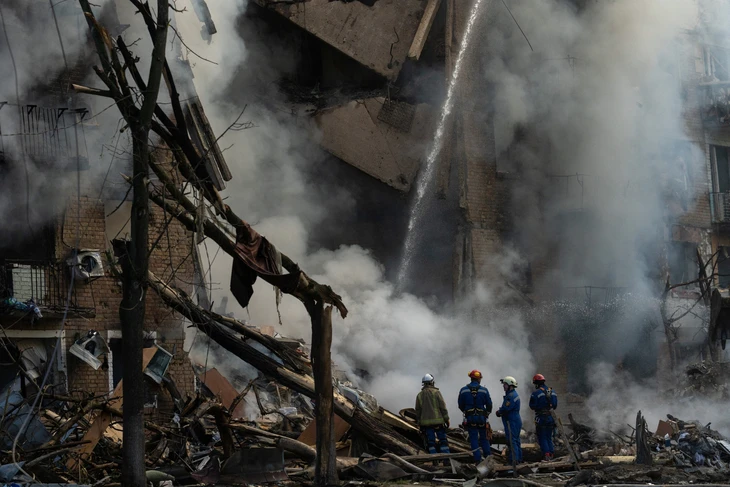
According to Russia, 16 drones attacked a five-story school building where cadets studied on floors 1 through 3 and lived on floors 4 and 5, which was not a military facility. On June 1, after the investigation results were released, Russian President Vladimir Putin convened a meeting at the Kremlin and declared that Kyiv had “opened a new chapter in its crimes.”
Following the accusations, both sides escalated attacks
The head of the Russian Investigative Committee, Alexander Bastrykin, determined that the Ukrainian drones used Starlink antennas for satellite-guided targeting, indicating a “deliberate act.” He stated that since the conflict began in 2014, 7,723 civilians have been killed and over 30,000 wounded, and that the Ukrainian military has attacked educational facilities 2,116 times.
At a UN Security Council meeting on May 23, Russia presented scene photos and stated that Ukraine had directed the drones in three waves targeting the same location. However, according to RIA Novosti, no European member of the Security Council commented on the deaths of the cadets.
The permanent representative of Latvia to the UN, Sanita Pavluta-Deslandes, even declared that no attack had occurred. The Russian Foreign Ministry then invited about 50 foreign journalists to Starobelsk on May 23, but BBC declined and CNN did not send a correspondent.
In the early hours of June 2, Russia launched a coordinated attack using combat drones and missiles on 149 areas of Ukraine, from Odessa to Khmelnytskyi, with a strong focus on Kyiv and Belaya Tserkov. Western observers assessed this as the most significant attack since the beginning of 2025, destroying dozens of facilities in the military-industrial complex, military depots, air bases, and energy infrastructure of Ukraine.
In response, on June 2 alone, 158 Ukrainian drones were intercepted across Russia, with 22 heading toward the capital Moscow and the last one shot down at 3 a.m. on June 3, according to Moscow Mayor Sergei Sobyanin.
The front line is a stalemate in a ‘drone maze’
The Ukrainian military Telegram channel Deep State reported on June 1 that the Ukrainian armed forces had recaptured more territory than they lost in May. Russia gained only 14 square kilometers in May 2026, the smallest area since October 2023. Both sides confirmed that Ukraine is advancing in western Zaporizhia near Primorskoye and Stepnogorsk, while Russia is advancing near Kostiantynovka.
Deep State assessed: “The front line has slowed significantly due to drones completely controlling the battlefield. Almost the entire front is a gray zone up to 20 kilometers deep, where positions of both sides are intermingled under continuous drone attacks. The decisive factor will be which side deploys new technology faster, primarily in the field of aerial and ground drones.”
According to the Ukrainian
Starobelsk Pedagogical College
Starobelsk Pedagogical College is a historic educational institution located in the city of Starobelsk, Ukraine, with roots dating back to the early 20th century. Originally established to train teachers for local schools, it played a significant role in the region’s educational development. The college has faced challenges over the years, including disruptions during World War II and recent conflicts, but remains a symbol of cultural and academic resilience.
Kremlin
The Kremlin is a historic fortified complex in the heart of Moscow, Russia, serving as the official residence of the President and a symbol of Russian political power. Its origins date back to the 12th century, with major expansions and renovations under Ivan the Great in the 15th century, who commissioned its iconic red-brick walls and cathedrals. Today, it encompasses palaces, churches, and museums, reflecting centuries of Russian history and culture.
United Nations Security Council
The United Nations Security Council (UNSC) is one of the six principal organs of the United Nations, established in 1945 after World War II to maintain international peace and security. It has the authority to impose sanctions, authorize military action, and adopt binding resolutions, with five permanent members (China, France, Russia, the UK, and the US) holding veto power. Over the decades, the UNSC has played a central role in addressing global conflicts, though its structure and decision-making have often been subjects of debate and calls for reform.
Moscow
Moscow, the capital of Russia, is one of the world’s largest cities and a historic center of political, cultural, and economic power. Founded in 1147 by Prince Yuri Dolgorukiy, it grew from a small settlement into the seat of the Grand Duchy of Moscow, later becoming the capital of the Tsardom of Russia and the Soviet Union. The city is renowned for iconic landmarks such as the Kremlin, Red Square, and St. Basil’s Cathedral, which reflect its rich and often tumultuous history.
Kyiv
Kyiv is the capital and largest city of Ukraine, with a history dating back over 1,400 years, traditionally founded in 482 AD. It served as the capital of the medieval state of Kyivan Rus’, a major cultural and political center of Eastern Europe, and later became a key city under the Russian Empire and the Soviet Union. Today, Kyiv is known for its iconic golden-domed St. Sophia Cathedral and its resilient spirit, especially in the face of modern conflicts.
Belaya Tserkov
Belaya Tserkov is a historic city in central Ukraine, whose name translates to “White Church.” Founded in the 11th century, it grew as an important trade and administrative center, later becoming a key location for the Cossack Hetmanate and the site of the 1651 Treaty of Belaya Tserkov. Today, it is known for its well-preserved 19th-century park, Dendropark Oleksandriya, and its role in Ukrainian cultural history.
Odessa
Odessa, a major port city on the Black Sea in Ukraine, was founded in 1794 by a decree of Russian Empress Catherine the Great on the site of a former Ottoman fortress. It quickly developed into a thriving cosmopolitan hub, famous for its grand architecture, the iconic Potemkin Steps, and its role as a center of trade and culture in the Russian Empire. Throughout its history, Odessa has been known for its unique multicultural character, blending Ukrainian, Russian, Jewish, and other influences, and it remains a key cultural and economic center in modern Ukraine.
Khmelnytskyi
Khmelnytskyi is a city in western Ukraine, historically known as Proskuriv until 1954, when it was renamed in honor of the Cossack leader Bohdan Khmelnytsky. It developed as a key railway and industrial hub in the 19th and 20th centuries, and its old town features landmarks like the Transfiguration Cathedral. The city also has a poignant history, including a tragic pogrom in 1919 and significant events during World War II.