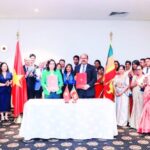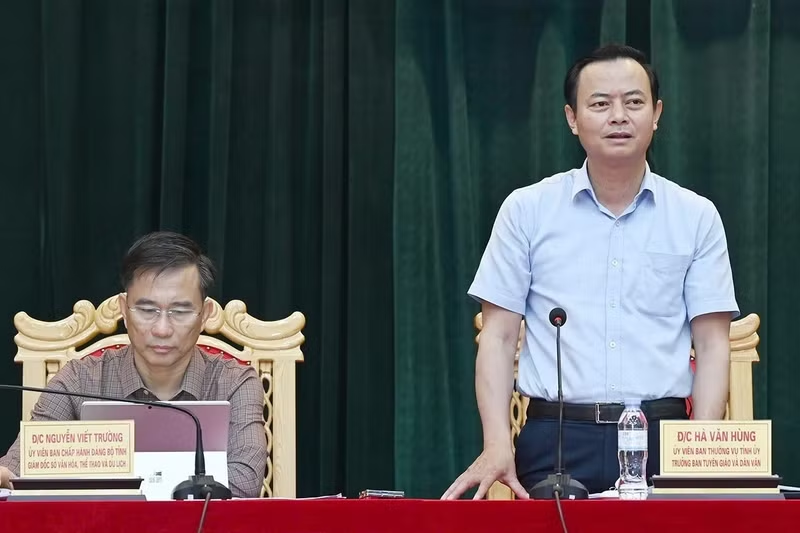
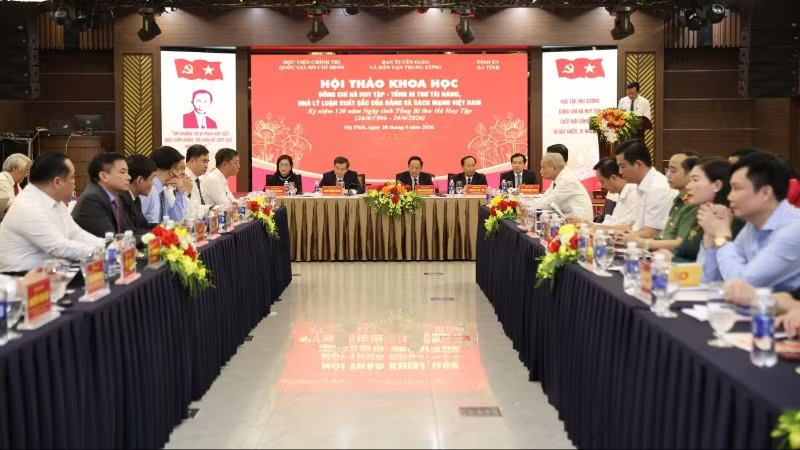
Comrade Trinh Van Quyet, member of the Politburo, Secretary of the Party Central Committee, and Head of the Central Commission for Propaganda and Mass Mobilization; Comrade Doan Minh Huan, member of the Politburo and Director of the Ho Chi Minh National Academy of Politics; along with representatives from central ministries, sectors, and localities, as well as numerous experts, scientists, and representatives of the Ha Huy clan, attended the seminar.
In his opening speech, Comrade Doan Minh Huan, member of the Politburo and Director of the Ho Chi Minh National Academy of Politics, stated: Born on April 24, 1906, in Kim Nac village, Tho Ngoa commune, now Cam Hung commune (Ha Tinh), a land rich in patriotic and revolutionary traditions. Born and raised in a family and homeland in Ha Tinh with deep patriotic traditions, and early exposed to the revolutionary ideals spread by leader Nguyen Ai Quoc, he quickly embarked on the revolutionary path.
The life and revolutionary career of Comrade Ha Huy Tap not only represent a talented leader and theorist but also a model of a genuine, steadfast communist who is not dogmatic, sharp in theory without being detached from practice, resolute in action, and always places the revolutionary cause of the Party and the interests of the nation above all else. This connection between intellect and action created the outstanding qualities of a talented revolutionary leader. Studying, honoring, and evaluating Comrade Ha Huy Tap is not only of historical significance but also holds profound contemporary value for Party building and the country’s development efforts.
At the seminar, delegates and scientists focused on analyzing and clarifying the formation of Comrade Ha Huy Tap’s character and revolutionary orientation; affirming his stature and significant contributions to the revolutionary cause of the Party and the nation; highlighting his pure revolutionary qualities, steadfast spirit, and indomitable will; clarifying the value of the theoretical and practical legacy he left behind; and reaffirming the timeless value and long-term guiding significance of his legacy.
Speaking at the seminar, Comrade Trinh Van Quyet, member of the Politburo, Secretary of the Party Central Committee, and Head of the Central Commission for Propaganda and Mass Mobilization, emphasized: Today’s scientific seminar is not only an occasion to respectfully remember, express gratitude for, and honor the great merits and contributions of Comrade Ha Huy Tap to the revolutionary cause of the Party and the nation, but also contributes to educating revolutionary ideals, patriotic traditions, and national pride, and inspiring a desire for contribution among cadres, Party members, and all strata of the people, especially the younger generation. The message of steadfastness, resilience, discipline, and innovation, which is the consistent value from the thought to the example of Comrade Ha Huy Tap, needs to be creatively applied in current Party building.
Comrade Trinh Van Quyet proposed that agencies and scientists continue to study and deepen the theoretical and practical values from the life and career of Comrade Ha Huy Tap, contributing to supplementing and developing the Party’s theory under new conditions; news agencies and the press should promote the results of the seminar, especially the articles and presentations by Party and State leaders and scientists, to affirm and deepen the example, thoughts, ethics, and great contributions of Comrade Ha Huy Tap to the Vietnamese revolution.
Furthermore, Party committees, Party organizations, authorities, mass organizations, cadres, Party members, and people nationwide, including the Party committee, authorities, and people of Ha Tinh province, should continue to promote revolutionary traditions, inherit and spread the noble values of Comrade Ha Huy Tap; uphold the spirit of self-reliance, self-strengthening, and strategic autonomy, the desire for contribution, and the determination to successfully achieve the goals and tasks set forth by the 14th Party Congress; and build a rapidly and sustainably developing, increasingly prosperous, civilized, and happy homeland and country.