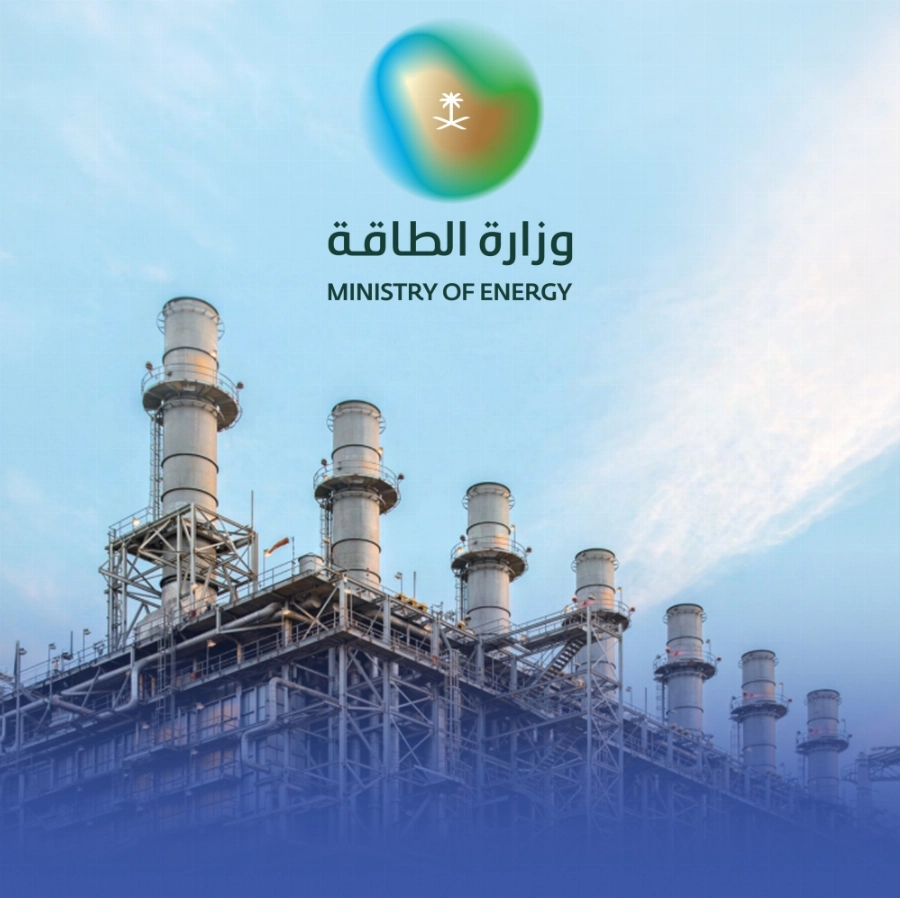
The Ministry of Energy announced today the start of the qualification phase for applicants for competitions to establish, own, and operate compressed natural gas distribution projects via tankers in the Riyadh region and the Eastern Province.
The ministry clarified that launching these competitions is part of its efforts to enhance the natural gas sector infrastructure, improve service quality, and contribute to creating an attractive competitive environment in this vital field. It noted that the deadline for receiving qualification documents is 16 Safar 1448 AH, corresponding to July 30, 2026.
The ministry invited entities wishing to enter the competitions to contact it via email: GNRFP-CNG@MOENERGY.GOV.SA, to obtain the qualification booklet, no later than 3 Muharram 1448 AH, corresponding to June 18, 2026.
These competitions represent an extension of ongoing efforts to develop and expand sector services and enhance the use of technology to facilitate access to natural gas. This will contribute, God willing, to displacing liquid fuel and supporting the replacement of natural gas in its place, within the framework of the “Saudi Vision 2030,” aiming to maximize the economic, environmental, and social benefits of petroleum resources.
Riyadh region
The Riyadh region, the heart of Saudi Arabia, is a vast area that blends ancient history with modern development. Historically, it was a collection of small desert settlements and oases, most notably Diriyah, the original home of the Al Saud dynasty and the first Saudi state in the 18th century. Today, the region is dominated by the capital city of Riyadh, which has transformed into a global metropolis and the political, economic, and cultural center of the country.
Eastern Province
The Eastern Province of Saudi Arabia is the country’s largest province by area and its most oil-rich region, home to the world’s largest conventional oil field, Ghawar, and the major oil port of Ras Tanura. Historically, it was the site of the ancient Dilmun civilization and later became a center for pearl diving before the discovery of oil in the 1930s transformed it into a global energy hub. Today, it blends a deep history with modern industrial significance, featuring cities like Dammam, Khobar, and Dhahran.
Riyadh region
The Riyadh region, located in the heart of Saudi Arabia, is the country’s political and administrative center, with the capital city of Riyadh at its core. Historically, the area was a small, walled settlement known as Hajr before emerging as a key stronghold for the Al Saud dynasty in the 18th century, leading to the unification of the kingdom in 1932. Today, it is a modern metropolis blending rapid urban development with cultural landmarks like the Masmak Fortress and the historic Diriyah district.
Eastern Province
The Eastern Province of Saudi Arabia is a historically and economically significant region, known for its vast oil reserves discovered in the 1930s, which transformed the country into a global energy leader. It is home to the headquarters of Saudi Aramco in Dhahran, as well as the ancient city of Al-Ahsa, a UNESCO World Heritage site with a history dating back thousands of years as a major oasis and trade hub. The province also borders the Arabian Gulf, featuring modern cities like Dammam and Khobar, and the industrial port of Jubail.
Diriyah
Diriyah is a historic city located on the outskirts of Riyadh, Saudi Arabia, known as the original home of the Saudi royal family and the first capital of the Saudi state. Founded in the 15th century, it rose to prominence in the 18th century as the center of the First Saudi State, but was largely destroyed by Ottoman forces in 1818. Today, it is a major cultural and heritage site, with its At-Turaif district—a UNESCO World Heritage site—showcasing restored mud-brick architecture and museums that highlight its rich history.
Ghawar
Ghawar is the world’s largest conventional oil field, located in Saudi Arabia. Discovered in 1948 and operated by Saudi Aramco, it has been the backbone of the country’s oil production for decades, contributing significantly to global energy supplies. Spanning over 280 kilometers in length, its history is closely tied to the rise of Saudi Arabia as a major economic and geopolitical power.
Ras Tanura
Ras Tanura is a city located on a peninsula in the Eastern Province of Saudi Arabia, known primarily as a major center for the global oil industry. Its history is closely tied to the discovery of oil in the region, with the construction of the Ras Tanura Refinery and oil terminal beginning in the 1930s, making it one of the oldest and largest oil facilities in the world. Today, it serves as a key export hub for Saudi crude oil and refined products, playing a vital role in the global energy market.
Dilmun civilization
The Dilmun civilization was an ancient trade-centered society that flourished in the Arabian Gulf, primarily on the island of Bahrain, from around the 4th to the 1st millennium BCE. Often referred to as the “Land of the Living” in Mesopotamian mythology, it served as a crucial hub for maritime trade between Mesopotamia, the Indus Valley, and other regions. The civilization is best known for its extensive burial mounds, which number in the tens of thousands and provide key archaeological insights into its culture and history.
Dammam
Dammam is the capital of Saudi Arabia’s Eastern Province and a major port city on the Persian Gulf. Originally a small fishing village, it grew rapidly after the discovery of oil in the 1930s, becoming a key center for the country’s petroleum industry. Today, Dammam is part of the larger Dammam Metropolitan Area, known for its modern infrastructure, commercial hubs, and cultural landmarks like the King Fahd Park and the historic Dammam Corniche.
Khobar
Khobar, located in the Eastern Province of Saudi Arabia, is a major commercial and industrial hub on the Arabian Gulf. Originally a small fishing village, it developed rapidly in the 20th century after the discovery of oil, becoming a key port and residential area for foreign workers. Today, it is known for its modern waterfront, vibrant corniche, and as a gateway to the nearby King Fahd Causeway linking Saudi Arabia to Bahrain.