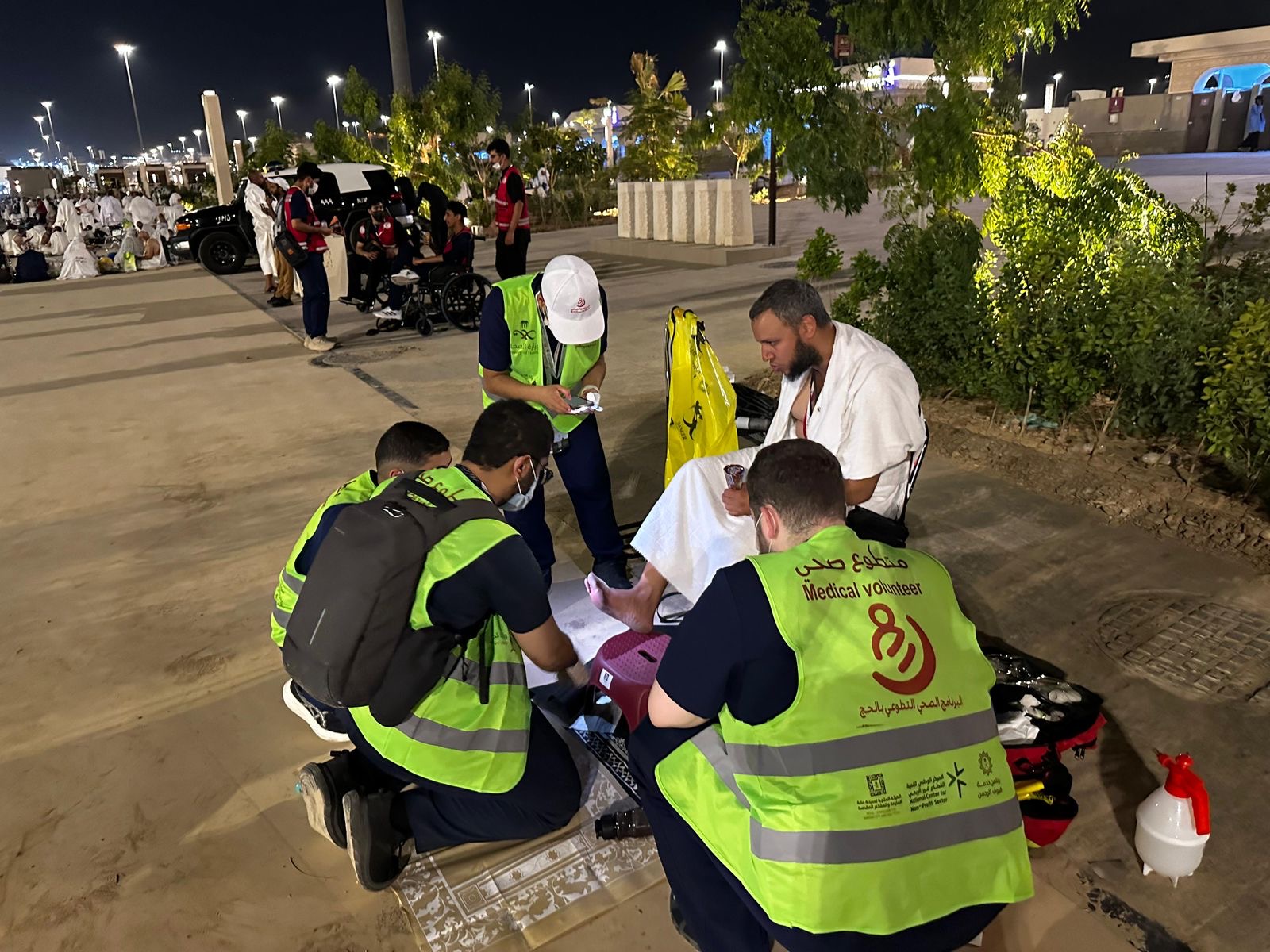
The field teams of the voluntary health program for Hajj in its eighteenth season for the year 1447 AH have begun their work in the holy sites, serving the pilgrims and providing primary health care, awareness, and preventive services in several high-density locations.
The volunteer teams started their tasks on the evening of the eighth day of Dhul Hijjah and the ninth day in the plain of Arafat, according to a field plan to distribute voluntary health care points in Mina, Arafat, Muzdalifah, and pedestrian routes, in line with the movement and flow plans for pilgrims during the rituals, ensuring rapid response and efficient, high-quality field health service delivery.
The number of field teams participating in the program reached 115 field teams, distributed across vital locations in the holy sites, including several voluntary health care points, in addition to covering the Jamarat Bridge across its four levels in Mina, aiming to provide primary health care, enhance health awareness, and reduce injuries and health complications among pilgrims.
The Chairman of the Board of Directors of the Charitable Society for Primary Health Care “Dirham Wiqaya,” the implementing body of the program, stated that the number of male and female volunteers participating this year reached 710 volunteers, including 402 male and 308 female volunteers, who were qualified through an intensive training program covering both theoretical and field aspects.
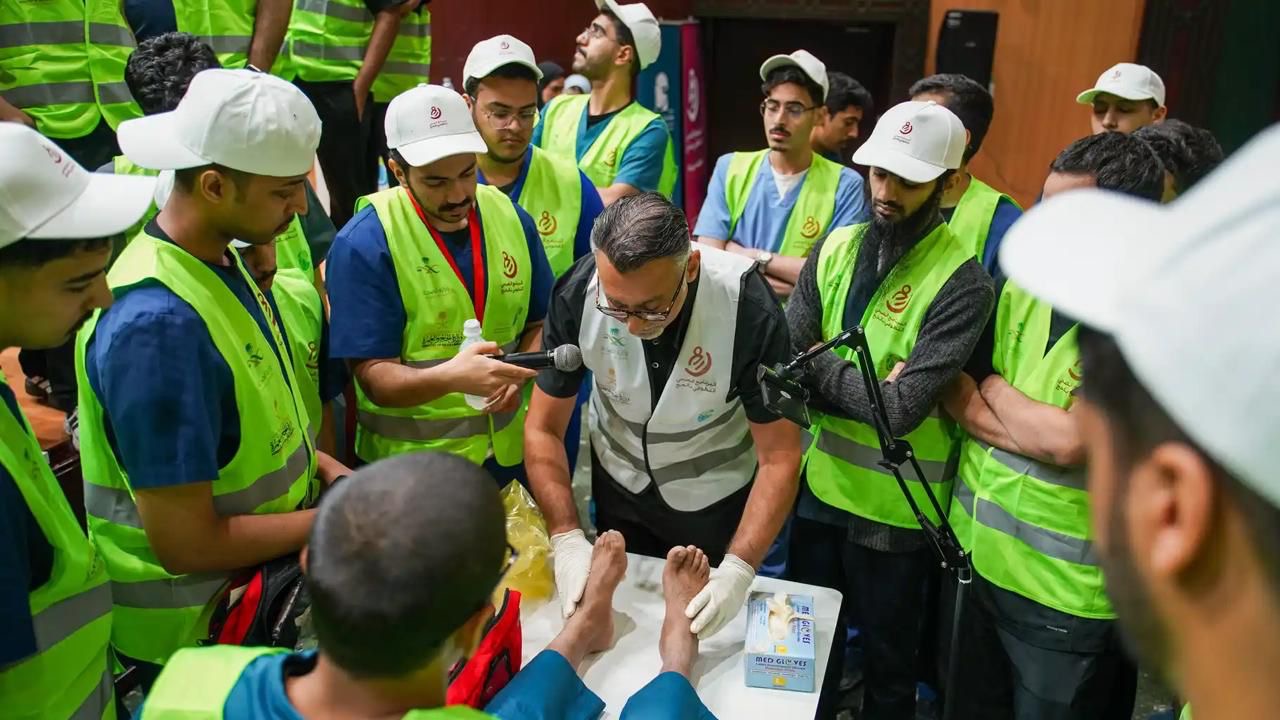
The Chairman indicated that the total training hours provided to volunteers amounted to 19,880 training hours, through 20 workshops, lectures, and training sessions, delivered by 10 trainers, aiming to raise the readiness of the teams and enable them to handle the most common health cases during the Hajj season.
He added that the training program focused on equipping volunteers with the necessary skills to deal with cases of heat stress and sunstroke and distinguish between them, foot injuries, and cases of fatigue, in addition to mechanisms for triaging cases during emergencies and disasters, God forbid, and the ability to identify cases that require referral to health centers.
The “Dirham Wiqaya” association implements the voluntary health program for Hajj in its eighteenth season, under the supervision and support of several relevant entities, reflecting the integration of efforts between the non-profit sector and governmental and health authorities, to contribute to raising health awareness, reducing health risks that pilgrims may face, and enhancing the quality of services provided to the pilgrims.
The program aims to promote a culture of health volunteering among students of health colleges, enable national competencies to actively participate in serving pilgrims, in addition to supporting innovation and its applications in the health field and crowd medicine and management, in line with the targets of the Kingdom’s Vision 2030 and the Guests of the Most Merciful Program to improve the quality of services provided to pilgrims and Umrah performers, and highlight the honorable image of the Kingdom in serving the Two Holy Mosques and their visitors.
Mina

Mina is a valley located near Mecca in Saudi Arabia, famous for its role in the annual Hajj pilgrimage. Historically, it is the site where the Prophet Ibrahim (Abraham) was believed to have been commanded by God to sacrifice his son, a story commemorated during the Hajj. Today, it serves as a tent city where millions of pilgrims stay during the pilgrimage, and it is also where the ritual of “stoning the devil” takes place at the Jamarat Bridge.

Arafat

Arafat is a plain located about 20 kilometers east of Mecca, Saudi Arabia, and holds immense significance in Islam as the site where the Prophet Muhammad delivered his Farewell Sermon. It is central to the Hajj pilgrimage, as pilgrims must gather here on the 9th day of Dhul Hijjah for the “Standing at Arafat,” a key ritual of the journey. This location is also revered as the place where Adam and Eve are believed to have reunited after their expulsion from

Mina

Mina is a valley located near Mecca, Saudi Arabia, best known for its role in the annual Hajj pilgrimage. It is the site where pilgrims throw stones at three pillars (Jamarat) during the ritual of “Stoning of the Devil,” commemorating Abraham’s defiance of Satan. Historically, Mina has served as a tent city for millions of pilgrims, with its significance rooted in Islamic tradition dating back to the time of the Prophet Abraham.

Arafat

Arafat is a plain located about 20 kilometers east of Mecca, Saudi Arabia, and is a site of profound religious significance in Islam. It is here that the Prophet Muhammad delivered his final sermon during his last pilgrimage, and it serves as the central location for the Day of Arafat, the most important day of the annual Hajj pilgrimage. Pilgrims gather here for prayer and reflection, seeking forgiveness and mercy, as it is believed that standing at Arafat is essential for the completion of Hajj.

Muzdalifah

Muzdalifah is a significant open area near Mecca in Saudi Arabia, playing a key role in the annual Hajj pilgrimage. According to Islamic tradition, it is where the Prophet Muhammad stopped and prayed during his final pilgrimage, and pilgrims today spend the night there after the Day of Arafat, collecting pebbles for the symbolic stoning of the devil at Mina. The site is also mentioned in the Quran, emphasizing its spiritual importance in the completion of the Hajj rituals.

Jamarat Bridge

The Jamarat Bridge is a pedestrian bridge in Mina, near Mecca, Saudi Arabia, used during the Hajj pilgrimage for the symbolic stoning of the devil ritual. Originally a simple structure, it has undergone multiple expansions and redesigns to improve safety and accommodate the millions of pilgrims who gather there annually. Its history reflects efforts to prevent crowd crushes and facilitate one of Islam’s most important rites.

Mecca

Mecca, located in Saudi Arabia, is the holiest city in Islam, serving as the birthplace of the Prophet Muhammad and the site of the Kaaba within the Masjid al-Haram mosque. Historically, it has been a major pilgrimage center since the 7th century, with the annual Hajj drawing millions of Muslims from around the world. The city’s religious significance is deeply rooted in pre-Islamic times, but it became the spiritual heart of Islam after the Prophet’s conquest of Mecca in 630 CE.

Two Holy Mosques

The term “Two Holy Mosques” refers to the Masjid al-Haram in Mecca and the Prophet’s Mosque in Medina, the two holiest sites in Islam. Masjid al-Haram surrounds the Kaaba, the direction of prayer for Muslims, and has been a center of pilgrimage since the time of Prophet Abraham. The Prophet’s Mosque in Medina, originally built by Prophet Muhammad in 622 CE, houses his tomb and has been greatly expanded over centuries to accommodate millions of worshippers.

Related news

5,000 tons of waste removed in Arafat

The Ministry of Municipalities and Housing, repres...

The Medina Municipality approves an opportunity to implement a commercial project.

The Medina Region Municipality has approved the im...

April 24, 2026

Book of the Day Angles Opinion Page Perspectives C...