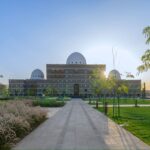
The Medina Region Municipality has approved the implementation of a commercial project aimed at developing the commercial sector in the region, stimulating investment, and supporting the economy. The approved commercial project, located on King Khalid bin Abdulaziz Street in the Al-Aqoul district, covers an area exceeding 28.1 thousand square meters. The project aims to attract investors, increase competitiveness, and meet consumer needs.
Recently, the Medina Region Municipality approved the implementation of several other projects, including a commercial project located on Abu Bakr Al-Siddiq Road in the Al-Qiblatain district, covering an area of 1,353 square meters. Additionally, a commercial project on Prince Sultan bin Abdulaziz Street in the Al-Ranona district, with an area exceeding 10.8 thousand square meters, was approved.
Furthermore, the Municipality approved a residential project located in the Al-Uyun district on Khadij bin Salamah Road, covering an area of 6,176 square meters. This project aims to provide suitable housing, attract competitors, and elevate the level of services for visitors.
Medina Region Municipality
The Medina Region Municipality is the administrative body overseeing the Medina Region in western Saudi Arabia, which contains the city of Medina—Islam’s second holiest city. Its history is profoundly linked to the Hijrah (migration) of the Prophet Muhammad in 622 CE, which established the city as the first capital of the Islamic community. Today, the municipality manages the region’s infrastructure and services, with a key focus on accommodating millions of pilgrims visiting the Prophet’s Mosque (Al-Masjid an-Nabawi).
King Khalid bin Abdulaziz Street
King Khalid bin Abdulaziz Street is a major thoroughfare in Riyadh, Saudi Arabia, named in honor of King Khalid, who ruled the country from 1975 to 1982. Historically, it has developed alongside the city’s rapid modern expansion and is now a prominent commercial and business corridor, lined with skyscrapers, hotels, and corporate headquarters.
Al-Aqoul district
The Al-Aqoul district is a historic area in the city of Medina, Saudi Arabia, known for being the original location where the Prophet Muhammad and his companions first settled upon their migration (Hijrah) from Mecca. It is historically significant as the site where the foundations of the first Islamic community and mosque (the Quba Mosque) were established. Today, the district remains an important religious and historical site for pilgrims and visitors.
Abu Bakr Al-Siddiq Road
Abu Bakr Al-Siddiq Road is a major thoroughfare found in many cities across the Muslim world, named in honor of Abu Bakr Al-Siddiq, the close companion and father-in-law of the Prophet Muhammad and the first Caliph of Islam. The road’s history is modern, but its name commemorates his pivotal 7th-century role in early Islamic history, representing his legacy of leadership, faith, and loyalty. It typically serves as a key commercial and transportation artery, symbolizing the enduring cultural and religious reverence for the Rashidun Caliphate.
Al-Qiblatain district
The Al-Qiblatain district in Medina, Saudi Arabia, is named after the historic **Masjid al-Qiblatain** (Mosque of the Two Qiblas). This mosque is where, in 624 CE, the Islamic prophet Muhammad received the Quranic revelation to change the direction of prayer (qibla) from Jerusalem to the Kaaba in Mecca. The district is thus a significant historical and religious site commemorating this pivotal moment in early Islam.
Prince Sultan bin Abdulaziz Street
Prince Sultan bin Abdulaziz Street is a major commercial and administrative thoroughfare in Riyadh, Saudi Arabia. It was named in honor of Prince Sultan bin Abdulaziz Al Saud, the long-serving Crown Prince and Minister of Defense, and has developed into a key business district since the late 20th century, reflecting the city’s modern growth.
Al-Ranona district
The Al-Ranona district is a historic neighborhood in the city of Taiz, Yemen, known for its traditional architecture and cultural significance. Historically, it was a prominent residential area for scholars and merchants, featuring distinctive stone houses and narrow alleyways that reflect centuries of Yemeni urban design. Today, it stands as a testament to Taiz’s rich heritage, though it has faced significant damage during the ongoing conflict in Yemen.
Al-Uyun district
Al-Uyun is a district in the Al-Ahsa Oasis of Saudi Arabia, historically significant as a core settlement area within one of the world’s largest oases. Its history is deeply tied to the region’s ancient agricultural and trading heritage, with its natural springs (“uyun” means springs in Arabic) supporting life and date palm cultivation for millennia. Today, it remains a vital administrative and cultural center within the larger Al-Ahsa region, a UNESCO World Heritage site.