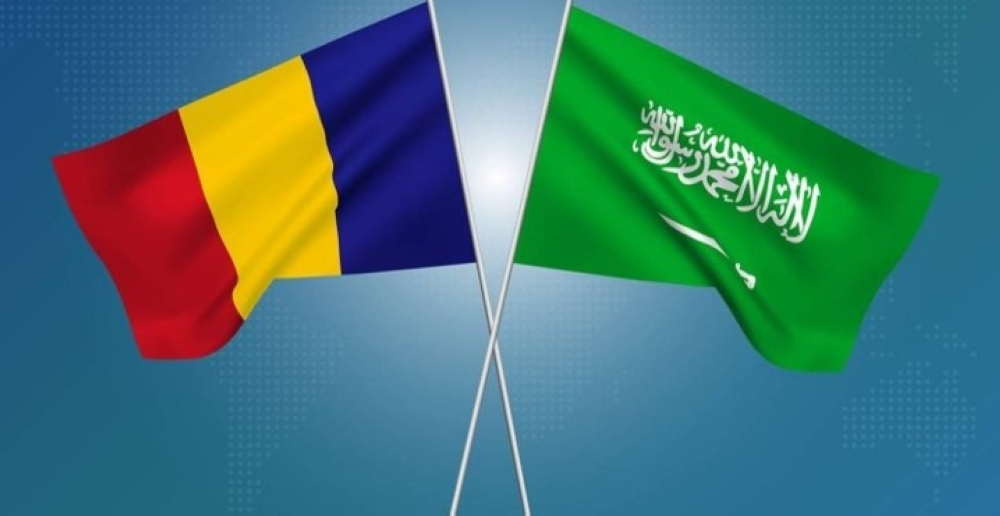
Today, the King Salman Humanitarian Aid and Relief Center signed a joint cooperation agreement with a civil society institution to support the education sector in the Republic of Chad.
It will benefit 23,000 male and female students from displaced and most vulnerable groups.
Saudi Support for Education in Chad
The agreement was signed at the Center’s headquarters in Riyadh.
Under the agreement, school uniforms, bags, and desks will be provided to the targeted schools in the regions of Lake Chad, N’Djamena, Hadjer Lamis, Al Batha, Kanem, Mayo-Kebbi Est, and Logone Occidental.
These efforts are part of a series of humanitarian and relief projects provided by the Kingdom of Saudi Arabia through the King Salman Relief Center to improve the educational environment and enhance learning opportunities for students in the world’s most fragile regions.
King Salman Humanitarian Aid and Relief Center
The King Salman Humanitarian Aid and Relief Center (KSrelief) is a Saudi Arabian humanitarian organization established by royal decree in May 2015. It coordinates and provides international aid and disaster relief to countries in crisis, regardless of race, religion, or gender. Since its founding, it has implemented hundreds of projects worldwide, focusing on food security, health, education, and refugee support.
Republic of Chad
The Republic of Chad is a landlocked nation in north-central Africa, historically home to powerful kingdoms and sultanates like Kanem-Bornu. It gained independence from France in 1960 and has since experienced significant political instability and conflict. Its cultural landscape is deeply shaped by the diverse Saharan and Sahelian environments and a mix of over 200 ethnic groups.
Riyadh
Riyadh is the capital and largest city of Saudi Arabia, historically a walled oasis town and the ancestral home of the Al Saud dynasty. It transformed from a modest desert settlement into a modern metropolis following the discovery of oil in the 20th century. Today, it serves as the nation’s political, financial, and administrative center, blending contemporary skyscrapers with historic sites like the Masmak Fortress.
Lake Chad
Lake Chad is a historically vast, shallow freshwater lake in central Africa, bordered by Chad, Cameroon, Niger, and Nigeria. It was once one of the world’s largest lakes, serving as a crucial crossroads for trans-Saharan trade and supporting ancient civilizations like the Sao. Since the 1960s, it has shrunk dramatically due to climate change and water diversion, though it remains a vital resource for fishing, agriculture, and livestock for millions in the region.
N’Djamena
N’Djamena is the capital and largest city of Chad, located at the confluence of the Chari and Logone rivers near the border with Cameroon. Founded by French colonial officer Émile Gentil in 1900 as Fort-Lamy, it served as a key military outpost. The city was renamed N’Djamena in 1973 and today is the nation’s administrative and economic center, though it has experienced significant conflict throughout its modern history.
Al Batha
Al Batha is a historic district in Riyadh, Saudi Arabia, known for its traditional mud-brick architecture and as the original seat of the Al Saud family. It served as the capital of the First Saudi State in the 18th century and features the remnants of the old city walls and palaces. Today, it stands as a significant cultural heritage site, offering a glimpse into the kingdom’s early history and foundational era.
Kanem
Kanem was a medieval African empire located around the Lake Chad region, flourishing from the 9th to the 14th centuries. Founded by the nomadic Kanembu people, it became a major center for trans-Saharan trade, particularly in slaves and ivory, and was an early adopter of Islam in the region. Its power eventually shifted, merging with the neighboring Bornu Empire to form the Kanem-Bornu Empire, which lasted for centuries.