Oil Company Signs Memorandum of Understanding with Chevron for Technical Study of Marine Area NC146
Washington, March 27, 2026 – The National Oil Corporation signed a memorandum of understanding yesterday, Thursday, with Chevron to conduct an integrated technical study of the offshore area (146 NC).
The signing of a memorandum with a global company of Chevron’s size represents a new launch towards exploring promising offshore potential. The (146 NC) area is considered one of the unexplored areas with encouraging geological indicators that could contribute to qualitative discoveries enhancing the national reserve.
Cooperation with Chevron opens wide horizons for transferring advanced technology and applying best practices in the field of offshore exploration, supporting efforts to develop the energy sector in a sustainable and safe manner.
This partnership is not merely a technical agreement, but a message of confidence in the Libyan investment environment, and evidence of the return of major companies to work and explore promising opportunities in our country. It is a step that reflects a strategic direction to enhance Libya’s position in the global energy market.
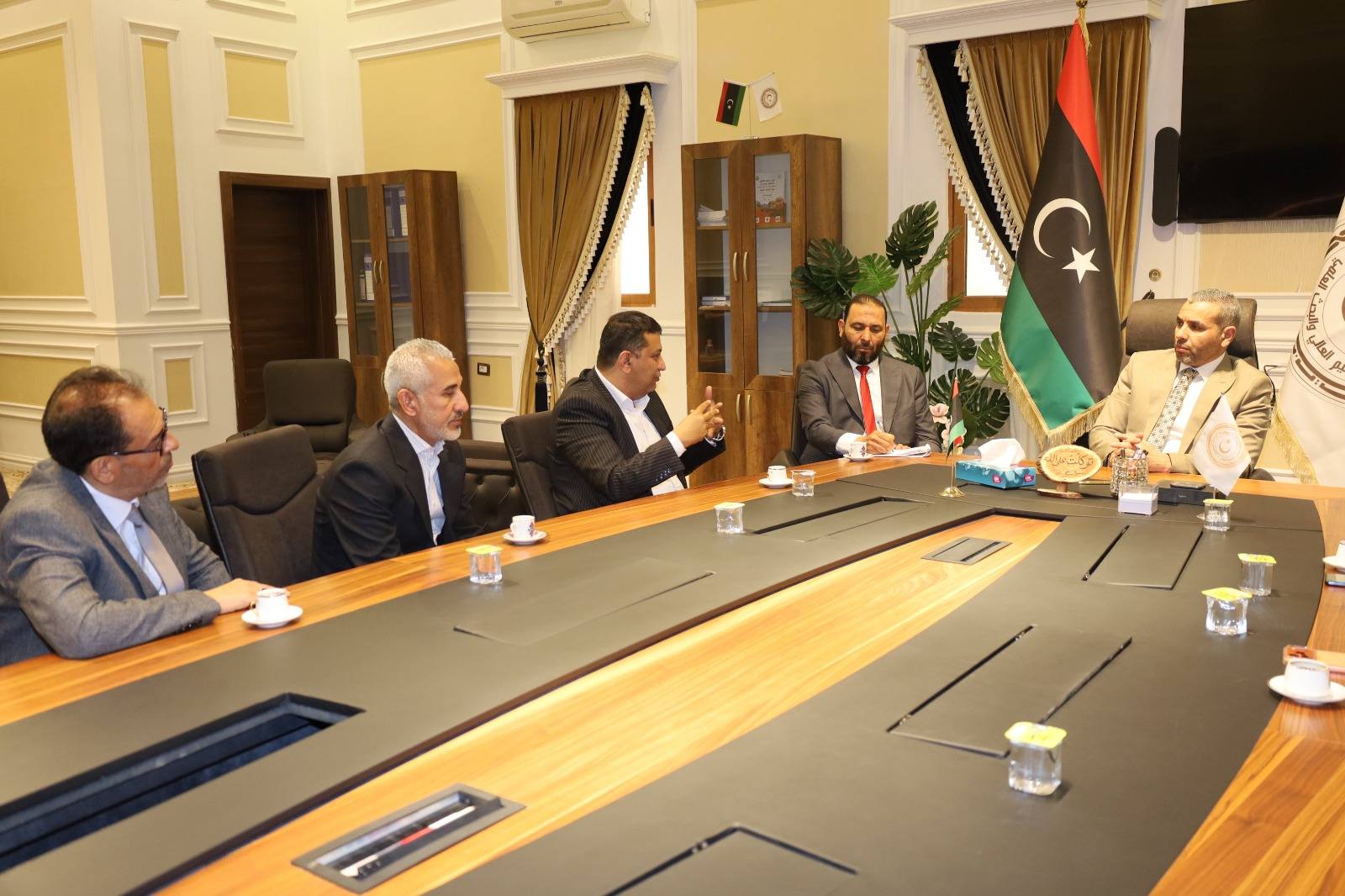
An important meeting was held with representatives from the U.S. Department of Energy’s Office of International Affairs, aimed at enhancing joint cooperation in the energy sector.
The strategy aimed at increasing production rates was reviewed during the meeting, with a presentation of the most prominent future plans and projects, along with the efforts being made to achieve sustainable growth in this vital sector.
The meeting also addressed ways of cooperation with international companies, contributing to supporting technology transfer and the exchange of technical expertise, to achieve desired goals and enhance performance efficiency.
Both sides emphasized the importance of strengthening investment relations between Libya and the United States, and working to open new horizons for strategic partnerships, which supports the national economy and enhances Libya’s position in the global energy market.
Washington
Washington, D.C., the capital of the United States, was founded in 1790 as a planned city to serve as the nation’s permanent seat of government. It is home to iconic landmarks like the White House, the U.S. Capitol, and the Washington Monument, which symbolize American democracy and history. The city’s design, influenced by Pierre L’Enfant, reflects its central role in federal governance and national memory.
National Oil Corporation
The National Oil Corporation (NOC) is the state-owned oil company of Libya, established in 1970 to oversee and manage the country’s hydrocarbon resources. It was founded following the nationalization of the oil industry after the 1969 revolution, consolidating control over Libya’s significant petroleum reserves. The NOC plays a central role in the Libyan economy and has been a key entity in the nation’s political and economic landscape throughout decades of conflict and change.
Chevron
“Chevron” is a major multinational energy corporation, founded in 1879 as the Pacific Coast Oil Company in California. It is not a specific physical place or cultural site, but rather a global company with a long history in the petroleum industry, known for its iconic blue-and-red logo. Its operations span exploration, production, refining, and marketing of oil and natural gas worldwide.
Libya
Libya is a North African country with a rich history rooted in ancient civilizations, most notably as the site of Phoenician, Greek, and Roman settlements along its Mediterranean coast. Its cultural landscape is profoundly shaped by its role in the trans-Saharan trade and its centuries within the Ottoman Empire, followed by Italian colonization in the 20th century. Today, it is known for UNESCO World Heritage sites like the ruins of Leptis Magna and the old town of Ghadamès, though it has faced significant instability following the 2011 revolution.
U.S. Department of Energy
The U.S. Department of Energy (DOE) is a federal agency established in 1977 in response to the energy crisis of the 1970s, consolidating various energy-related programs. Its primary missions are to ensure America’s energy security, oversee the nation’s nuclear weapons program, and advance scientific and technological innovation in energy and nuclear safety.
Office of International Affairs
The Office of International Affairs is an administrative department, typically within a university, government, or large organization, established to manage and promote global relations. Its history is tied to the post-World War II expansion of international exchange and globalization, evolving to handle functions like student and scholar programs, international partnerships, and cross-cultural initiatives. Its core purpose is to facilitate cooperation and communication across borders.
United States
The United States is a federal republic in North America, founded in 1776 after declaring independence from Great Britain. Its history is marked by westward expansion, industrialization, and its emergence as a global superpower in the 20th century, shaped by diverse immigration and a democratic political system. Culturally, it is a vast and influential mosaic, known for its exports in film, music, technology, and its foundational ideals of liberty and individual rights.