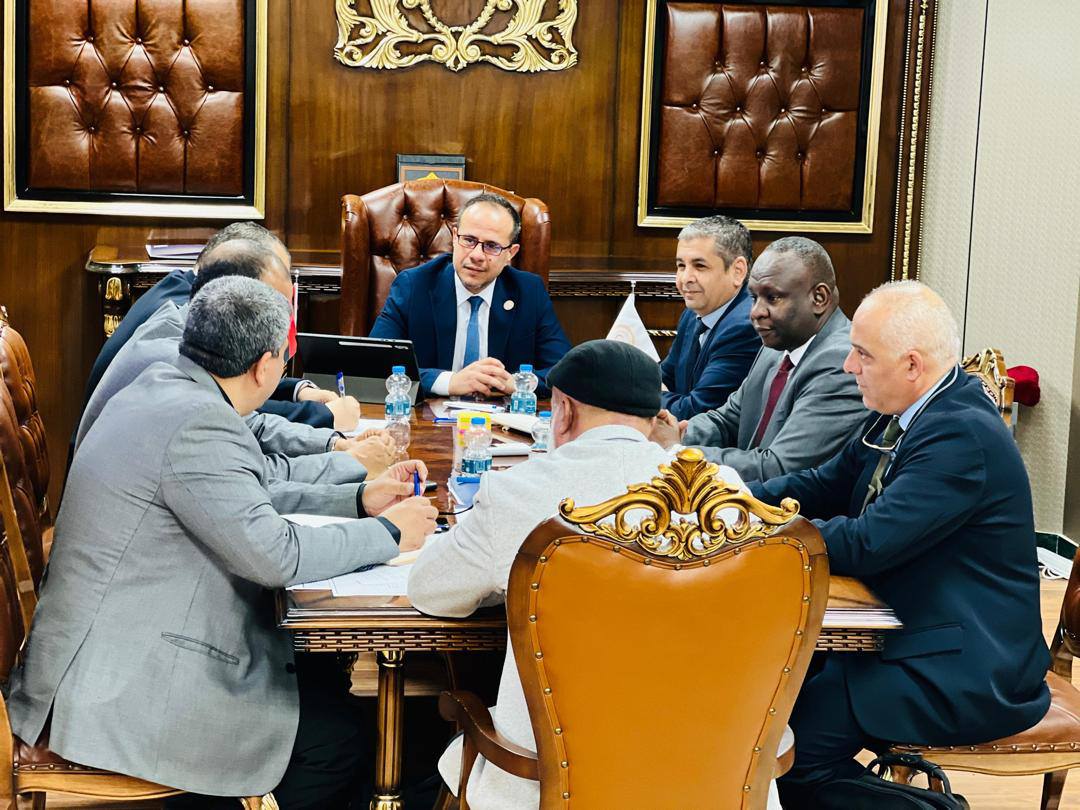
An expanded meeting was held by the Minister of Education today with directors of relevant departments and offices within the ministry to discuss a number of vital dossiers related to developing the educational process and elevating the level of institutional performance.
The meeting addressed ways to enhance international cooperation in the field of education, develop religious education programs to keep pace with the requirements of the current stage, in addition to discussing the ministry’s strategic plans and their implementation mechanisms according to modern visions that contribute to achieving educational quality. The regulation of the private education sector was also discussed to ensure its alignment with approved educational policies.
The meeting included the Director of the International Cooperation Office, the Director of the Religious Education Department, the Secretary-General of the National Committee for Education, Culture and Science, the Director of the Planning and Strategies Department, and the Director of the Private Education Department. The meeting was dedicated to discussing a number of vital dossiers related to developing the educational process and elevating the level of institutional performance.
…
Minister of Education
The “Minister of Education” is not a specific place or cultural site, but a government official or cabinet position responsible for a nation’s education system. The role’s history varies by country, but modern ministries of education were often established in the 19th or 20th centuries to centralize and standardize public schooling. Therefore, it is an administrative office rather than a physical location to visit.
International Cooperation Office
The International Cooperation Office is not a specific historical or cultural site, but a common administrative unit within universities, government bodies, and organizations. Its primary function is to manage and facilitate international partnerships, exchanges, and collaborative projects. As a modern institutional concept, its history is tied to the post-World War II expansion of globalization and formal diplomatic relations between nations and academic institutions.
Religious Education Department
The Religious Education Department is an administrative and instructional unit within educational institutions, primarily in countries like the UK, responsible for designing and overseeing the curriculum for the study of world religions, ethics, and philosophy. Its history is often tied to the 1944 Education Act in England and Wales, which mandated daily Christian collective worship and religious instruction, though its modern form has evolved to promote a more inclusive, academic, and multi-faith understanding of religion in society.
National Committee for Education, Culture and Science
The National Committee for Education, Culture and Science is a governmental body in Vietnam, established to advise on and implement state policies in its namesake fields. Its history is tied to the country’s modern administrative structure, working to preserve cultural heritage, develop the education system, and promote scientific advancement in line with national development goals.
Planning and Strategies Department
The Planning and Strategies Department is not a specific cultural or historical site, but a common administrative division within organizations and governments. Its history is tied to the 20th-century development of systematic, long-term strategic planning as a discipline for managing complex projects and policy goals. Therefore, it functions as an internal office focused on analysis and future direction rather than a public landmark.
Private Education Department
The Private Education Department is not a specific cultural site or historic landmark, but rather an administrative body found in many countries. It is typically a government agency or ministry responsible for regulating, licensing, and overseeing private schools and educational institutions. Its history is tied to the development of national education systems, emerging to ensure quality and standards in the non-public education sector alongside public schooling.