Ministry of Water Resources urges citizens to stay away from valley waterways amid anticipated weather fluctuations.
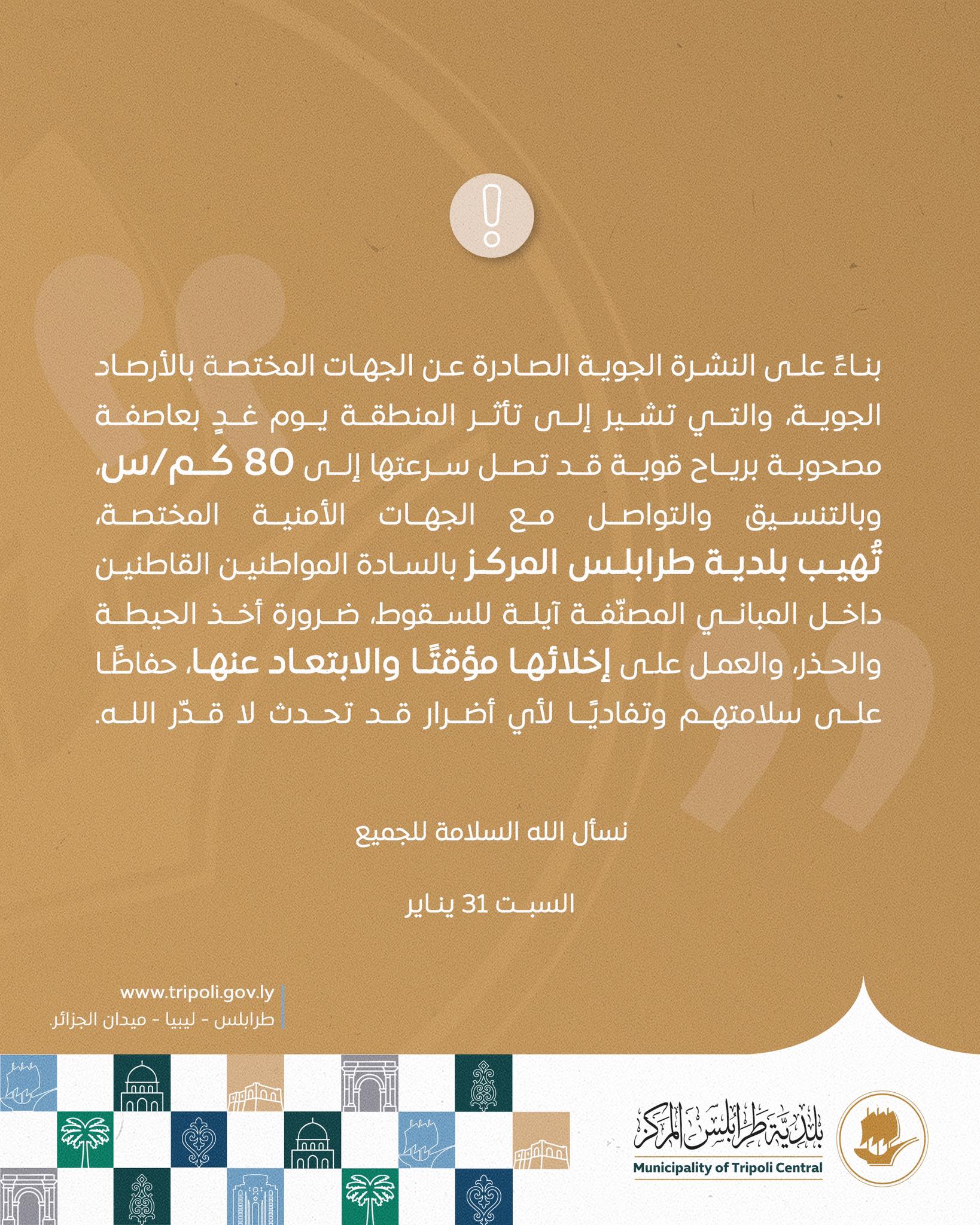
Tripoli – The Ministry of Water Resources of the Government of National Unity has called on citizens to exercise the utmost caution, following forecasts of scattered rainfall that may be accompanied by thunderstorm cells. This could lead to water accumulation and the flow of some local valleys, especially in a number of areas located in the north of the country, starting from today, Sunday, and lasting for two days.
The Ministry clarified, in a notice published on its official page based on weather forecasts issued by the National Center of Meteorology, that some areas extending from Tripoli to Misrata will witness cloud build-up with scattered rainfall, which may sometimes be accompanied by thunderstorm cells.
It added that the chance of rainfall will be better this evening and tonight in the northeastern areas extending from Benghazi to the Green Mountain, where it is expected to be accompanied by thunderstorm cells that may cause water accumulation in low-lying areas and the flow of some local valleys.
In this context, the Ministry of Water Resources appealed to citizens to stay away from valley streams and low-lying areas, and to avoid risking crossing roads affected by water accumulation or floods, while adhering to the instructions of the competent authorities, to preserve public safety.
The Ministry stressed the importance of taking necessary precautions, especially in areas close to flood streams, urging everyone to follow weather bulletins and alerts issued by the relevant official bodies.
Tripoli
Tripoli is the capital and largest city of Libya, located on the country’s northwestern coast. Historically, it was founded by the Phoenicians in the 7th century BCE and later became a significant Roman city, known as Oea. Over the centuries, it has been ruled by the Vandals, Byzantines, Arabs, Ottomans, and Italians, leaving a rich architectural and cultural legacy visible in its historic medina and Red Castle (Assaraya al-Hamra).
Misrata
Misrata is a major port city on the Mediterranean coast of northwestern Libya, historically known as a key trading and commercial center. It played a pivotal and prolonged role during the 2011 Libyan Civil War as a stronghold of anti-Gaddafi forces, enduring a significant siege. Today, it remains one of Libya’s most important economic hubs, known for its industry and commerce.
Benghazi
Benghazi is a major port city in eastern Libya, historically known as a key economic and cultural center in the region. It was founded by Greek colonists in the 5th century BCE as Euesperides and later flourished under Roman, Byzantine, and Ottoman rule. In modern times, it played a significant role in the 2011 Libyan revolution and has faced considerable conflict and rebuilding efforts since.
Green Mountain
Green Mountain is a notable hill on Ascension Island in the South Atlantic Ocean, which was largely barren until the 19th century. Under the direction of botanist Joseph Hooker, an extensive planting project beginning in the 1850s transformed it into a lush, cloud-forest ecosystem. Today, it stands as a remarkable example of human-assisted environmental restoration and a key habitat for endemic species.