Algerian Foreign Minister and U.S. Presidential Advisor Discuss Developments in Libya.
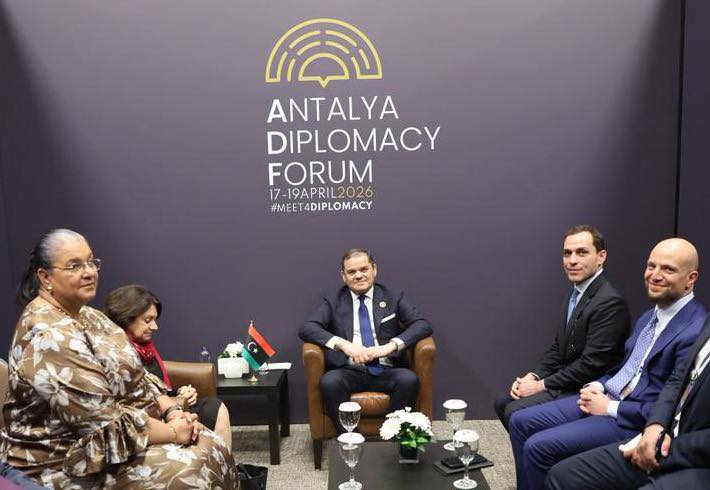
Tripoli — The Algerian Minister of Foreign Affairs met with the Senior Advisor to the US President for Africa and the Middle East to discuss regional developments during a meeting held on the sidelines of the Antalya Diplomatic Forum.
The meeting specifically addressed developments in Libya, alongside other regional issues such as Sudan and the latest developments concerning Western Sahara, within the framework of exchanging views on the most prominent current challenges in the Arab world and the African continent.
The two sides also reviewed the state of Algerian-American relations, emphasizing the positive momentum in the strategic dialogue between the two countries, in addition to prospects for enhancing economic partnership.
Tripoli
Tripoli is the capital and largest city of Libya, located on the country’s Mediterranean coast. Historically, it was founded by the Phoenicians in the 7th century BC and has since been ruled by a succession of powers, including the Romans, Arabs, Ottomans, and Italians, which is reflected in its diverse architecture, such as the ancient Red Castle (Assaraya al-Hamra) and old medina. Today, it serves as Libya’s major political, economic, and cultural center.
Antalya Diplomatic Forum
The Antalya Diplomacy Forum (ADF) is an annual international conference launched in 2021, held in the coastal city of Antalya. It serves as a major platform for high-level dialogue on global governance, diplomacy, and current geopolitical challenges, bringing together heads of state, foreign ministers, academics, and think tanks. While a recent initiative, it reflects a modern diplomatic outreach and ambition to facilitate multilateral discussions on pressing international issues.
Libya
Libya is a North African country with a rich history rooted in ancient civilizations, most notably as the site of Phoenician, Greek, and Roman settlements along its Mediterranean coast. Its cultural landscape is profoundly shaped by its long history as part of various empires and its central role in the trans-Saharan trade routes. In the modern era, Libya gained independence in 1951 and experienced significant political changes throughout the 20th and early 21st centuries.
Sudan
Sudan is a country in Northeast Africa with a rich ancient history, most notably as the home of the Kingdom of Kush, which was a major rival to ancient Egypt and ruled as pharaohs during the 25th Dynasty. Its landscape is marked by archaeological sites like the pyramids of Meroë, which are a UNESCO World Heritage Site. In modern history, Sudan gained independence in 1956 and has since experienced significant political changes, including the secession of South Sudan in 2011.
Western Sahara
Western Sahara is a disputed territory in North Africa, largely controlled by Morocco but claimed by the indigenous Sahrawi people’s Polisario Front. Historically a Spanish colony until 1975, its status remains unresolved following a war and a UN-brokered ceasefire in 1991, with ongoing disputes over sovereignty and self-determination. The region is known for its vast Saharan desert landscape and the cultural heritage of its Sahrawi nomadic inhabitants.
<div class="my-4
Tripoli
Tripoli is the capital and largest city of Libya, located on the country’s Mediterranean coast. Historically, it was founded by the Phoenicians in the 7th century BCE and has since been ruled by the Romans, Arabs, Ottomans, Italians, and others, making it a city with a rich and layered cultural heritage. Its historic core, the medina of Old Tripoli, contains ancient ruins, bustling souks, and significant landmarks like the Red Castle (Assai al-Hamra).
Antalya Diplomatic Forum
The Antalya Diplomacy Forum (ADF) is an annual international conference launched in 2021 by Türkiye, held in the coastal city of Antalya. It serves as a major platform for high-level dialogue on global diplomacy, security, and sustainable development, bringing together heads of state, foreign ministers, and other leaders. While a recent initiative, it has quickly become a significant event in the diplomatic calendar, reflecting Türkiye’s active role in facilitating multilateral discussions on contemporary challenges.
Libya
Libya is a North African nation with a rich history rooted in ancient civilizations, most notably as the site of Phoenician, Greek, and Roman settlements along its Mediterranean coast. Its cultural landscape is profoundly shaped by its role in the trans-Saharan trade routes and its later history as a center of the Ottoman Empire and an Italian colony. Today, Libya is known for archaeological treasures like the UNESCO-listed ruins of Leptis Magna and Sabratha, remnants of its Roman past.
Sudan
Sudan is a country in Northeast Africa with a rich ancient history, most notably as the home of the Kingdom of Kush, which ruled from the city of Meroë and even conquered Egypt to establish the 25th Dynasty. Its cultural landscape is marked by numerous archaeological sites, including the pyramids of Meroë, which are a UNESCO World Heritage Site and predate many of Egypt’s famous pyramids. In modern history, Sudan gained independence from Anglo-Egyptian rule in 1956 and has since been shaped by diverse ethnic groups and significant political changes.
Western Sahara
Western Sahara is a disputed territory in North Africa, largely controlled by Morocco but claimed by the indigenous Sahrawi people’s Polisario Front. Historically a Spanish colony until 1975, its status remains unresolved following a war and a UN-brokered ceasefire in 1991, with ongoing disputes over sovereignty and self-determination.
Red Castle (Assaraya al-Hamra)
The Red Castle (Assaraya al-Hamra) is a historic fortress and palace complex in Tripoli, Libya. Originally built by the Spanish in the 16th century, it was later expanded under Ottoman rule and served as a government seat. Today, it houses the national museum and is a major landmark overlooking the Mediterranean Sea.
Kingdom of Kush
The Kingdom of Kush was a powerful ancient civilization in Nubia (modern-day Sudan), which flourished along the Nile River from around 1070 BCE to 350 CE. It was a major rival to Egypt, even ruling as its 25th Dynasty, and is renowned for its wealth, iron production, and iconic pyramids at sites like Meroë.
Meroë
Meroë was the capital of the Kingdom of Kush, located in present-day Sudan, and flourished from around 590 BCE to 350 CE. It is renowned for its more than 200 pyramids, which served as royal burial sites for Kushite kings and queens. The site reflects a unique blend of Egyptian, Greco-Roman, and indigenous African cultural influences.