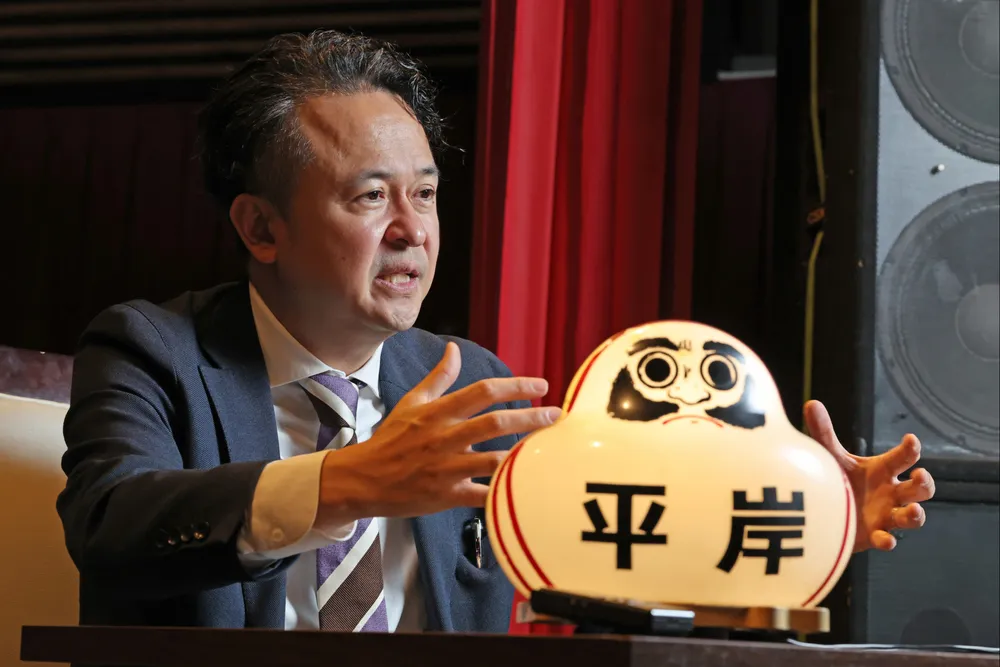
Hiragishi Taxi is a taxi company based in Hiragishi, Toyohira Ward, Sapporo. This company, which has been rooted in the community for 67 years, has reportedly been organizing comedy shows in recent years. Why did they start this initiative, which is far from their core business? We spoke with President Koji Kumashiro (49) at “Daruma Hall,” named after the company’s symbol, the daruma doll, to hear his thoughts.
…
Hiragishi
Hiragishi is a neighborhood in Sapporo, Japan, known for its residential charm and the Hiragishi Shopping District. Historically, it developed as a hub for coal mining and transportation in the late 19th and early 20th centuries, with the nearby Hiragishi Station serving the Horonai Railway. Today, it retains a nostalgic atmosphere and is celebrated for local events like the Hiragishi Summer Festival.
Toyohira Ward
Toyohira Ward is one of the ten wards of Sapporo, Japan, located in the central-southern part of the city. Historically, it developed as a suburban area along the Toyohira River, with its name derived from the river itself, and it became a formal ward in 1972 when Sapporo was designated as a city. Today, it is known for its residential neighborhoods, parks, and the Sapporo Dome, a major sports and event venue.
Sapporo
Sapporo is the largest city on Japan’s northern island of Hokkaido, known for its modern urban planning and the annual Sapporo Snow Festival. Originally a small settlement, it was developed in the late 19th century following the Meiji Restoration, with the city’s layout designed after a grid system by American advisors. Its history is closely tied to the colonization of Hokkaido, and today it is famous for its beer, ramen, and winter sports legacy from the 1972 Winter Olympics.
Daruma Hall
Daruma Hall is a building commonly found in Japanese Zen Buddhist temples, named after Bodhidharma (Daruma), the founder of Zen Buddhism. The hall typically houses a statue or image of Daruma and serves as a place for meditation and reflection on his teachings. Historically, these halls became widespread during the Edo period as Zen practice flourished in Japan.
Daruma Hall
Daruma Hall, also known as Darumadō, is a notable structure often found in Japanese Buddhist temples dedicated to Bodhidharma (Daruma), the founder of Zen Buddhism. These halls typically house statues or relics associated with Daruma, who is revered for his meditation practices and the legend of his limbs withering away after years of unwavering focus. Historically, the hall serves as a place for meditation and prayer, reflecting the ascetic and persevering spirit of Daruma, especially in temples like Kōfuku-ji or other Zen centers in Japan.
Hiragishi
Hiragishi is a neighborhood in Sapporo, Japan, known for its residential character and the Hiragishi Park. Historically, it developed as a suburb of Sapporo during the city’s expansion in the early 20th century, with much of its land originally used for agriculture. Today, it is a quiet, family-friendly area that retains a sense of local community while being connected to central Sapporo.
Toyohira Ward
Toyohira Ward is a district in Sapporo, Japan, named after the Toyohira River that flows through it. Established in 1972 when Sapporo became a designated city, the area developed rapidly due to urban expansion, hosting residential neighborhoods and key attractions like the Sapporo Convention Center. Its history reflects the growth of Sapporo from a frontier settlement into a modern city, with the ward serving as a hub for culture and commerce.
Sapporo
Sapporo, located on Japan’s northern island of Hokkaido, is a modern city known for its beer, skiing, and annual Snow Festival. Originally developed in the late 19th century as a planned city under the guidance of American advisors, it was designed with a grid layout and Western influences. Today, it serves as the cultural and economic hub of Hokkaido, blending its frontier history with vibrant urban life.
Hiragishi Station
Hiragishi Station is a subway station on the Namboku Line in Sapporo, Japan, which opened in 1971. Located in the Toyohira-ku ward, it serves as a key transit point for the residential and commercial areas of the Hiragishi district. The station’s name reflects the area’s historical development as part of Sapporo’s post-war urban expansion.
Horonai Railway
The Horonai Railway was the first railway built in Hokkaido, Japan, opening in 1882 to transport coal from the Horonai coal mine to the port of Otaru. Originally constructed with American assistance for industrial development, the line later expanded and became a crucial part of Hokkaido’s early transportation network. Although the original railway ceased operations in 1987, its history marks a key milestone in Japan’s Meiji-era industrialization.
Sapporo Dome
Sapporo Dome is a multi-purpose stadium in Sapporo, Japan, primarily used for baseball and football events. Opened in 2001, it is notable for its unique retractable roof and a floating grass field that can be moved in and out of the dome to preserve natural turf. The venue gained international recognition as a host site for matches during the 2002 FIFA World Cup.
Toyohira River
The Toyohira River flows through Sapporo, Hokkaido, and has played a key role in the city’s development since the late 19th century. It was originally used as a transportation route for timber and goods during the early settlement of the region. Today, the river is a central feature of Sapporo’s landscape, offering scenic parks and walking paths that reflect the city’s blend of nature and urban life.