Nearly 900,000 Vietnamese workers abroad send back 6 – 7 billion USD per year
The Ministry of Home Affairs has just released a draft report summarizing the implementation of the Law on Vietnamese workers going abroad under contracts.
Accordingly, in the period 2022-2025, the activity of sending Vietnamese workers abroad continued to be maintained and developed, recovering strongly after the impact of the COVID-19 pandemic.
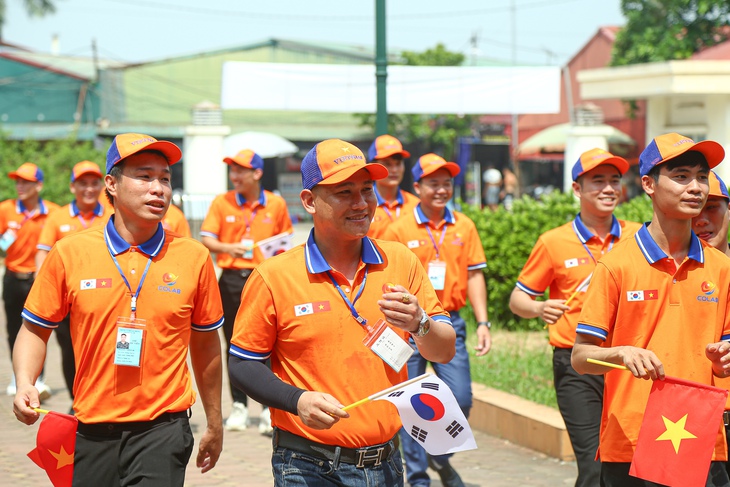
The number of Vietnamese workers going abroad under contracts reaches about 130,000 – 150,000 people per year. Among them, remittances from Vietnamese workers are estimated at 6 – 7 billion USD per year. Leading provinces such as Nghe An and Ha Tinh receive thousands of billions of VND per year.
Also according to the Ministry of Home Affairs, the overseas labor market has been expanded to 57 countries and territories.
By the end of 2025, nearly 900,000 Vietnamese workers are working abroad, concentrated in key markets such as Japan, Taiwan (China), South Korea, and some new markets with high skill requirements.
The ministry assessed that the revenue from remittances of Vietnamese workers abroad contributes significantly to the national balance of payments, and through the process of working abroad, a workforce improves skills, foreign languages, and discipline, becoming a quality human resource for socio-economic development upon returning home.
4 Eximbank executives resign together
Vietnam Export Import Commercial Joint Stock Bank has just announced receiving resignation letters from four members of the Board of Directors.
Hanoi
<div class="
Hanoi
Hanoi, the capital of Vietnam, is one of the oldest cities in Southeast Asia, with a history dating back over a thousand years. It served as the political center of various Vietnamese dynasties and later became the capital of French Indochina, which left a lasting architectural and cultural influence. Today, Hanoi is known for its blend of ancient pagodas, colonial buildings, and vibrant street life, particularly around the iconic Hoan Kiem Lake and the Old Quarter.
South Korea
South Korea is a vibrant East Asian nation known for its dynamic blend of ancient traditions and cutting-edge modernity. Its history spans thousands of years, from the early Gojoseon kingdom through the Joseon Dynasty, followed by Japanese colonization and the Korean War, which divided the peninsula. Today, South Korea is a global leader in technology and pop culture, while preserving UNESCO World Heritage sites like Gyeongbokgung Palace and the historic villages of Andong.
Japan
Japan is an island nation in East Asia with a rich history spanning thousands of years, from its early feudal era of samurai and shoguns to its rapid modernization during the Meiji Restoration. The country is known for its unique blend of ancient traditions, such as Shinto and Buddhist temples, and cutting-edge technology in cities like Tokyo. Culturally, Japan is famous for its tea ceremonies, calligraphy, anime, and cuisine like sushi and ramen, making it a fascinating destination that honors its past while embracing the future.
Taiwan
Taiwan is an island in East Asia with a rich and complex history, shaped by indigenous cultures, Chinese immigration, Japanese colonization (1895–1945), and post-WWII rule by the Republic of China. Known for its vibrant democracy, bustling night markets, and stunning natural landscapes like Taroko Gorge, it remains a cultural and political crossroads in the region. Today, Taiwan is a distinct entity with its own government, though its status is a subject of ongoing international debate.
Nghe An
Nghe An is a province in north-central Vietnam known for its rich history and natural beauty. It is the birthplace of revolutionary leader Hồ Chí Minh, whose legacy is honored at the Kim Liên Memorial Complex. The area also features historical sites like the ancient citadel of Vinh and scenic landscapes such as the Pu Mat National Park.
Ha Tinh
Ha Tinh is a province in north-central Vietnam, historically known as part of the ancient kingdom of Hoan Chau and later the Nghe Tinh region, which played a key role in Vietnamese resistance against foreign invasions. It is renowned as the birthplace of the famous poet Nguyen Du, author of the epic “The Tale of Kieu,” and is home to cultural sites like the Hong Linh Mountain range and the Dong Loc T-Junction, a poignant memorial to Vietnam War heroines. Today, Ha Tinh blends its rich literary and revolutionary heritage with natural attractions such as Vung Ang Bay and Thien Cam Beach.