The variety show that digs deep into Tokai region staples! This time: “There are still more! Super cheap all-you-can-eat morning services in the Tokai region”!
All-you-can-eat, all-you-can-drink, all-you-can-read! Enjoy a morning buffet at a manga café
First up is “Oomori Manpuku Manga Café Hanako” in Gifu City. Opened in 2007, it has 100 seats. There are counter seats, box seats, PC seats, and on the second floor, private booth seats (with PCs). It has over 25,000 manga and magazines! Popular with a wide range of ages, from young women to families.
Previously, there were over 10 independently owned manga cafés in Gifu City besides the major chains, but now only Hanako remains. The reason this manga café survived in Gifu, a fiercely competitive area for coffee shops, is its “all-you-can-eat morning buffet.”
Morning service is from 6:30 AM to 11:00 AM. The manager, who has 35 years of culinary experience including training at a Chinese restaurant, creates a menu that is both luxurious and incredibly cheap.
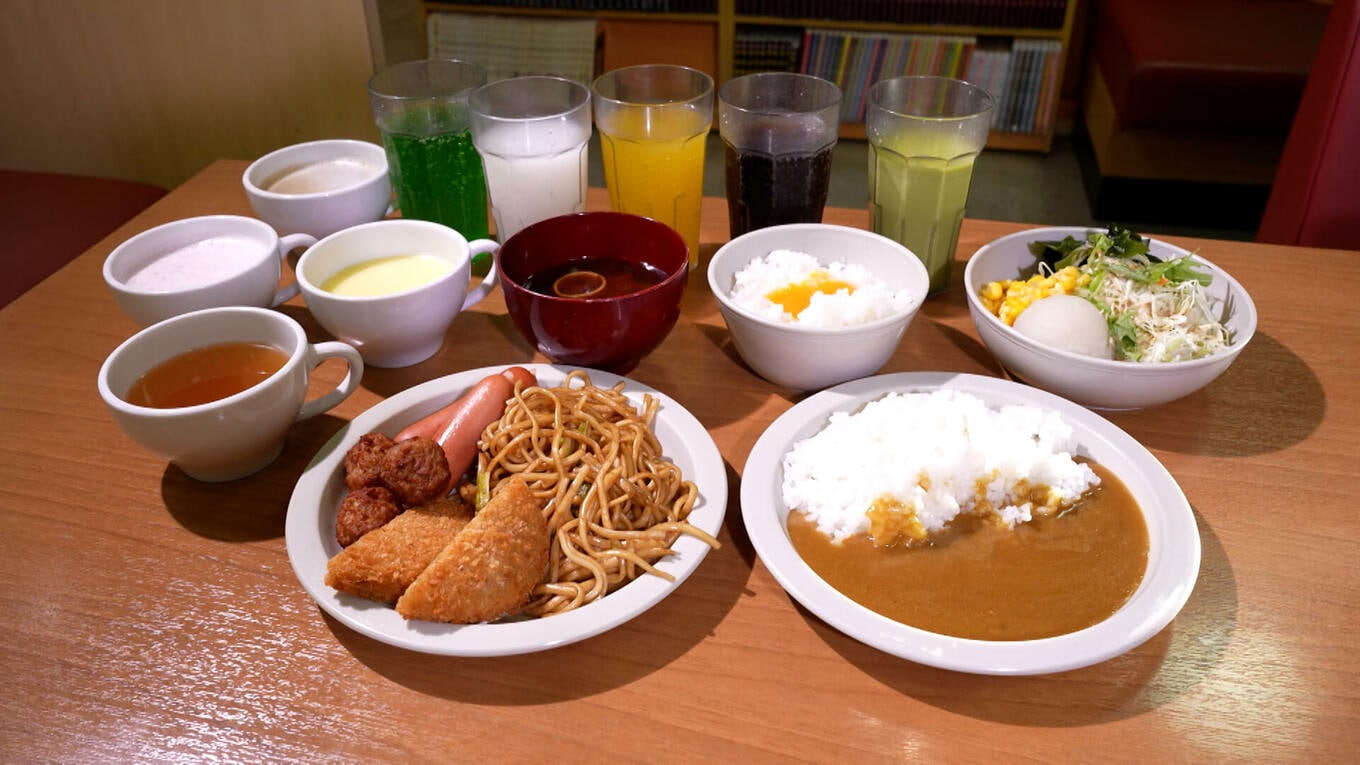
The homemade “sauce yakisoba” is a specialty from his training days. He stir-fries the noodles with bonito broth before adding the sauce to enhance the flavor. Refills are completely free! Besides the sauce version, a homemade “salt yakisoba” is also offered on a rotating basis. The original salt sauce is the key to its flavor.
Side dishes include meatballs, croquettes, and sausages. There is also an all-you-can-eat salad bar with cabbage, wakame seaweed, corn, and even mashed potatoes. Plus, rice and sliced bread are also all-you-can-eat! Cream stew and homemade curry are available on a rotating basis while supplies last. The manager’s special touch for the curry is adding red miso and sautéed garlic for depth of flavor, then letting it sit overnight.
Miso soup, corn soup, and onion soup are all-you-can-drink. Drinks are also all-you-can-drink from a drink bar with over 40 options.
Homemade yakisoba, side dishes like croquettes, tamago kake gohan (rice with raw egg), homemade curry, soup, salad, plus rice and bread — a total of 11 items are all-you-can-eat, and drinks and soups are all-you-can-drink! Furthermore, for 80 minutes from entry, you can read manga and magazines freely and use the computers (limited number available)! And for any seat, the price is a flat 600 yen!
From opening at 6:30 AM until the morning service ends at 11:00 AM, the café can see up to 130 customers on busy days!
Gifu City
Tokai region
Gifu Castle
Nagara River
Tokaido road
Related news
Training for potential random attacks at next year’s Asian Games: Police and fire departments coordinate at boxing venue gymnasium, confirming procedures for triaging and transporting injured in Aichi, Nishio City.

The final Sunday of the House of Representatives election: Candidates appeal for support in harsh cold across 25 small districts in three Tokai prefectures, with 102 candidates running.
Eastern Japan sees snow centered around Gifu Prefecture, with strong north winds bringing midwinter cold. Latest snow simulation and weather forecast for Aichi, Nagoya, Gifu, and Mie (12/26 midday).
Passenger car and light vehicle collide, 58-year-old man killed; police investigate as hit-and-run case in Yokkaichi, Mie