
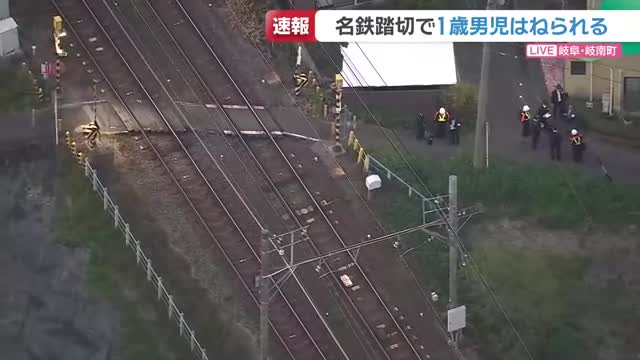
Just after 5 p.m. on the 24th, a one-year-old boy was hit by a train at a railroad crossing near Meitetsu Ginan Station in Ginan Town, Gifu Prefecture, and was transported to a hospital.
According to police, just after 5 p.m., a train heading toward Gifu Station struck the one-year-old boy at a crossing near Meitetsu Ginan Station in Ginan Town.
The boy was transported to a hospital by a medical helicopter.
The train was a non-passenger service, with no passengers on board, and neither the driver nor the conductor was injured.
Due to the accident, train operations were suspended on both the up and down lines between Shin-Kisogawa Station and Meitetsu Gifu Station on the Meitetsu Nagoya Main Line, but service resumed just after 6:30 p.m.
Meitetsu Ginan Station
Meitetsu Ginan Station is a railway station located in Ginan, Gifu Prefecture, Japan, operated by the private Meitetsu railway company. It opened in 1914 as part of the Takehana Line, serving as a local stop that supports commuters and travelers in the rural-urban fringe of the Nagoya metropolitan area. The station reflects the region’s development linked to railway expansion in early 20th-century Japan.
Gifu Station
Gifu Station is the central railway station in Gifu City, Japan, originally opened in 1886 as part of the expanding rail network linking Nagoya and the surrounding region. Historically, it served as a key gateway to the historic city of Gifu, famous for its mountaintop Gifu Castle and traditional cormorant fishing on the Nagara River. Today, the station is a major transportation hub, connecting travelers to local attractions and high-speed Shinkansen services via nearby Gifu-Hashima Station.
Meitetsu Gifu Station
Meitetsu Gifu Station is a major railway terminal in Gifu City, Japan, serving as a key hub for the Nagoya Railroad (Meitetsu) network. Originally opened in 1913, it has undergone several renovations and relocations, with the current station building completed in 2005. The station provides access to central Gifu and is historically significant as a gateway to the region, particularly for travelers heading to the nearby Gifu Castle.
Shin-Kisogawa Station
Shin-Kisogawa Station is a railway station located in Kuwana, Mie Prefecture, Japan, operated by the private Yoro Railway. It opened on October 6, 1931, as a stop on the Yoro Line, which originally served the local industrial and passenger transport needs of the region. The station’s name reflects its position near the Kisogawa River, and it continues to function as a modest commuter stop for the surrounding area.
Meitetsu Nagoya Main Line
The Meitetsu Nagoya Main Line is a major railway line in central Japan, operated by Nagoya Railroad (Meitetsu), connecting Nagoya Station to Gifu and Toyohashi. Opened in stages beginning in 1898, it evolved from a local tram line into a key commuter and intercity route, playing a vital role in the industrial and economic
Meitetsu Ginan Station
Meitetsu Ginan Station is a railway station located in Ginan, Gifu Prefecture, Japan, operated by Nagoya Railroad (Meitetsu). It opened in 1914 as part of the Takehana Line, serving as a local stop that historically supported the area’s transportation and industry, including connections to nearby paper mills. Today, it remains a functional station for commuters and travelers in the rural-urban fringe of the Gifu region.
Gifu Station
Gifu Station is a major railway hub in Gifu City, Japan, originally opened in 1886 as part of the expanding rail network. It serves as a key transit point for the Tōkaidō Main Line and the Takayama Main Line, connecting the region to Nagoya and northern Gifu Prefecture. The station has been rebuilt and modernized over the years, and its surrounding area features shopping centers and a statue of the famous Sengoku-era warlord Oda Nobunaga, who once ruled the region.
Meitetsu Gifu Station
Meitetsu Gifu Station is a major railway terminal in Gifu City, Japan, operated by Nagoya Railroad (Meitetsu). Opened in 1914, it serves as a key hub connecting Gifu to Nagoya and other parts of the Chubu region. Historically, the station played a vital role in the region’s transportation development, facilitating trade and travel through its extensive rail network.
Shin-Kisogawa Station
Shin-Kisogawa Station is a railway station located in Kuwana, Mie Prefecture, Japan, operated by the private railway company Yōrō Railway. It opened on July 1, 1929, serving as a key stop on the Yōrō Line, which connects Ogaki and Kuwana. The station’s name references the nearby Kiso River, and it primarily serves local commuters and visitors to the surrounding area.
Meitetsu Nagoya Main Line
The Meitetsu Nagoya Main Line is a major railway line operated by Nagoya Railroad (Meitetsu) in central Japan, connecting Nagoya with Gifu and other key areas. Its history dates back to the early 20th century, with segments opening in 1911 as part of the Mino Electric Railway, later merging into the Meitetsu network. Today, it serves as a vital commuter and intercity link, known for its high-speed limited express services and integration with Nagoya’s urban transit system.
Gifu Castle
Gifu Castle, originally built in the early 13th century, is a historic fortress perched atop Mount Kinka in Gifu Prefecture, Japan. It is famously associated with the warlord Oda Nobunaga, who seized control in 1567 and used it as a base for his campaign to unify Japan. The current structure, a concrete reconstruction completed in 1956, offers panoramic views and houses a museum detailing the castle’s samurai-era history.
Nagara River
The Nagara River in central Japan is renowned for its clear, pristine waters and is considered one of the three most famous clear streams in the country. Historically, it has been a vital source for fishing, particularly for the traditional cormorant fishing (ukai) method that dates back over 1,300 years and is associated with the city of Gifu. The river’s scenic beauty and cultural significance have made it a protected and celebrated natural landmark.
Gifu-Hashima Station
Gifu-Hashima Station is a railway station in Hashima, Gifu Prefecture, Japan, that primarily serves the Tokaido Shinkansen high-speed line. It opened in 1964 as part of the original Shinkansen network, connecting Tokyo and Osaka, and was built to serve the nearby city of Gifu and surrounding areas. The station is known for its distinctive, modern architecture and acts as a gateway for travelers visiting historic sites like the nearby Inuyama Castle.
Related news

U28 pitcher Kohta Umezu and player Ryusei Sato (28) notified of release from team; Umezu, currently in rehabilitation, is scheduled to re-sign for next season as a developmental player – “I aim to show growth beyond my pre-surgery self,” says Dragons.
Chunichi Dragons pitcher Kota Umetsu (28) and play...

Man tricked into fake investment scam, loses 62 million yen after repeated cash demands raise suspicion in Nagoya
A man in his 30s from Nagoya was scammed out of ap...

“Historic Defeat for Liberal Democratic Party in Senate Election: Exit Polls Reveal Reasons Behind the Loss, How Does Representative Suzuki Eikei React to the Shock?”
If things continue like this, it seems the Liberal...

Emergency drill at Higashiyama Zoo simulates magnitude 6+ earthquake, quickly guiding Asian elephants back to enclosures in Aichi.
On Disaster Prevention Day, a training exercise si...

Removing mines from the Strait of Hormuz would take six months, according to a U.S. Defense Department analysis, with Iran having laid more than 20 mines in the surrounding area.
The U.S. Department of Defense has analyzed that t...