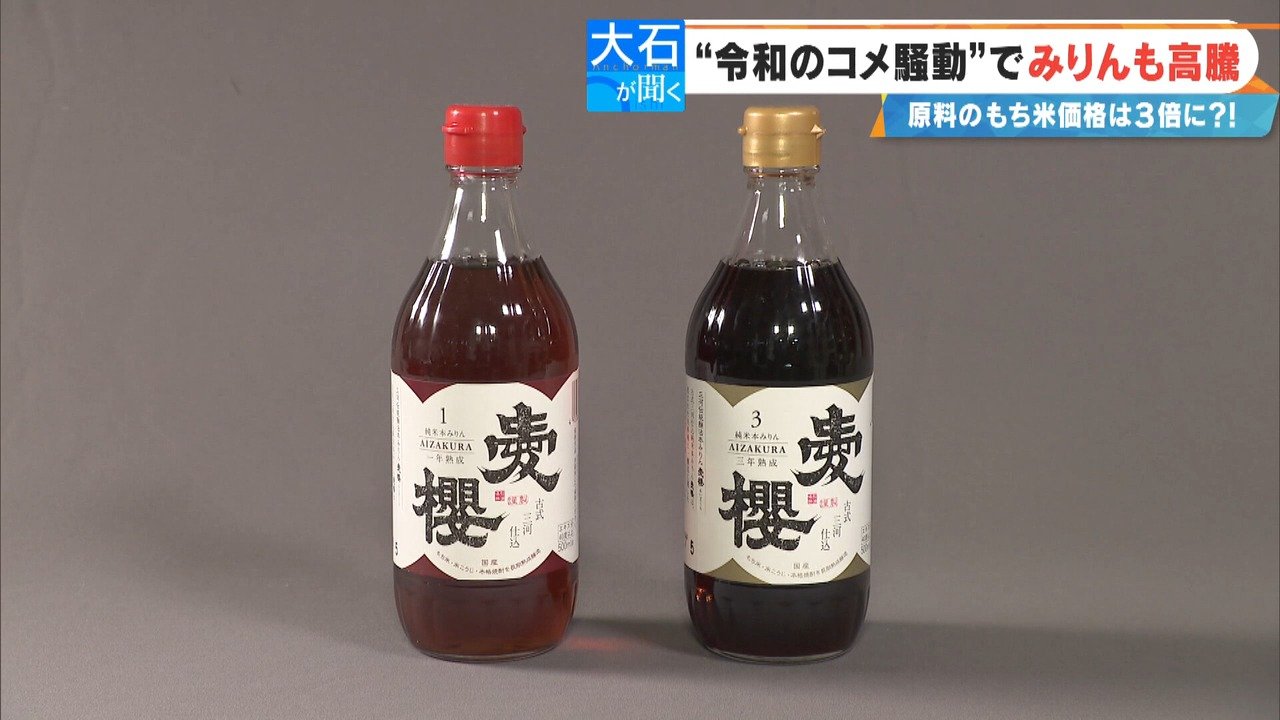
Due to the ripple effects of soaring rice prices, “mirin,” essential for Japanese cuisine, is becoming more expensive. The impact may reach dishes like unadon (eel rice bowl) and hitsumabushi…
At a rice shop in Nakamura Ward, Nagoya. The brand-name rice lined up in the store costs nearly 1000 yen per kilogram. With 5 kilograms costing around 5000 yen, rice prices remain high.
And mochi rice is also soaring in price. The price of glutinous rice is about double last year’s, exceeding the increase rate of brand-name rice. As a result, “mirin,” essential for the flavor of Japanese cuisine, is also seeing high prices.
Looking at the ingredients…
“Domestic glutinous rice, rice koji… It uses rice.”
mirin
“Mirin” is not a place or cultural site, but a key ingredient in Japanese cuisine. It is a sweet rice wine used for cooking, with a history dating back to the 16th century when it was originally enjoyed as a sweet sake before evolving into a fundamental seasoning for dishes like teriyaki and glazes.
unadon
Unadon is a popular Japanese dish consisting of grilled eel (unagi) glazed with a sweet soy-based sauce and served over a bowl of rice. Its origins trace back to the Edo period (1603-1868), when it became a favored meal to boost stamina during hot summers, particularly on the “Day of the Ox” in the traditional calendar. Today, it is considered a classic and often high-end comfort food in Japanese cuisine.
hitsumabushi
Hitsumabushi is a signature dish from Nagoya, Japan, consisting of grilled eel (unagi) served over rice in a special lacquer bowl. Its history dates to the late Edo period when eel restaurants in Nagoya began serving it as a more elaborate version of the classic unadon. The unique “three-ways” eating style—first plain, then with condiments, and finally as a tea-based soup—was popularized in the 20th century to enhance the dining experience.
Japanese cuisine
Japanese cuisine, known as *washoku*, is a UNESCO Intangible Cultural Heritage recognized for its emphasis on seasonal ingredients, aesthetic presentation, and balanced flavors. Its history is deeply rooted in centuries of tradition, influenced by Buddhist temple cuisine (*shojin ryori*) and a historic prohibition on eating meat, which refined techniques for preparing fish, vegetables, and seaweed. Modern Japanese food culture elegantly blends these ancient practices with regional specialties, from sushi and tempura to kaiseki multi-course meals.
Nagoya
Nagoya is a major city in central Japan, historically the seat of the powerful Owari Tokugawa clan during the Edo period. It is most famous for Nagoya Castle, built in 1612, which was a key samurai stronghold until its destruction in World War II and subsequent reconstruction. Today, the city is a modern industrial and economic hub, known for its automotive and aviation industries.
Nakamura Ward
Nakamura Ward is a central district in Nagoya, Japan, historically significant as the birthplace of the samurai ruler Tokugawa Ieyasu in 1543. Today, it is a major transportation hub centered around Nagoya Station and features modern landmarks like the Midland Square skyscraper alongside historical sites such as the reconstructed Nagoya Castle (located just north of the ward).
rice shop
A rice shop is a traditional retail store specializing in selling various types of rice, grains, and often related staples. Historically common across Asia, these shops were vital community hubs where rice—a dietary cornerstone—was sold in bulk from sacks or bins. While many have been replaced by modern supermarkets, some family-run rice shops endure, preserving artisanal knowledge of grain varieties and a personalized shopping experience.
mochi rice
“Mochi rice” refers to short-grain japonica rice, particularly glutinous varieties like mochigome, which is the key ingredient for making traditional Japanese mochi. Its cultivation in Japan dates back centuries, with mochi itself being a central food in Shinto rituals and New Year celebrations since ancient times. The rice is steamed and pounded into a smooth, elastic dough that forms the basis for both sweet and savory dishes.