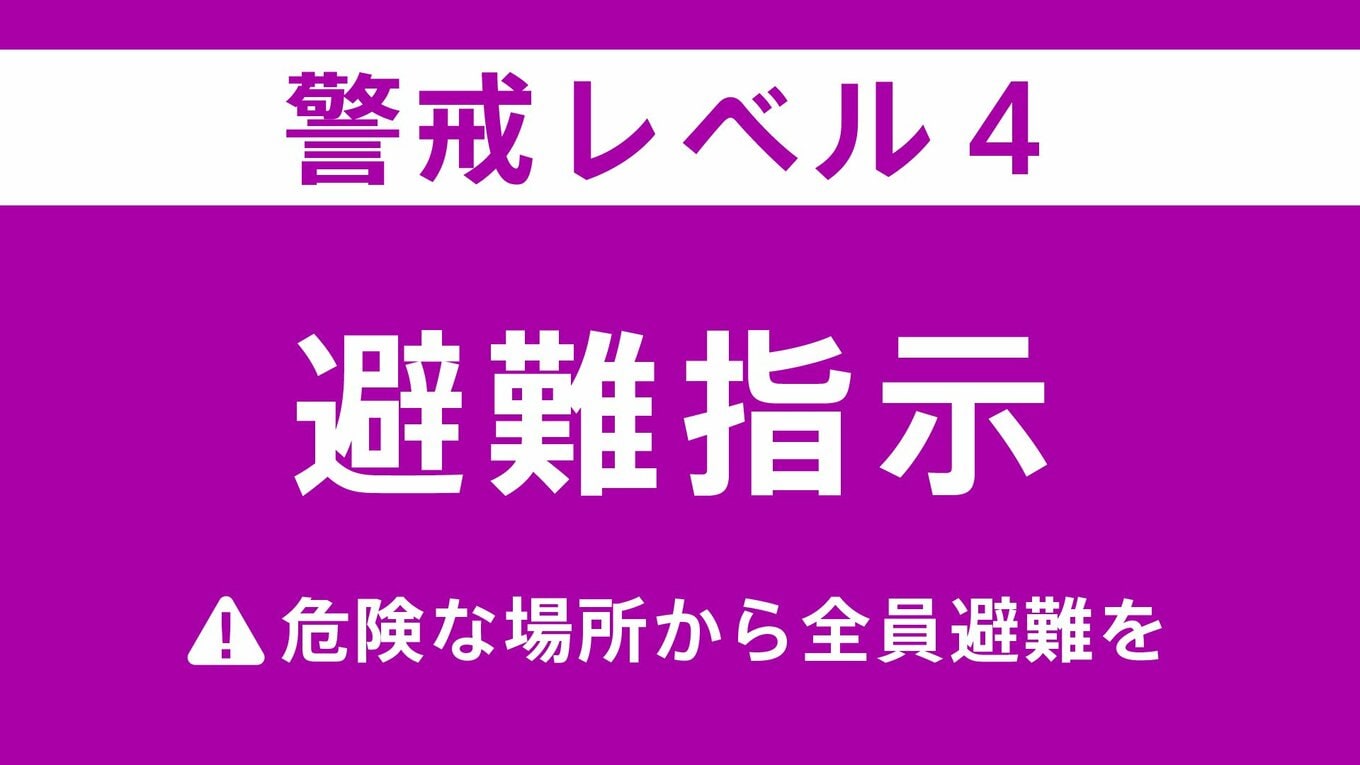
Mie Prefecture Kiho Town issued an “Evacuation Order (Warning Level 4)” at 9:05 a.m. on the 8th.
The “Evacuation Order (Warning Level 4)” applies to the area including within Udono Port, the coastline, the area on the sea side of the embankment near the river mouth, and the Kumano River riverbed.
People targeted by the evacuation order are those in dangerous locations with potential for flooding or landslides. If you are in a dangerous area, evacuate to a safe place immediately.
◆Additional Information from the Municipality
An evacuation order is issued for the area including within Udono Port, the coastline, the area on the sea side of the embankment near the river mouth, and the Kumano River riverbed. People inside Udono Port, on the coastline, or near the river mouth should evacuate and stay away until the tsunami advisory is lifted.
◆Areas Under Evacuation Order
<Areas with an Evacuation Order>
○ Area including within Udono Port, the coastline, the area on the sea side of the embankment near the river mouth, and the Kumano River riverbed
◆Check the Latest Evacuation Information for Your Location
◆About Evacuation Information
When an “Evacuation Order” is Issued
“Evacuation Order (Warning Level 4)” is the second-highest warning level, “Warning Level 4,” out of five levels. People targeted by the evacuation order are those in dangerous locations with potential for flooding or landslides.
If you are in a dangerous area, evacuate to a safe place immediately.
By evacuating immediately, you can expect to complete a “relocation evacuation” to a nearby designated emergency evacuation site set by the municipality before a disaster occurs. Starting evacuation after the “Heavy Rain Special Warning” or “Flood Occurrence Information” corresponding to the highest “Warning Level 5” may be too late. Do not wait for “Warning Level 5”; be sure to start evacuating during “Warning Level 4” and complete your evacuation within “Warning Level 4.”
*Please check the latest information on the municipality’s website.
*This evacuation information is posted based on information announced by the municipality.
Udono Port
Udono Port, located in the Kumano region of Japan, has a long history as a key coastal hub for trade and pilgrimage, particularly during the Edo period. It served as a vital entry point for travelers on the Kumano Kodo pilgrimage routes, connecting them to the sacred Kumano Sanzan shrines. Today, the port is a quiet, historic area that preserves remnants of its bustling past, including old stone walls and traditional architecture.
Kumano River
The Kumano River flows through the mountainous Kii Peninsula in Japan, and its surrounding region has been a center of Shinto and Buddhist pilgrimage for over a thousand years. The river is deeply tied to the sacred Kumano Sanzan (Three Grand Shrines) and the Kumano Kodo pilgrimage routes, which were designated a UNESCO World Heritage site in 2004. Historically, the river served as both a spiritual purification site and a vital transportation route for pilgrims traveling to the ancient shrines.
Udono Port
Udono Port, located in Kumano, Mie Prefecture, Japan, has historically served as a vital gateway for pilgrims traveling to the sacred Kumano Sanzan shrines. Its deep connection to the Kumano Kodo pilgrimage routes dates back centuries, facilitating both religious journeys and trade. Today, it remains a quiet but historically significant site, offering visitors a glimpse into Japan’s spiritual and maritime heritage.
Kumano River
The Kumano River, located in the Kii Peninsula of Japan, is a sacred waterway deeply tied to the Kumano Sanzan shrine complex and the ancient Kumano pilgrimage routes. Historically, it served as a spiritual path for emperors and pilgrims seeking purification, with boat journeys along its rapids believed to wash away impurities. Today, the river remains a key part of the UNESCO World Heritage-listed “Sacred Sites and Pilgrimage Routes in the Kii Mountain Range,” offering scenic boat rides that blend natural beauty with centuries of religious tradition.
Kumano Kodo
The Kumano Kodo is a network of ancient pilgrimage routes in Japan’s Kii Peninsula, used for over a thousand years by emperors, aristocrats, and commoners seeking spiritual renewal. These paths lead to the sacred Kumano Sanzan—three grand shrines (Hongu, Nachi, and Hayatama) that are central to Shinto-Buddhist syncretism. Designated a UNESCO World Heritage site in 2004, the Kumano Kodo remains a popular destination for hikers and pilgrims today.
Kumano Sanzan
Kumano Sanzan refers to three grand Shinto shrines—Kumano Hongū Taisha, Kumano Nachi Taisha, and Kumano Hayatama Taisha—located in the mountainous Kii Peninsula of Japan. For over a thousand years, these sacred sites have been central to Japan’s unique nature-based faith, serving as the destination for the Kumano Kodō pilgrimage routes, which are part of a UNESCO World Heritage site. The shrines are deeply connected to Shinto and Buddhist traditions, and their history reflects centuries of spiritual practice, imperial patronage, and the veneration of the region’s dramatic natural landscapes.