Trump reminds Netanyahu; Cuba hit by rare major earthquake.
Trump Warns Israel Could Be Isolated Over Iran Strikes
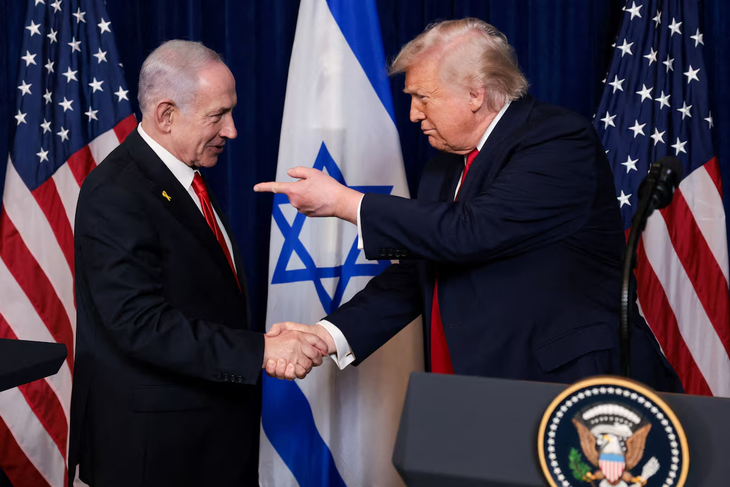
He said he directly warned Israeli Prime Minister Benjamin Netanyahu that Israel risks being isolated if it continues airstrikes against Iran.
In an interview on June 8, Trump revealed he told the Israeli leader: “You should be careful, or very soon you will have to face everything on your own.”
According to Trump, Israel only informed the U.S. about the strikes on Iran on June 7 with very short notice. Although the airstrikes have currently paused, Netanyahu stated the military campaign could resume if necessary.
The U.S. leader also said five regional countries have asked Washington to intervene to prevent escalation, while expressing support for the negotiation process the U.S. is promoting to end the conflict.
Trump said Iran has also contacted the U.S., pledging to halt attacks if Israel refrains from military actions in the coming period.
U.S. Court Rejects Trump’s $100,000 H-1B Visa Fee
A U.S. federal judge on June 8 struck down the $100,000 fee that President Donald Trump imposed on new H-1B visas for high-skilled foreign workers, ruling it is a tax not approved by Congress.
Judge Leo Sorokin of the federal court in Boston determined that this fee is not a form of administrative sanction as argued by the Trump administration, but essentially a tax. Therefore, the president lacks the authority to unilaterally impose it under current immigration law.
The policy, announced in September last year, drastically increased the cost of applying for an H-1B visa from the typical $2,000 to $5,000 up to $100,000.
According to court records, the new fee led to a significant drop in H-1B applications.
The White House said it will appeal the ruling. Spokesperson Taylor Rogers asserted that Trump has the authority to restrict entry of foreign groups he deems not in the U.S. interest.
Rare Strong Earthquake Shakes Cuba, Spreads to U.S. and Mexico
A magnitude 6.1 earthquake struck off the northwest coast of Cuba on June 8, shaking many areas in Cuba, Mexico, and the U.S. state of Florida.
According to the U.S. Geological Survey (USGS), the epicenter was located about 104 kilometers west-northwest of the town of Mantua, at a depth of 26 kilometers. Scientists noted this is a rare earthquake for the Caribbean region as it occurred within a tectonic plate, rather than at a plate boundary as usual.
The USGS said it has not recorded an earthquake of similar intensity within a 322-kilometer radius of this area since 1880.
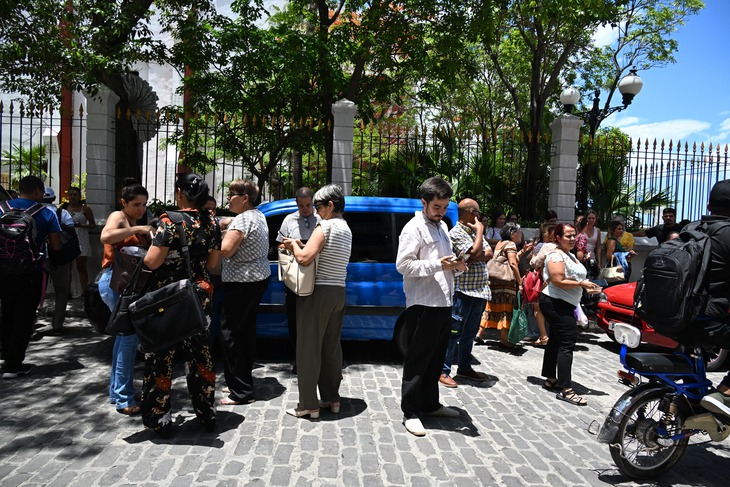
Although no casualties or major damage have been reported, the tremors caused panic in western Cuba. Many people said it was the strongest earthquake they had ever experienced.
The shaking was also felt in popular Mexican tourist spots such as Cancun, Playa del Carmen, and Tulum, forcing many to evacuate buildings. No tsunami warning has been issued.
People in the capital Havana rushed into the streets after tremors occurred.
Trump Nominates Former Personal Lawyer as U.S. Attorney General
According to reports on June 9, U.S. President Donald Trump officially nominated Todd Blanche – his former
<div class="my-4 p-4 rounded-lg shadow-md
Iran
Iran is a country in West Asia with a rich history spanning thousands of years, once the heart of the ancient Persian Empire. Its cultural sites include the ruins of Persepolis, the grand capital of the Achaemenid Empire, and the stunning Naqsh-e Jahan Square in Isfahan, a masterpiece of Islamic architecture. Today, Iran’s culture blends deep historical traditions with modern influences, making it a significant center of art, literature, and science.
Boston
Boston, the capital of Massachusetts, is one of the oldest cities in the United States, founded in 1630 by Puritan settlers. It played a pivotal role in the American Revolution, hosting key events like the Boston Tea Party and the Battle of Bunker Hill. Today, Boston is renowned for its rich history, prestigious universities, and vibrant cultural scene.
Cuba
Cuba is a Caribbean island nation with a rich and complex history, shaped by Spanish colonization, the transatlantic slave trade, and a struggle for independence that culminated in the Spanish-American War of 1898. Following a period of U.S. influence, the 1959 Cuban Revolution led by Fidel Castro established a socialist state, which has since defined its political and economic landscape. Today, Cuba is known for its vibrant culture, classic cars, and resilient people, while its historic cities like Havana showcase a blend of colonial architecture and revolutionary spirit.
Mexico
Mexico is a country rich in cultural heritage, home to ancient civilizations such as the Maya and Aztec, whose monumental ruins like Chichen Itza and Teotihuacan remain iconic. Colonized by Spain in the 16th century, Mexico gained independence in 1821, blending indigenous and European influences into its vibrant traditions, cuisine, and art. Today, it is known for its colorful festivals like Día de los Muertos, diverse landscapes, and historic cities such as Mexico City.
Florida
Florida is a southeastern U.S. state known for its subtropical climate, beaches, and major tourist attractions like Walt Disney World and the Everglades. Originally inhabited by Native American tribes, it was first explored by Spanish conquistador Juan Ponce de León in 1513 and later became a U.S. territory in 1821 before achieving statehood in 1845. Its history also includes periods of Spanish and British control, as well as a significant role in the Civil Rights Movement.
Mantua
Mantua is a historic city in northern Italy, renowned for its Renaissance art and architecture, and it was a major cultural center under the rule of the Gonzaga family from the 14th to the 18th centuries. The city is famously associated with the poet Virgil, who was born nearby, and it features landmarks like the Ducal Palace and the Palazzo Te. Mantua is also a UNESCO World Heritage site, recognized for its significant contributions to Italian Renaissance culture and urban planning.
Cancun
Cancún, located on Mexico’s Yucatán Peninsula, was once a small fishing village and Mayan settlement before being transformed into a world-renowned tourist destination starting in the 1970s. Its development was carefully planned by the Mexican government to boost tourism, and today it is famous for its stunning Caribbean beaches, ancient Mayan ruins like El Rey, and vibrant nightlife. The area’s rich history also includes nearby archaeological sites such as Chichén Itzá and Tulum, reflecting its deep pre-Columbian heritage.
Havana
Havana, the capital of Cuba, was founded in 1519 by Spanish colonists and grew into a key port for trade and shipbuilding in the Spanish New World. Its historic core, Old Havana, is a UNESCO World Heritage site, featuring a rich mix of Baroque and neoclassical architecture. The city is renowned for its vibrant culture, classic cars, and the famous Malecón seaside promenade.