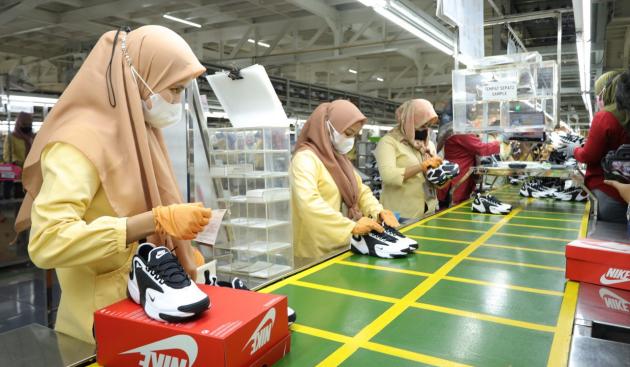
Sports equipment company Nike has laid off 1,400 employees across its various operational regions.
Nike’s Chief Operating Officer Venkatesh Alagirisamy explained that the move is aimed at streamlining the organizational structure, particularly in the technology lines spread across several areas.
This step continues a similar policy implemented earlier. At the beginning of the year, the company had already eliminated hundreds of positions to accelerate the use of automated systems.
On the other hand, market response to the news has been limited. Nike’s stock price only saw a slight increase after trading, while over the past few years, its value has actually experienced a significant decline.
This situation occurs amid increasing pressure from competitors like On, Hoka, and Anta, which are aggressively expanding their market share.
Under the leadership of CEO Elliott Hill, the company is trying to redirect its business strategy towards core products in the sports sector.
The focus is on categories such as running and soccer, along with efforts to introduce product innovations.
However, pressure on financial performance is still being felt. The company is reportedly having to offer discounts to clear old inventory, while new products have not yet been fully able to maintain demand stability.
One product line that has shown positive results is the Nike Vomero 18, which achieved sales of around US$100 million shortly after its launch.
Despite this, future projections do not yet show significant improvement. Sales in the current quarter are expected to decline, including in the Chinese market, which is predicted to contract quite deeply.
Analysts note that this situation indicates the company’s recovery is progressing slower than expected.
“Nike should have been further along in its recovery by now,” one analyst remarked.
Another analyst described the decision as having been widely anticipated.
Nevertheless, the company has not yet disclosed the financial impact of these efficiency measures.
Looking ahead, Nike plans to streamline its supply chain and centralize technology operations at two main points: its headquarters in the United States and its development center in India.