The Deputy Chairman of the Jakarta DPRD conveyed three main issues that are the focus of the legislature during the one-year leadership of the Governor and Deputy Governor of Jakarta. These are flooding, traffic congestion, and poverty.
“97 percent of the quick win programs have been completed,”
The Deputy Chairman listened to a presentation on the one-year performance achievements of the Jakarta Provincial Government under the leadership of the Governor and Deputy Governor. He appreciated the successful completion of the quick wins programs that were the focus of the first year of administration.
“We heard directly from the Governor that 97 percent of the quick wins programs are complete and three percent are still in process. This is certainly an achievement that should be appreciated,” he said.
Nevertheless, the DPRD assesses that there are still fundamental problems that must become a shared priority. He emphasized that the DPRD and the Provincial Government will continue to synergize to accelerate the handling of flooding, congestion, and poverty in the capital.
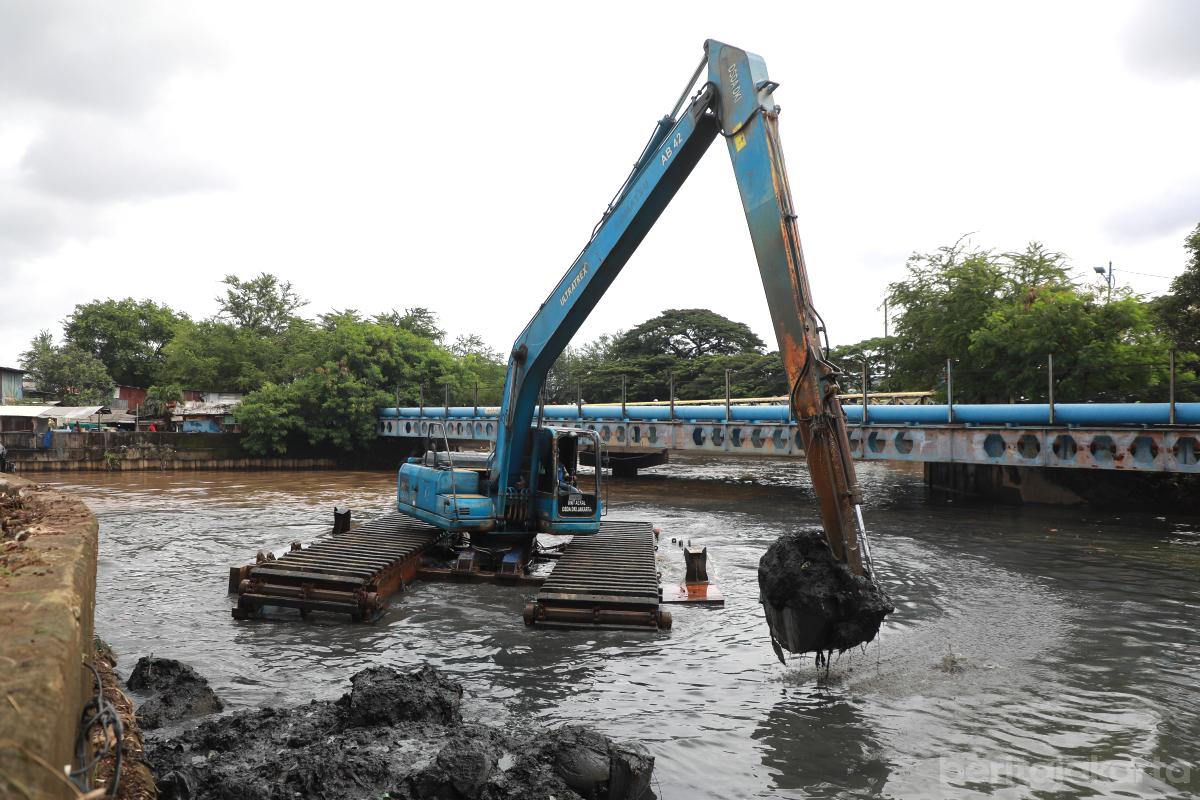
Regarding flooding, he stressed the importance of strengthening control measures, one of which is through the Ciliwung River normalization program.
“We in the DPRD will continue to support the work of the executive so that Jakarta is increasingly free from flooding problems,” he said.
To overcome traffic congestion, he believes the development of public transportation is the key. He supports strengthening Transjakarta services and the integration of Transjabodetabek to reach the buffer areas.
“We support the expansion of services to buffer areas being widened further, so congestion can be significantly reduced,” he stated.
Meanwhile, in efforts to reduce poverty rates, he mentioned the continuity of the Jakarta Smart Card (KJP) program as an important instrument in maintaining educational access for underprivileged communities.
“The KJP will be maintained and there will be no reduction. God willing, it will even continue to develop,” he affirmed.
He added that these three problems must be handled consistently over the five-year leadership term of the Governor and Deputy Governor.
The Jakarta DPRD, he continued, will also encourage the Provincial Government to strengthen the merit system and internal solidarity among regional apparatus organizations (OPD) so that program implementation runs more harmoniously and effectively.
“We will continue to cooperate with the executive, both through oversight functions and by absorbing aspirations during recess. Problems must be solved in the field, and we hear the voices of the people directly,” he explained.
He hopes that by the end of the term, the ideal of realizing a more humane and well-organized Jakarta can truly be achieved.
Meanwhile, the Chair of Commission D of the Jakarta DPRD also appreciated the one-year achievements of the Governor and Deputy Governor’s leadership. However, she reminded that there is still much homework to be done, especially regarding the poverty gap.
“Going forward, there is still a lot of homework, especially concerning the poverty gap which is still quite high. This is a shared challenge, especially amid fiscal limitations,” she said.
She emphasized that the DPRD will ensure budget allocation is truly focused on the interests of the people, particularly in handling flooding, congestion, and poverty.
“We will ensure the budget is used as effectively as possible to answer the needs of Jakarta’s residents,” she concluded.
Ciliwung River
The Ciliwung River is a historically vital waterway flowing through Jakarta, Indonesia, which for centuries served as a major trade and transportation route, contributing to the founding of the city. Today, it is heavily polluted and prone to flooding, but remains a central part of the urban landscape and is the focus of ongoing restoration and community initiatives.
Jakarta DPRD
The Jakarta DPRD is the legislative council for the Special Capital Region of Jakarta, responsible for local governance, budgeting, and oversight. It was established following Indonesian independence, with its modern form and authority largely shaped by the regional autonomy laws enacted after the fall of the New Order regime in the late 1990s. The building itself, located in Central Jakarta, is a prominent political site often associated with public demonstrations and the democratic process in the capital.
Transjakarta
Transjakarta is a bus rapid transit (BRT) system in Jakarta, Indonesia, launched in 2004 as the first full BRT system in Southeast Asia. It was created to address the city’s severe traffic congestion by providing a dedicated lane network for high-capacity buses. The system has significantly expanded over the years and remains a central, though often crowded, part of the city’s public transportation infrastructure.
Transjabodetabek
“Transjabodetabek” refers to the integrated commuter rail network serving the greater metropolitan area of Jakarta, Indonesia, connecting the capital with its surrounding regions of Bogor, Depok, Tangerang, and Bekasi. It was developed to alleviate severe road congestion and consists of several lines operated by PT Kereta Commuter Indonesia (KCI), evolving from older Dutch colonial-era railways into a modern mass transit system.
Jakarta Smart Card (KJP)
The Jakarta Smart Card (KJP) is a social assistance program launched by the Jakarta city government in 2013, not a physical place or cultural site. It provides financial aid to students from low-income families to cover educational expenses, aiming to improve access to education and reduce dropout rates. The program represents a modern policy initiative to address social inequality through direct cash transfers for schooling.
Jakarta Provincial Government
The Jakarta Provincial Government is the administrative body governing Indonesia’s capital and largest city, historically centered in the National Monument (Monas) area. Its history is intertwined with the city’s evolution from the colonial port of Batavia under Dutch rule to the modern, sprawling metropolis of independent Indonesia. As the local authority, it manages the city’s complex urban affairs from its main offices, such as the City Hall (Balai Kota) in Central Jakarta.
Commission D of the Jakarta DPRD
Commission D of the Jakarta DPRD (Regional People’s Representative Council) is one of the permanent commissions within Jakarta’s regional legislature, specifically focused on overseeing public welfare sectors such as education, health, labor, and social affairs. It was established as part of Indonesia’s post-1998 decentralization reforms, which granted regional legislatures greater authority to monitor and shape local policy implementation in these key areas.
Governor and Deputy Governor of Jakarta
The **Governor and Deputy Governor of Jakarta** are the elected leaders of Indonesia’s capital, a position established after independence. Historically, the role evolved from colonial Dutch-appointed administrators, with the first native governor being Suwiryo in 1945, marking Jakarta’s transition to a special autonomous region. Today, they govern a megacity facing challenges like rapid urbanization and flooding, while shaping national political trends.