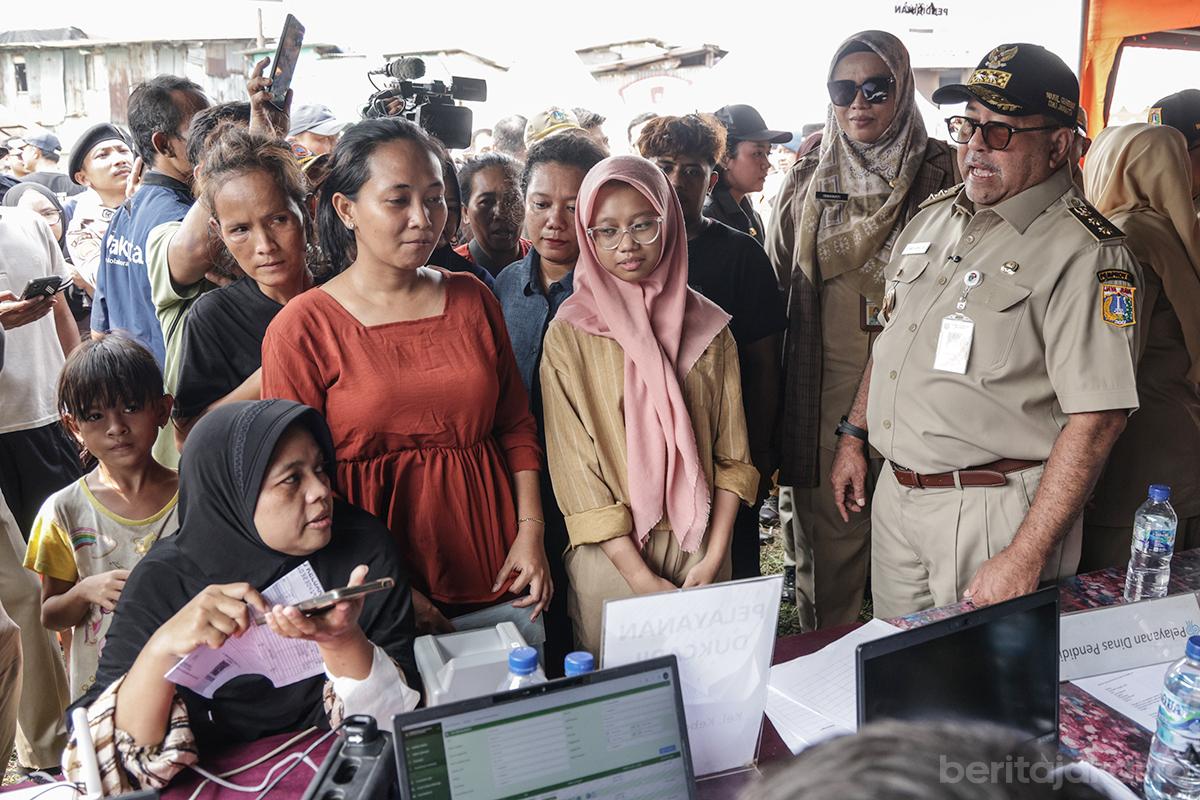
Deputy Governor of Jakarta, Rano Karno, visited the evacuation site for fire survivors from RW 04 and RW 05 in Kebon Kosong Village at Jusuf Hamka Field on Benyamin Sueb Street, Kebon Kosong Village, Kemayoran, Central Jakarta.
The Jakarta Provincial Government provides various services to fire survivors
Not just to inspect and greet residents, Rano came to ensure all fire survivors receive proper services and assistance.
“Based on the preliminary tally, the fire affected nearly 304 buildings, 354 households, with a total of 679 people impacted,” he said on Tuesday (June 2).
Rano explained that of the 679 residents affected by the fire, 326 are male and 353 female, including 35 elderly, 90 toddlers, 53 elementary school-aged children, six middle school-aged children, 22 high school teenagers, and 414 adults, including pregnant women.
To the residents, Rano stated that the Jakarta Provincial Government provides various services such as a communal kitchen, health posts, and psychological support posts for children.
Furthermore, they have also opened population administration and civil registration services for residents whose documents were burned.
Additionally, the Social Affairs Office has distributed food aid as well as in-kind assistance including mattresses, clothing, and school supplies.
“If needed, officers are ready to take residents to the nearest hospital for further health services,” he said.
Rano added that fires in Jakarta are often triggered by non-compliant electrical installations.
Therefore, Rano urged residents to be cautious of fire hazards caused by electrical short circuits.
“Today the Governor will arrive, hopefully he lands in Jakarta at 2 PM. Earlier before leaving, he called me from Medina, sending greetings to the residents, hoping they remain patient in facing this disaster,” he said.
Kebon Kosong
Kebon Kosong is a historic area located in Central Jakarta, Indonesia, known for its role as a burial ground for European colonists during the Dutch East Indies era. Established in the late 18th century, it contains graves dating back to the 1790s, reflecting the colonial history of the region. Today, it serves as a quiet heritage site, offering insights into Jakarta’s multicultural past.
Jusuf Hamka Field
Jusuf Hamka Field is a multipurpose stadium located in Klender, East Jakarta, Indonesia. Named after the prominent Indonesian businessman and philanthropist Jusuf Hamka, the field serves as a venue for local sports events and community activities. It was developed as part of efforts to provide better recreational and athletic facilities for the surrounding community.
Benyamin Sueb Street
Benyamin Sueb Street, located in Jakarta, Indonesia, is named after the legendary Betawi actor, comedian, and singer Benyamin Sueb, who was a prominent figure in Indonesian entertainment from the 1960s to the 1990s. The street runs through areas like Kemayoran and is part of the city’s efforts to honor local cultural icons. It is also known for being a bustling hub of activity, reflecting the vibrant Betawi culture that Benyamin Sueb helped popularize.
Kemayoran
Kemayoran is a district in Central Jakarta, Indonesia, historically known for hosting the city’s first international airport, Kemayoran Airport, which operated from 1940 until its closure in 1985. The area later became a key site for the Jakarta International Expo (JIExpo) and a major redevelopment zone. Today, it is a bustling commercial and residential area, blending its aviation legacy with modern urban growth.
Central Jakarta
Central Jakarta is the political and economic heart of Indonesia, serving as the capital’s administrative and business hub. Historically, it was the center of the colonial Batavia government, with landmarks like the National Monument (Monas) and Merdeka Palace reflecting its role in Indonesia’s independence struggle. Today, it blends modern skyscrapers with historic Dutch-era buildings, museums, and cultural sites.
Jakarta
Jakarta is the capital and largest city of Indonesia, located on the northwest coast of Java. Originally a small port town called Sunda Kelapa, it was renamed Jayakarta in the 16th century before becoming Batavia under Dutch colonial rule. After Indonesia’s independence in 1945, it was renamed Jakarta and has since grown into a bustling metropolis, serving as the country’s political, economic, and cultural center.
Medina
Medina, in Saudi Arabia, is the second holiest city in Islam, after Mecca. It is historically significant as the city that welcomed the Prophet Muhammad after his migration (Hijra) from Mecca in 622 CE, marking the beginning of the Islamic calendar. The city is home to the Prophet’s Mosque (Al-Masjid an-Nabawi), where Muhammad is buried, making it a major pilgrimage destination.