Jakarta –
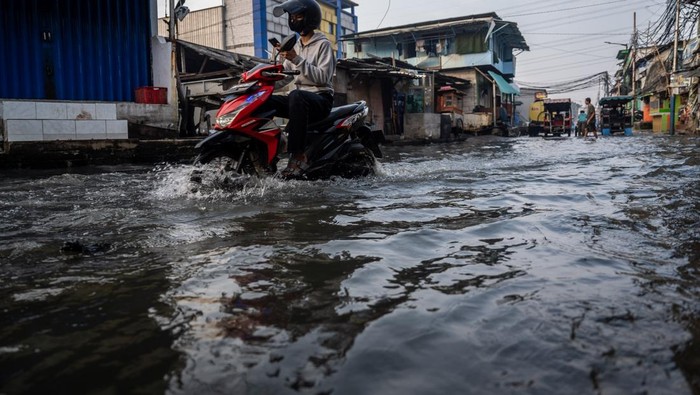
The Jakarta Regional Disaster Management Agency (BPBD) has issued a warning for 12 areas in Jakarta. The potential for coastal flooding applies from May 27 to June 5, 2026.
Based on information from the Meteorology, Climatology, and Geophysics Agency (BMKG) regarding the Early Warning of Coastal Flooding (Rob) from May 27 to June 5, 2026, the phenomenon of maximum sea water tides coinciding with the full moon phase on May 31, 2026, has the potential to increase the maximum tidal height, resulting in coastal flooding or rob in the northern coastal areas of Jakarta. Residents of Jakarta’s northern coast are advised to anticipate these impacts.
The peak of the maximum tide occurs from 19:00 to 00:00 local time in the following areas:
- Kamal Muara
- Kapuk Muara
- Penjaringan
- Pluit
- Ancol
- Kamal
- Marunda
- Cilincing
- Kalibaru
- Muara Angke
- Tanjung Priok
- Kepulauan Seribu
Advice for the Public
Regarding the potential for coastal flooding (rob) in the northern coastal areas of Jakarta, residents are advised to:
- Increase vigilance regarding changes in weather and sea water conditions.
- Avoid activities in coastal areas at risk of flooding, especially during high tide.
- Ensure drainage systems around homes are functioning properly to prevent waterlogging.
- Download the Preparedness Guidebook:
- Report any potential waterlogging or flooding through the JAKI application.
- In an emergency, contact 112.
List of Emergency Channels and Water Level Monitoring
Here is a list of official channels that can be used to report emergencies or find information about flooding in Jakarta.
- Website
Latest information regarding flood information and its handling.
- JAKI
Report through the Citizen Report feature.
- BMKG and BPBD
Early warnings of potential disasters up to water level data (via Instagram @infobmkg and @bpbddkijakarta)
- Jakarta Siaga 112
In an emergency, contact Jakarta Siaga 112 for further handling.
Jakarta
Jakarta is the capital and largest city of Indonesia, located on the northwest coast of Java. Historically known as Batavia during the Dutch colonial era, it was a major center for the Dutch East India Company’s spice trade. Today, Jakarta is a bustling metropolis blending modern skyscrapers with colonial-era architecture, reflecting its rich and complex history.
Kamal Muara
Kamal Muara is a coastal subdistrict in North Jakarta, Indonesia, historically known as a fishing village and a key transit point for goods and people traveling between Jakarta and the islands of the Thousand Islands archipelago. Its name derives from the local Malay words “kamal” (a type of tree) and “muara” (river mouth), reflecting its geographic location at the estuary of the Kamal River. Today, the area is a mix of traditional settlements, modern development, and a major port serving ferry routes to popular tourist destinations like Pulau Seribu.
<h3 class="text-lg font-semib
Jakarta
Jakarta, the capital of Indonesia, is a sprawling metropolis with a rich history rooted in its origins as the port city of Sunda Kelapa. It later became the Dutch colonial center known as Batavia, which heavily influenced its architecture and trade networks. Today, Jakarta is a dynamic hub of culture and commerce, blending colonial-era landmarks like the Fatahillah Square with modern skyscrapers and diverse traditions.
Kamal Muara
Kamal Muara is a coastal administrative village located in Penjaringan, North Jakarta, Indonesia, historically known as a fishing community and a key transit point for maritime trade. The area is home to the Kamal Muara Fish Market, a bustling hub for fresh seafood, and has developed into a mixed residential and commercial zone. Its proximity to Jakarta Bay and the Tanjung Priok port has shaped its growth, though it also faces challenges like land subsidence and flooding due to its low-lying geography.
Kapuk Muara
Kapuk Muara is a coastal area in North Jakarta, Indonesia, historically known as a fishing village and a key transit point for goods entering the port of Sunda Kelapa. Over time, it has developed into a bustling residential and commercial district, though it still retains elements of its maritime heritage. The area is also famous for its seafood markets and the annual Cap Go Meh celebrations, reflecting the local Chinese-Indonesian cultural influence.
Penjaringan
Penjaringan is a historic district in North Jakarta, Indonesia, known as one of the oldest settlements in the city, dating back to the 16th century when it was a key port for the Banten Sultanate and later the Dutch East India Company. It is home to the Old Batavia area, featuring landmarks like the 17th-century Portuguese Church and the Kali Besar canal, reflecting its colonial-era significance as a trade and administrative hub. Today, Penjaringan blends this rich history with modern urban life, though parts of it face challenges such as flooding and congestion.
Pluit
Pluit is a densely populated coastal area in North Jakarta, Indonesia, known for its history as a swampy region that was transformed into a residential and commercial hub through large-scale land reclamation projects in the 1970s and 1980s. Originally part of the Batavia (Jakarta) hinterland, it developed rapidly with the construction of housing complexes, malls, and the Pluit Reservoir, which was built to help control flooding. Today, Pluit is a bustling, multicultural neighborhood, though it still faces challenges with urban flooding and environmental issues.
Ancol
Ancol is a large recreational and tourism complex located in Jakarta, Indonesia, along the coast of Jakarta Bay. Originally a swampy area with a history as a colonial-era fishing village, it was transformed in the 1960s under President Sukarno’s vision to become a major public leisure destination. Today, it features attractions like Dunia Fantasi (Fantasy World) theme park, Sea World, beaches, and hotels, serving as a popular escape for locals and tourists alike.
Kepulauan Seribu
Kepulauan Seribu, or the Thousand Islands, is a chain of over 100 islands located in the Java Sea just north of Jakarta, Indonesia. Historically, these islands served as a strategic maritime route and a natural defense for the port of Jakarta, with some islands housing colonial-era fortifications and lighthouses built by the Dutch. Today, the archipelago is a popular tourist destination known for its coral reefs, white-sand beaches, and marine parks.
Tanjung Priok
Tanjung Priok is a major seaport and district in North Jakarta, Indonesia, serving as the country’s busiest and most important port for international trade. Its development began in the late 19th century under Dutch colonial rule, when it was built to replace the older, silted-up port of Sunda Kelapa. Today, Tanjung Priok is a vital economic hub, handling the majority of Indonesia’s cargo and container traffic, though it has also faced challenges related to congestion and labor issues.


![Partai Kebangkitan Bangsa (PKB) menggelar lomba desain karikatur Ketua Umum PKB Muhaimin Iskandar alias Gus Imin. [Suara.com/dok]](https://asiacity.news/wp-content/uploads/2025/07/43754-karikatur-150x150.webp)

![Rumah Uya Kuya usai dijarah massa pada Sabtu, 30 Agustus 2025 [Suara.com/Tiara Rosana]](https://asiacity.news/wp-content/uploads/2025/09/76175-penampakan-rumah-uya-kuya-usai-dijarah-massa-pada-sabtu-30-agustus-2025-suaracomtiara-rosana-150x150.webp)