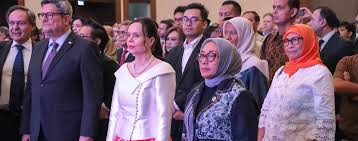
Depok (14/05/2026) – The 235th anniversary of the Polish Constitution has become an important milestone in strengthening bilateral relations between Indonesia and Poland. Minister of Women’s Empowerment and Child Protection, Arifah Fauzi, emphasized that this moment serves as a foundation to expand collaboration across various strategic sectors, especially in strengthening the rights of women and children.
During the event held in Jakarta, Arifah stressed that international dialogue is a vital instrument in creating inclusive and equitable development for all layers of society.
Global Commitment for Vulnerable Groups
Indonesia and Poland have agreed to prioritize humanitarian values in all international cooperation they establish. The main focus of both countries is to create a stable region and provide maximum protection for vulnerable groups.
- Humanitarian Vision: Both countries promote inclusive global cooperation to ensure vulnerable groups receive adequate legal and social protection.
- Regional Stability: There is a joint commitment to maintain peace and sustainability for the future of the international community.
- Multisectoral Collaboration: This cooperation covers education, culture, research, and women’s economic empowerment.
The Constitution of May 3, 1791: Foundation of Democracy and Human Rights
The Ambassador of the Republic of Poland to Indonesia, Barbara Szymanowska, explained the historical significance behind the Polish National Day celebration. She highlighted the role of the Constitution of May 3, 1791, as the first modern constitution in Europe—and the second in the world—which became the root of the Polish struggle for the values of freedom.
These democratic principles remain Poland’s main driving force in building international partnerships, including with Indonesia, which is increasingly solid in various global forums such as the UN and G20.
Enhancing Economic and Cultural Cooperation
In addition to social protection aspects, relations between the two countries are also growing in the trade and cultural exchange sectors.
- Leading Commodities: Typical Indonesian products, especially tea and coffee, are reported to be increasingly gaining a place in the hearts of the Polish people.
- Talent Exchange: Partnerships in education and research sectors are continuously strengthened to deepen people-to-people contact.
Appreciation for the bilateral relationship that has been established concluded the meeting, with the hope that this collaboration can become a solution in facing increasingly complex global challenges.