Strengthening Political Brotherhood, PKS and PKB in Depok Explore Opportunities for Strategic Coalition for Public Benefit
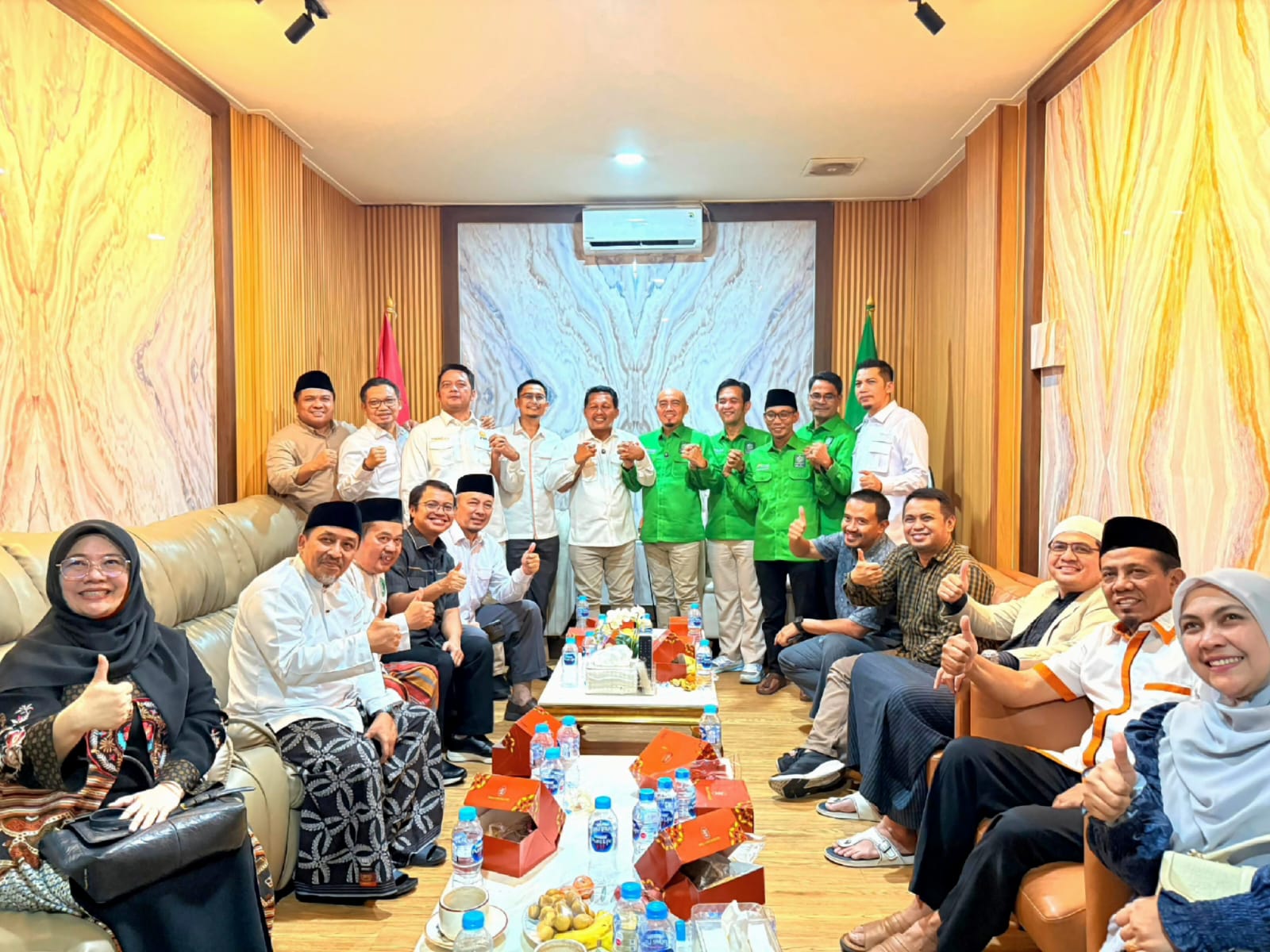
Depok – The political landscape in Depok City shows a positive trend through the strengthening of cross-faction communication. The Regional Leadership Council (DPD) of the PKS Depok City conducted an official goodwill visit to the branch headquarters of the National Awakening Party (PKB) Depok City on Friday. This meeting is seen as a crucial step in thawing political barriers to create stability for development at the regional level.
The PKS delegation was warmly welcomed by PKB officials in a familial atmosphere.
Harmony Mission: Integrating Political Strength
During the discussion, it was emphasized that contributions to regional development cannot be done partially. The mission of “Harmony and Synergy” was put forward as the main foundation for building relationships with other parties, including PKB.
“PKS Depok opens the widest possible space for collaboration. We believe that the city’s stability will be maintained if cross-party communication runs well. Our main focus remains one: ensuring that every policy born in parliament is truly felt by the wider community,” the speaker explained.
PKB Response: Maintaining Communication and Concrete Work
Echoing this vision, appreciation was given for the PKS’s goodwill initiative. For them, this meeting is not merely a political ceremony, but a foundation for building more technical cooperation in the future.
Key Points from the PKS-PKB Meeting:
Acceleration of People’s Programs: Unifying views on urgent socio-economic programs for the citizens of Depok.
Legislative Stability: Strengthening coordination at the DPRD level to ensure oversight and budgeting functions run in harmony.
Sustainable Vision: Building opportunities for strategic coalitions in formulating inclusive and progressive public policies.
“This goodwill visit is a positive step to strengthen togetherness. We hope communication and collaboration like this continues, so we can together provide the best for the people of Depok City,” it was stated.
Building a Healthy Political Foundation
This visit marks a new chapter in the local political dynamics of Depok, where major parties are beginning to prioritize dialogue over confrontation. The synergy between PKS as a dominant force in the legislature and PKB with its strong cultural mass base is predicted to be the driving force for the birth of more accommodative policies.
The meeting concluded with an agreement to continue regular communication, to ensure the aspirations of constituents from both sides can be optimally represented in Depok City’s future development agenda.
Depok City
Depok City is a city in West Java, Indonesia, originally established in the 17th century as a private agricultural estate by Cornelis Chastelein, a Dutch East India Company official. It later evolved into a significant center for Christian education and community before being integrated into the Bogor Regency and finally gaining its status as an independent city in 1999. Today, it is a major residential and university satellite city, part of the greater Jakarta metropolitan area.
Regional Leadership Council (DPD) of the PKS Depok City
The Regional Leadership Council (DPD) of the Prosperous Justice Party (PKS) in Depok City is the local executive board of the Islamic-based political party PKS for the city of Depok, West Java. It is responsible for managing the party’s political activities, recruitment, and campaigns at the municipal level, operating within the national framework of PKS, which was founded in 1998. As a branch of a national party, its history is tied to the party’s broader growth and electoral participation in Indonesian democracy since the Reformasi era.
National Awakening Party (PKB) Depok City
The National Awakening Party (PKB) in Depok City is a local branch of the Indonesian political party founded in 1998, which is historically linked to the Nahdlatul Ulama (NU) Islamic organization. As a city-level political office, its primary role is to organize party activities, support legislative candidates, and engage with the community in Depok, reflecting the party’s national platform of pluralism and community-based development.
PKS Depok
PKS Depok refers to the Pondok Cabe Ilir Stadium, a multi-purpose stadium located in Depok, West Java, Indonesia. It is primarily used for football matches and is the home stadium for the professional club **Persikabo 1973**. The stadium was originally named the **Stadion Pangkalan Jati** and has undergone renovations to serve as a modern sporting venue for the city.
PKB
“PKB” most commonly refers to the **Památník Karla Bendla (Karel Bendl Monument)**, a cultural site in Prague, Czech Republic, dedicated to the 19th-century Czech composer Karel Bendl. It is located in a villa where he lived and worked, serving as a memorial to his contributions to Czech national music. Today, the villa functions as a museum and cultural center celebrating his life and the musical heritage of the era.
DPRD
“DPRD” refers to the **Dewan Perwakilan Rakyat Daerah**, which is the Regional People’s Representative Council in Indonesia. It is a legislative body at the provincial or regency/city level, established after Indonesian independence to provide regional representation and governance as part of the country’s democratic decentralization. Its history is tied to Indonesia’s post-1998 *Reformasi* (Reform) era, which strengthened regional autonomy and local legislative authority.
PKS
“PKS” is not a widely recognized acronym for a specific, major cultural site or place in global history or tourism. It could refer to several possibilities, such as the **Prambanan Temple Compounds** in Indonesia (a 9th-century Hindu temple complex and UNESCO World Heritage Site) or other local institutions.
To provide an accurate summary, please clarify the intended meaning of “PKS” (e.g., a full name or location).
PKS-PKB Meeting
The “PKS-PKB Meeting” refers to a significant political event in Indonesia, specifically a high-level consultation between the Prosperous Justice Party (PKS) and the National Awakening Party (PKB). These meetings, which have occurred periodically since the early 2000s, are part of coalition-building efforts within Indonesia’s democratic framework, often aimed at aligning strategies for elections or legislative agendas. They highlight the dynamic and coalition-driven nature of Indonesian politics, where Islamic-based parties negotiate alliances to influence governance.