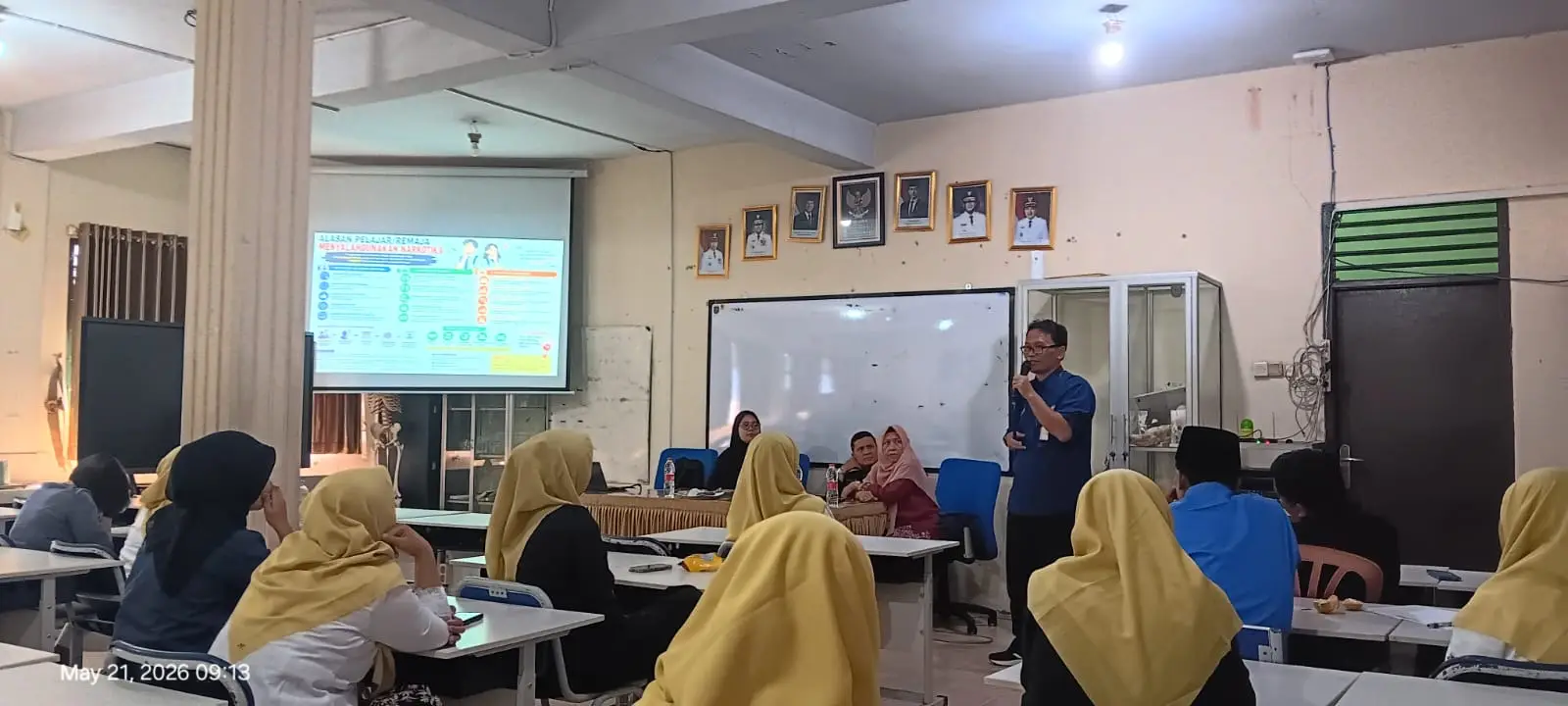
DEPOK (22/05/2026) – The National Narcotics Agency (BNN) of Depok City, together with the Depok City Government, launched a new tactical step to protect the educational ecosystem from the threat of illegal substances. Through the synergy of the Health Office and the Education Office, authorities are running a marathon program called Mobile NAPZA at dozens of public schools.
Unlike previous years’ interventions that focused on student groups, the 2026 operational draft prioritizes strengthening oversight at the school management level.
Shift in Target Subjects and Enforcement of the P4GN Regional Regulation
The Community Health Division of the Depok City Health Office explained that the implementation of the Mobile NAPZA program is a juridical implementation of Depok City Regional Regulation Number 13 of 2021 on Facilitation of Prevention and Eradication of Narcotics Abuse and Illicit Trafficking (P4GN).
In this period’s implementation, the policy line was significantly changed to create a more integrated internal oversight system within the learning environment.
“In 2026, we set a different target subject. If previously education targeted students, this time the main focus of intervention is directed at school principals, teachers, and educational staff,” it was detailed on Friday (22/05).
Accumulatively, the projected reach of the Mobile NAPZA program in this phase targets 22 public schools at the elementary and junior high school levels spread across the administrative area of Depok City.
Educational Curriculum and Early Detection Protocol for Educators
The Prevention and Community Empowerment Team of the Depok City BNN highly appreciated the expansion of the Mobile NAPZA method. Through this scheme, educators are positioned as active protective agents equipped with three fundamental P4GN materials:
-
Current Narcotics Science: Mapping of the latest variants and distribution methods of addictive substances in the black market.
-
Cluster Data Analysis: Case study and analysis of drug abuse patterns that often victimize school-age individuals.
-
Contingency Protocol: A guide for precise clinical and legal handling steps if a student is detected to be suspected of consuming narcotics.
Field Clinical Screening Mechanism: After the material deepening phase was completed, the BNN together with the medical team from the Depok Health Office immediately activated the early detection protocol on site. All attending school principals and teachers were required to undergo a physical examination in the form of a mass urine test to ensure the integrity and cleanliness of the teachers from exposure to addictive substances.
Target Achievement of a Clean Educational Environment
Through this strategic shift in tightening at the upstream sector, the Depok City BNN targets the creation of a resilient and protective school climate. Teachers and educational staff are expected no longer to be passive but to transform into vigilant frontliners who are keen in monitoring student activities, while ensuring the school environment is completely free from illicit drug trafficking.