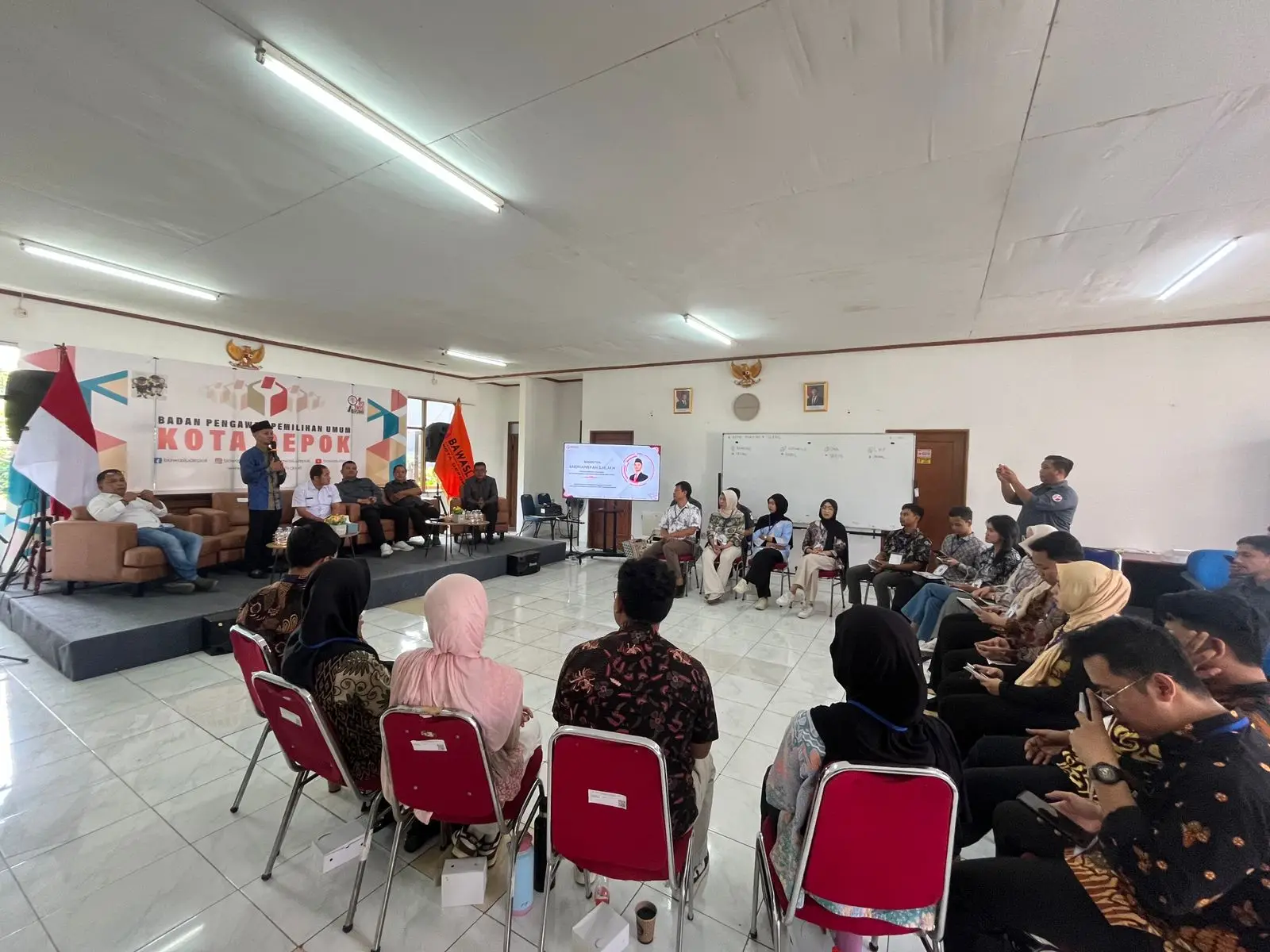
DEPOK (02/06/2026) – The Depok City Election Supervisory Body (Bawaslu) has taken a progressive step to secure the integrity of future political contests. This strategy is being implemented through the Participatory Supervision Education (P2P) agenda, which specifically targets young people from the Generation Z (Gen Z) cluster, both students and university students.
This tactical political education, attended by 20 selected participants, was held directly at the Depok Bawaslu Secretariat Office, Beji District, on Tuesday (02/06). Through this incubation, the election supervisory institution aims to increase the communal supervision index to safeguard the quality of democracy at the local level.
Depok Becomes National Pioneer in Youth Supervision Movement
The Acting Chair of the Depok City Bawaslu confirmed that Depok City has recorded itself as the first jurisdiction in Indonesia to independently initiate and execute the P2P program. The young groups that have been equipped with the supervision draft are projected to become the authority’s spokespersons in mitigating election violations at the grassroots level.
“These formed participatory supervisory cadres carry the crucial function of being a formal bridge between Bawaslu and the wider public. Our great hope is that they can transform into pioneers as well as the front line in socializing the draft duties and functions of election supervision,” explained the Acting Chair.
Activating Young People’s Critical Thinking to Counter 2029 Election Hoaxes
Carrying the major theme ‘Functioning and Moving for a Dignified 2029 Election’, participants were encouraged to move beyond the conventional role of passive voters. Gen Z is demanded to take on a strategic role as active supervisory agents overseeing the entire election process.
The authority considers placing Gen Z at the forefront to be very reasonable, given their characteristics of being familiar with the digital ecosystem.
Parameters for Optimizing Gen Z’s Role:
-
Leveraging Critical Thinking: Utilizing the critical reasoning of young people, which is considered much more active and responsive to social change.
-
Mitigating Digital Vulnerabilities: Making this young group the main shield to ward off, capture, and prevent the spread of disinformation or fake news circulating on social media during the election period.
Commitment to Expanding Collaborative Supervision Network
The Acting Chair emphasized that this P2P project draft will not stop as a one-time ceremonial agenda. Depok Bawaslu guarantees the program’s sustainability on a regular basis to reach more massive and diverse community clusters in order to build a collaborative supervision network.
To date, the public participation strengthening program has been successfully executed twice in the Depok City area. In the previous registration cluster, Bawaslu had even embraced disability organization groups, reinforcing the institution’s draft commitment to inclusivity to involve all elements without exception in safeguarding the sovereignty of the people’s voice.