Accelerating Political Fund Allocation: Depok PKS-PKB Coalition Pushes for Increased Political Education Budget
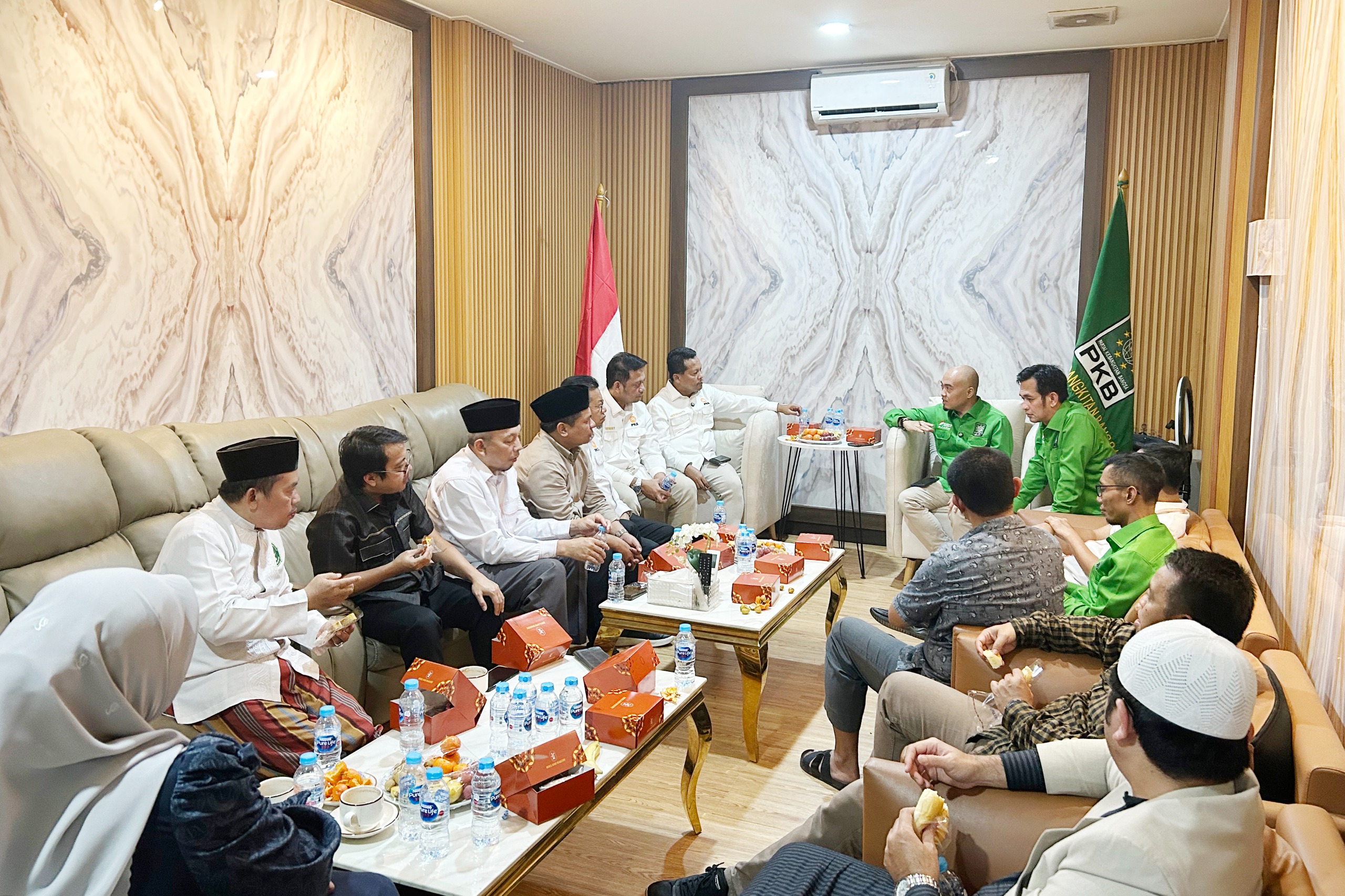
Depok – The wave of post-election consolidation in Depok City is now focusing on strengthening the financial structure of political organizations. Utilizing the momentum of the Syawal friendship gathering on Friday, the Prosperous Justice Party (PKS) and the National Awakening Party (PKB) officially voiced the urgency of increasing political party financial assistance (Banpol) as a vital instrument for improving the quality of local democracy.
The strategic meeting, held at the Depok City PKB DPC office, was not merely a ceremonial event but a technical forum to unify visions regarding adjustments to party support budgets.
The Per-Vote Value Gap: Depok Lags Far Behind
The disparity in the amount of Banpol in Depok City compared to other regions was highlighted. Currently, the budget allocation for Banpol in Depok is around Rp3,000 per valid vote.
This figure is considered no longer relevant to the escalating needs for party operational costs and cadre development today.
“If we compare it to other regions that have reached Rp15,000 per vote, Depok’s position is still significantly lagging. Meanwhile, political parties bear a heavy burden in carrying out the functions of political literacy and public participation,” it was explained.
Long-Term Investment for Community Literacy
For this coalition, the demand to increase Banpol is not merely about strengthening internal coffers, but a form of state investment in creating a healthy political ecosystem. The following are the three main pillars forming the basis for pushing this budget increase:
Optimizing Political Education: Ensuring parties have the resources to educate the public to be more critical and rational.
Sustainable Cadre Development: Strengthening the party’s function in producing quality regional leadership candidates.
Institutional Accountability: Proportional fiscal support is expected to minimize the potential for reliance on non-formal, non-transparent funding sources.
“The ultimate goal is to present a healthy democracy, where the public has good political literacy and participates actively in development,” it was added.
Budget Mechanism: Targets for the 2026 Revised APBD and the 2027 APBD
As a concrete step, this proposal for an increase will be brought to the negotiation table of the Depok City DPRD Budget Committee (Banggar) to be discussed jointly with the executive ranks of the Depok City Government. The target is for it to be included in the 2026 Revised Regional Budget (APBD-P) scheme or at least in the 2027 Pure Regional Budget (APBD).
It was assured that this budget strengthening process would undergo comprehensive study to remain in accordance with legislative corridors and the principles of public accountability.
“We want to ensure that every decision is not only administratively legal but also becomes a catalyst for strengthening the party’s strategic function in the eyes of the public,” it was concluded.
This cross-axis meeting signals that the majority of parties in the Depok parliament are already on the same wavelength regarding strengthening party institutions through more equitable and proportional budget policies.
Depok City
Depok City is a city in West Java, Indonesia, originally established in the 17th century as a private agricultural estate by Cornelis Chastelein, a Dutch East India Company official. It evolved from a small settlement into a modern satellite city of Jakarta, known for its significant educational institutions and as a major residential and commercial hub. The city’s name is believed to derive from an acronym of Chastelein’s estate: *De Eerste Protestantse Organisatie van Christenen* (The First Protestant Organization of Christians).
Prosperous Justice Party (PKS)
The Prosperous Justice Party (PKS) is an Islamic political party in Indonesia, founded in 1998 following the fall of the Suharto regime. It evolved from a campus-based *dakwah* (proselytization) movement and has become a significant force in Indonesian politics, advocating for the application of Islamic values within the framework of the nation’s democracy.
National Awakening Party (PKB)
The National Awakening Party (PKB) is a major political party in Indonesia, founded in 1998 by Abdurrahman Wahid (Gus Dur) and other prominent figures from the Nahdlatul Ulama (NU), the world’s largest Islamic organization. It was established as a key part of the pro-democracy movement following the fall of the Suharto regime, aiming to represent the traditionalist Muslim community and promote pluralism and social justice within the Indonesian political system.
Depok City PKB DPC office
The Depok City PKB DPC office is the local administrative headquarters for the **National Awakening Party (PKB)** in Depok, West Java. As a branch of a major Indonesian political party founded in 1998 with ties to the Nahdlatul Ulama organization, this office coordinates the party’s political activities, community engagement, and election campaigns within the city.
Depok City DPRD Budget Committee (Banggar)
The Depok City DPRD Budget Committee (Banggar) is a key working committee within the Depok City Regional People’s Representative Council (DPRD) in West Java, Indonesia. Its primary function is to draft, review, and oversee the implementation of the regional budget (APBD), ensuring it aligns with local development plans and public needs. The committee operates within the framework of Indonesia’s post-Reformasi decentralization laws, which granted greater fiscal authority to regional legislatures.
Depok City Government
The Depok City Government is the administrative body governing Depok, a city in West Java, Indonesia. The city itself was officially established on April 27, 1999, after separating from the Bogor Regency, though its history as a settlement dates back to the Dutch colonial era. The government operates from its main complex, overseeing the development of what has become a major university and residential hub within the Greater Jakarta metropolitan area.
2026 Revised Regional Budget (APBD-P)
The “2026 Revised Regional Budget (APBD-P)” is not a physical place or cultural site; it is a financial and administrative document. It is a revised annual budget plan for a specific Indonesian province or regency, adjusted during the fiscal year to reflect changes in regional priorities, revenue, or unexpected needs. Its “history” is procedural, stemming from the ongoing fiscal management required by Indonesian law to ensure regional development funds are allocated effectively.
2027 Pure Regional Budget (APBD)
The “2027 Pure Regional Budget (APBD)” is not a physical place or cultural site; it is an Indonesian governmental term referring to the projected regional revenue and expenditure budget for the year 2027. As a financial planning document, it has no historical significance in a cultural sense but is part of the ongoing administrative and fiscal history of Indonesia’s regional governance.