Jakarta – The Indonesian government has identified 10 regions as top priorities in the initial phase of developing waste-to-energy (WTE) facilities as part of a national strategy to improve waste management.
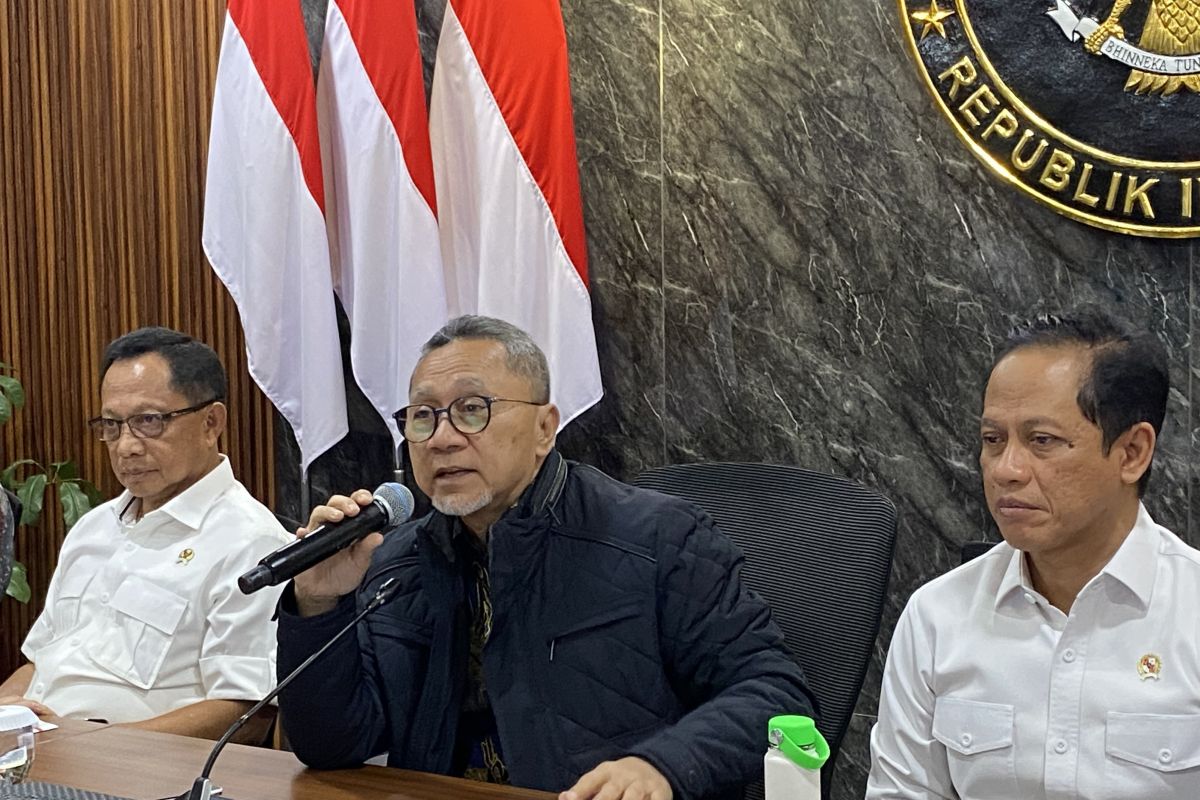
Coordinating Minister for Food Affairs and Chair of the National Acceleration Team for Food, Energy, and Water Self-Sufficiency, Zulkifli Hasan, said the selection was based on a comprehensive assessment and verification process conducted by the Ministry of Environment.
“The assessment criteria include regions that generate over 1,000 tons of waste per day, have available land for WTE development, and demonstrate a clear commitment from local governments to manage waste transportation,” Hasan told reporters here on Thursday.
The 10 designated regions are DKI Jakarta (with four sites), Bali, Yogyakarta, Bekasi City, Bekasi District, Greater Bogor, Tangerang, Semarang, Medan, and West Java—covering Bandung City, Cimahi City, West Bandung District, Sumedang District, and Garut District.
Hasan added an additional 14 regions are currently under review, including Serang, South Sulawesi, Depok, Pekanbaru, Lampung, Malang, Padang, Samarinda, Balikpapan, Pontianak, Banjarmasin, Jambi, Makassar City, and South Tangerang City.
The Ministry of Environment emphasized that local governments must submit a formal declaration of readiness to the minister, accompanied by several key requirements.
These include providing at least five hectares of land that complies with spatial planning regulations, is flood-free, located away from airports, and has sufficient road access and water infrastructure.
To ensure logistical efficiency, WTE facilities must be situated within 50 kilometers of the waste source. “These requirements have already been fulfilled by the respective local governments,” Hasan said.
In a major financial boost to the initiative, Indonesia’s sovereign wealth fund Danantara announced that its Rp50 trillion (approximately US$3.2 billion) “patriot bonds” have been fully subscribed through a private placement scheme.
Danantara CEO Rosan Roeslani stated on Wednesday that the funds will support new and renewable energy projects as well as WTE projects in 33 locations across the country. According to him, Danantara plans to hold a tender to select its project partner by the end of the month.
Danantara estimates that converting 1,000 tons of waste will require an investment of Rp2 trillion to Rp3 trillion or US$127 million to US$190 million, and could produce up to 15 megawatts of electricity—enough to power roughly 20,000 households.
Jakarta
Jakarta is the capital and largest city of Indonesia, located on the northwest coast of Java. Originally a small port named Sunda Kelapa, it was renamed Jayakarta in the 16th century before becoming the Dutch colonial hub of Batavia, which left a lasting architectural and cultural influence. Today, it is a bustling metropolis known for its blend of traditional and modern elements, including landmarks like the National Monument and Old Town.
Bali
Bali, an Indonesian island known for its stunning beaches, terraced rice paddies, and vibrant arts scene, has a rich history shaped by Hindu-Buddhist influences since the 1st century AD. After the fall of the Majapahit Empire in the 16th century, Bali became a refuge for Hindu culture, which remains central to its identity today. Despite Dutch colonial rule and later integration into Indonesia, Bali has preserved its unique traditions, including elaborate temple ceremonies and dance performances.
Yogyakarta
Yogyakarta is a city on the Indonesian island of Java, renowned as a center of classical Javanese art and culture. Historically, it was the heart of the Mataram Sultanate and later became a key stronghold during Indonesia’s struggle for independence, with the sultan playing a crucial role in the nation’s founding. Today, it is famous for its nearby ancient temples, such as Borobudur and Prambanan, and its vibrant traditional arts scene.
Bekasi City
Bekasi City is a major satellite city in West Java, Indonesia, located just east of Jakarta. Historically, it was part of the ancient Tarumanagara kingdom, and evidence of this past includes the discovery of the Tugu inscription, which dates back to the 5th century. Today, Bekasi has rapidly developed into a densely populated industrial and residential hub, serving as a key commuter area for workers in the Jakarta metropolitan region.
Bekasi District
Bekasi District is a region in West Java, Indonesia, that has evolved from a historically significant area during the Dutch colonial era and the early Indonesian independence period into a major industrial and residential hub. Once known as a rural area with agricultural roots, it experienced rapid urbanization and development, particularly since the 1980s, transforming into a key part of the Greater Jakarta metropolitan area. Today, Bekasi is known for its large-scale industrial estates and as a home for many commuters working in Jakarta.
Greater Bogor
Greater Bogor refers to the Bogor region in West Java, Indonesia, including the city of Bogor and its surrounding areas. Historically known as Buitenzorg during the Dutch colonial era, it served as a retreat for colonial officials and is famous for the Bogor Botanical Gardens, established in 1817. Today, it is a rapidly growing urban center known for its cooler climate, presidential palace, and agricultural research institutions.
Tangerang
Tangerang is a city in Banten Province, Indonesia, located just west of Jakarta. Historically, it developed as a trading hub and was influenced by Dutch colonial rule, with many old buildings and Chinese-Indonesian heritage sites reflecting its multicultural past. Today, it is a rapidly growing urban center known for its industrial areas, shopping malls, and the famous Kaulinan traditional market.
Semarang
Semarang is the capital city of Central Java, Indonesia, known for its rich blend of Javanese, Chinese, and Dutch colonial history. Established as a major port in the 17th century under Dutch rule, it grew into a key trading hub, leaving landmarks like the Old Town (Kota Lama) with its European-style architecture. Today, the city is celebrated for its cultural diversity, featuring sites such as the iconic Sam Poo Kong temple and the blend of traditional and colonial influences.