Pertamina EP Tambun Field and TNGGP collaborate to preserve Mount Gede Pangrango.
BEKASI – Behind a thin mist slowly enveloping the forest canopy of Mount Gede Pangrango, a small, gray-haired primate with a distinctive crest moves nimbly among the trees. Its long tail maintains balance as it leaps from one branch to another. Its small face, adorned with cream-colored fur around the eyes, occasionally glances downward.
This is the Surili (Presbytis comata), an endemic primate of West Java that has become a symbol of the struggle for nature conservation in the face of extinction threats. For some, the Surili may be just a small, rarely seen animal. But for the ecosystem of Mount Gede Pangrango, it is the “mandate”—a guardian of life circulation, playing a crucial role in seed dispersal and maintaining forest balance.
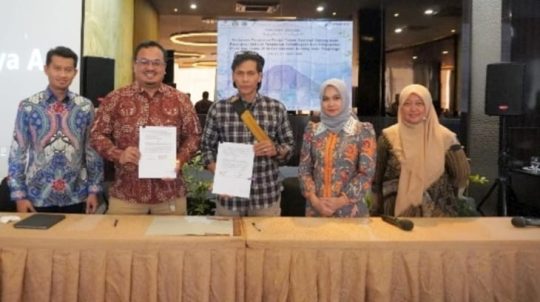
Unfortunately, its habitat is gradually shrinking. The estimated population of the Surili, classified as Endangered on the IUCN Red List, ranges from 1,000 to 6,000 individuals in the wild, drastically declining due to habitat destruction, illegal hunting, and human disturbance. Recognizing that the biodiversity crisis is an imminent challenge, a major step was taken by PT Pertamina EP (PEP) Tambun Field, which officially partnered with the Mount Gede Pangrango National Park Authority (TNGGP) to forge a stronger synergy through a joint program agreement for “Strengthening National Park Functions.”
This agreement embeds a grand mission: to bolster institutions and ensure that the flora and fauna within—especially the Surili—continue to have a safe home for the future. The Senior Manager of PEP Tambun Field emphasized that in today’s era, protecting nature can no longer be done alone.
“Current environmental challenges require cross-sector collaboration. This collaboration is a tangible form of corporations and conservation institutions uniting their visions to produce broader impacts,” said the Senior Manager.
The Senior Manager also stated the full commitment of Pertamina EP Tambun Field to supporting the TNGGP Authority through the integration of expertise and innovation, to safeguard the “green lungs” of Java.
Both parties agreed on three main pillars. First, synergy of expertise, combining human resources from industry with field knowledge from forest rangers, aiming to create a more effective ecosystem protection system for threatened species. Second, innovation and research, incorporating the latest technology and precise scientific data into every conservation step. Third, sustainable benefits, to prove the narrative that a preserved nature does not have to marginalize people.
On the contrary, a healthy forest must be able to coexist with the well-being of surrounding communities. The steps taken by Pertamina EP Tambun Field and the TNGGP Authority give new breath to conservation efforts that may have previously felt isolated. By uniting missions, efforts to protect the Surili and other biodiversity now have a stronger foundation. After all, as forest rangers often remind us, protecting Gede Pangrango is not just about trees and primates, but about preserving a dynamic legacy of life so that it can continue to be enjoyed by future generations. This collaboration proves that when energy and conservation meet, the resulting impact far exceeds the boundaries of any work map.
Mount Gede Pangrango
Mount Gede Pangrango is a twin-peaked volcano located in West Java, Indonesia, and is part of the Gunung Gede Pangrango National Park. Historically, the area has been a significant site for scientific research and conservation, with its forests being studied by Dutch colonial botanists as early as the 19th century. Today, it is a popular destination for hiking and ecotourism, offering diverse wildlife and scenic landscapes.
West Java
West Java is a province on the Indonesian island of Java, known for its rich cultural heritage and natural beauty, including volcanoes and tea plantations. Historically, it was the heartland of the Sundanese Kingdom, such as the Pajajaran Kingdom, and later became a key area during the Dutch colonial era. Today, it remains a center of Sundanese culture, with cities like Bandung playing a significant role in Indonesia’s history and development.
<
Mount Gede Pangrango
Mount Gede Pangrango is a national park and twin volcanic mountain range located in West Java, Indonesia. The area has long been ecologically significant, with its rainforests and highland ecosystems studied by famous naturalists like Alfred Russel Wallace in the 19th century. Today, it is a popular destination for hiking and conservation, known for its rich biodiversity, including the endangered Javan gibbon and the iconic Edelweiss flower.
Mount Gede Pangrango National Park (TNGGP)
Mount Gede Pangrango National Park is a protected area in West Java, Indonesia, encompassing the twin volcanoes Mount Gede and Mount Pangrango. Established in 1980, it is one of the oldest nature reserves in Indonesia, with its conservation history dating back to the Dutch colonial era when parts were designated as a botanical garden and protected forest. The park is renowned for its rich biodiversity, including the rare Javan gibbon and various endemic plants, and it offers popular hiking trails leading to its scenic crater lakes and peaks.
West Java
West Java is a province of Indonesia located on the western part of the island of Java, known for its rich cultural heritage and natural beauty, including volcanic landscapes and tea plantations. Historically, it was a center of the powerful Sunda Kingdom, which thrived from the 7th to the 16th centuries before the region came under Dutch colonial rule. Today, West Java is home to the Sundanese people, famous for their traditional arts, music, and cuisine.
Java
Java is a culturally and historically rich island in Indonesia, known for its ancient kingdoms and volcanic landscapes. It was home to powerful empires like the Hindu-Buddhist Majapahit and Mataram, which left behind iconic sites such as Borobudur and Prambanan temples. Today, Java remains the political and economic heart of Indonesia, with its capital Jakarta and vibrant traditions in art, music, and dance.
Pajajaran Kingdom
The Pajajaran Kingdom was a prominent Hindu-Buddhist kingdom that flourished in West Java, Indonesia, from the 14th to the 16th centuries, with its capital at Pakuan Pajajaran (modern-day Bogor). It is best known as the successor to the Sunda Kingdom and for its prosperous trade and cultural achievements, including the development of the Sundanese language and literature. The kingdom declined in the late 16th century due to internal strife and the expansion of the Islamic Sultanate of Banten, eventually being absorbed into the growing Islamic states of Java.
Bandung
Bandung, the capital of West Java, Indonesia, is a city known for its cool climate, colonial architecture, and vibrant arts scene. Historically, it played a key role in the 1955 Asia-Africa Conference, which marked a milestone in the Non-Aligned Movement. Today, it remains a popular destination for its cultural heritage, shopping, and natural surroundings.
Gunung Gede Pangrango National Park
Gunung Gede Pangrango National Park is a protected area in West Java, Indonesia, encompassing two volcanoes, Mount Gede and Mount Pangrango. Established in 1980, it is one of the oldest national parks in the country, originally designated as a nature reserve by the Dutch colonial government in the 19th century. The park is renowned for its rich biodiversity, including the rare Javan gibbon and the iconic Rafflesia flower, and offers popular hiking trails to its peaks and crater lakes.
Mount Gede Pangrango National Park Authority
Mount Gede Pangrango National Park, located in West Java, Indonesia, is a protected area encompassing two volcanic peaks—Mount Gede and Mount Pangrango. Established as one of the country’s first national parks in 1980, it has a rich history of conservation dating back to the Dutch colonial era when it was designated a nature reserve. The park is renowned for its diverse ecosystems, including tropical rainforests and montane forests, and is a popular destination for hiking and wildlife observation.