Bekasi –
Social media was abuzz with news about a wedding ceremony that had absolutely no decorations or catering. Even all the wedding vendors had not been paid because the wedding organizer (WO) fled without taking responsibility.
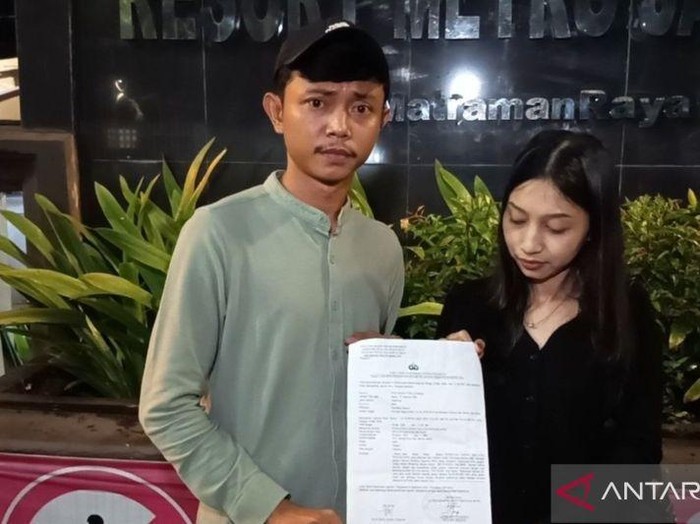
The bride and groom have now spoken out about the chronology of the alleged scam by WO Marwah. The couple who fell victim to the scam lost up to 85.5 million Indonesian rupiah.
The bride and groom, Aldi (32 years old) and Feny (32 years old), became victims of an alleged scam by wedding organizer (WO) Marwah, which has an office in the East Jakarta area. Due to this incident, they suffered material losses of tens of millions of rupiah.
“Initially, I got information from Instagram. After looking at the price list and packages, I paid a down payment first. Total loss was 85.5 million rupiah,” said Feny in Jakarta on Monday.
The Beginning: Tempted by a Promotion and Full Payment
Feny explained that she initially used the services of WO Marwah after seeing a promotion on Instagram. At that time, she was interested in the wedding package offered and then made a down payment.
After the initial payment was made, the couple attended a food tasting session held by the WO. During this event, Feny said she saw many staff working, from decoration vendors, makeup artists, a master of ceremonies, to examples of the wedding dais and buffet food.
Next, the couple underwent a wedding dress fitting process at the WO office in the Jakarta Garden City area. Payments were then made in stages until fully paid in early April 2026. They even added more guests on May 11, 2026.
Suspicion Arises and the Venue Demands Payment
Suspicion began to arise during a technical meeting held online. The meeting was considered unprofessional and very brief.
“The technical meeting was only about 10 minutes and very lacking in detail. When I asked about the rundown, the flow of entering the venue, and the division of guest sessions, everything was answered with ‘we’ll inform you one day before the event’,” explained Feny.
According to her, this condition was different from the usual wedding preparation process, which is typically done directly at the event location. Suspicion grew even stronger after Feny heard about other victims who had previously complained about the WO’s service, ranging from late catering to food quantities that did not match the order.
The peak came on May 13, 2026, about 10 days before the event. The management of the Islamic Center Bekasi contacted Feny and Aldi, informing them that the venue payment had not been fully settled by the WO.
“From the Islamic Center, the bill was still short by about 17.5 million rupiah. It turned out the WO had only paid a down payment of around 6 million rupiah,” said Feny.
Empty Office One Day Before the Wedding
The couple then tried to contact the WO repeatedly but received no clear response. Finally, on the day before the wedding, Aldi and Feny went to the WO office and found the location already empty.
“When we arrived, the gallery was already empty. People nearby said they had moved to Rorotan,” revealed Aldi.
The couple then searched for the WO warehouse in the Rorotan area. At that location, they met with the WO management, who kept giving convoluted reasons regarding the venue payment.
“We asked for payment confirmation because it was already the day before. They said the deposit hadn’t cleared yet and promised to pay at four in the afternoon,” said Aldi.
Furthermore, the WO even signed a stamped statement letter regarding responsibility for the event’s execution. However, after that, the WO owner left the location, citing other