Bekasi City Police Uncover 80 Drug Cases, 98 Suspects Charged
Bekasi City –
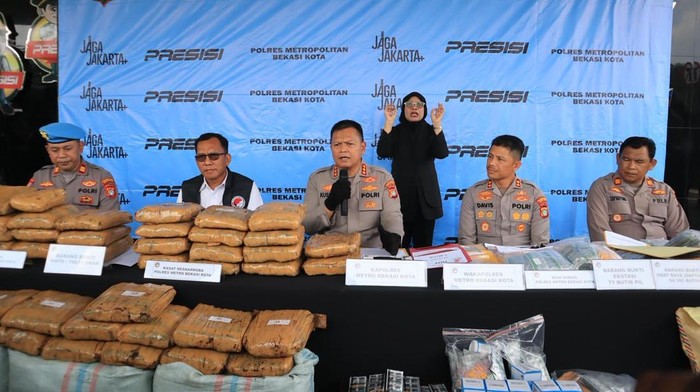
The police have uncovered 80 drug cases since the beginning of 2026. A total of 98 people have been named as suspects in cases of drug trafficking and abuse.
The Bekasi Metro City Police Chief stated that the number consists of 31 narcotics cases and 49 cases of trafficking hard or dangerous drugs without a permit. He emphasized a strong commitment to eradicating the illicit trafficking of narcotics and dangerous drugs within their jurisdiction.
“We will not compromise on any form of narcotics and dangerous drug trafficking. We need the active role of the community to report if they see anything suspicious,” he said.
Of the 98 people who have been named as suspects, 37 are suspects related to narcotics cases and 61 people are involved in dangerous hard drug cases.
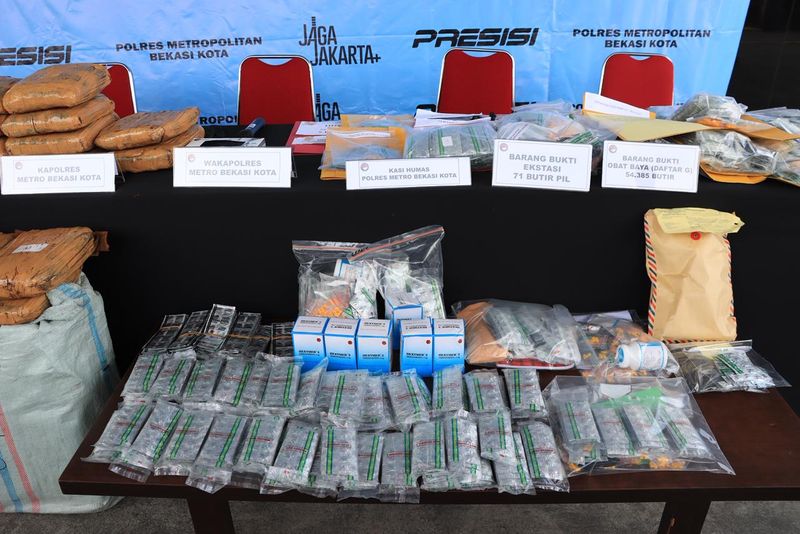
During operations conducted over four months, the Bekasi Metro City Police seized evidence of dozens of kilograms (kg) of narcotics of various types. The evidence includes 45 kg of marijuana, 883.65 grams of crystal methamphetamine, 71 ecstasy pills, 759.55 grams of synthetic tobacco (gorilla), and 271,680 hard drug pills.
“If calculated, this disclosure is estimated to have saved more than 62 thousand lives,” he explained.
He mentioned that the areas with the highest rates of drug case disclosures are in the districts of West Bekasi, East Bekasi, Pondok Gede, Jatisampurna, and South Bekasi.
He revealed a change in the trend or modus operandi of perpetrators in the field. If previously trafficking was often done conventionally through stalls or rented shops, now perpetrators are increasingly using cash on delivery (COD) or drop-off systems.
“Perpetrators can come directly to the buyer or vice versa, goods are placed at a location to then be picked up by the buyer. This presents a new challenge for us, but we continue to adapt our disclosure strategies,” he added.
The Bekasi Metro City Police stated they will not give the slightest room to traffickers. They also invited the public to play an active role in providing information.
For their actions, narcotics suspects are charged under Law Number 35 of 2009 concerning Narcotics with a maximum threat of 20 years in prison. Meanwhile, perpetrators of illegal hard drug cases are subject to Law Number 17 of 2023 concerning Health, with a criminal threat of up to 12 years in prison.
The press conference was also attended by the Deputy Police Chief, the Head of the Narcotics Investigation Unit, the Head of Public Relations, the Head of Professional and Security Division, as well as Unit and Sub-unit Heads of Narcotics from the police force.
Bekasi City
Bekasi is a city in West Java, Indonesia, located on the eastern border of the capital, Jakarta. Historically, it was part of the 5th-century Tarumanagara Kingdom, with evidence like the 5th-century **Bekasi Inscription** (Prasasti Kebon Kopi) found in the area. Today, it is a major industrial and residential satellite city, experiencing rapid modern development as part of the Jakarta metropolitan region.
West Bekasi
West Bekasi is a district within Bekasi City, located in West Java, Indonesia, which has rapidly transformed from agricultural land into a major industrial and densely populated residential suburb of Jakarta since the late 20th century. Its history is closely tied to the expansion of the Indonesian capital, with significant development driven by industrialization and the need for housing for commuters working in Jakarta. Today, it is characterized by factories, housing estates, and bustling commercial areas, reflecting its role in the broader Jabodetabek metropolitan region.
East Bekasi
East Bekasi is a district within the city of Bekasi, located on the eastern outskirts of Jakarta, Indonesia. Historically, the area was part of the larger Bekasi Regency, known for its agricultural land, before rapid urbanization integrated it into the Jakarta metropolitan area as a major residential and industrial suburb. Today, it is characterized by dense housing complexes, factories, and commercial centers, reflecting its transformation from rural hinterland to a key part of the capital’s urban sprawl.
Pondok Gede
“Pondok Gede” is a common place name in Indonesia, most notably referring to a major suburban area in Bekasi, West Java. Historically, the name translates to “Big Cottage” and is often associated with a large 18th-century estate and plantation house owned by the Dutch landlord Cornelis Chastelein. Today, it is a densely populated district known for its transportation hub, the Pondok Gede Station, and its integration into the Jakarta metropolitan area.
Jatisampurna
Jatisampurna is a district (kecamatan) located within the city of Bekasi, West Java, Indonesia. Historically, the area was part of Bekasi’s broader development from agricultural land into a significant industrial and residential suburb of Jakarta. Its name reflects its modern administrative establishment as the city expanded.
South Bekasi
South Bekasi is a district within the city of Bekasi, located in West Java, Indonesia. Historically, the broader Bekasi region was part of the ancient Tarumanagara kingdom and later developed from agricultural lands into a major industrial and residential suburb of Jakarta. Today, it is characterized by dense housing complexes, factories, and commercial areas, serving as a key commuter zone for the capital.