For many women today, emancipation does not always come in the form of obvious, grand struggles. Instead, it lives in the small, daily decisions—from how they think, to how they fulfill their roles, to how they express themselves, including in simple matters like dressing.
However, behind this seemingly growing freedom, the reality is not always that simple. Modern women still coexist with various social expectations that are often invisible, yet continuously influence how they present themselves, behave, and even judge themselves.
The actress is often seen as a figure representing women who dare to stand by their own choices. For her, emancipation is not an abstract concept, but the most essential freedom: self-determination.
In the spirit of Kartini Day, the conversation with Tara Basro once again highlights the meaning of women’s emancipation, which has evolved from mere access to freedom in making everyday life choices.
Tara revealed that her understanding of emancipation came from a personal journey. If women’s struggles were once often linked to access to education or careers, the challenges now come in more subtle forms, such as social standards about the “ideal version” of a woman.
“There was a time when I felt I had to be a certain version to be accepted. And that was exhausting, because it didn’t feel like the real me,” said Tara.
That experience led her on a long journey toward self-acceptance. She realized that self-confidence does not come from meeting others’ expectations, but from the courage to choose her own path.
“At one point, I learned that we don’t always have to follow what others consider ‘right.’ It’s when we start choosing for ourselves that we find a more real sense of confidence,” she continued.
For Tara, emancipation does not always have to come in a big form. Instead, it lives in the small decisions made every day.
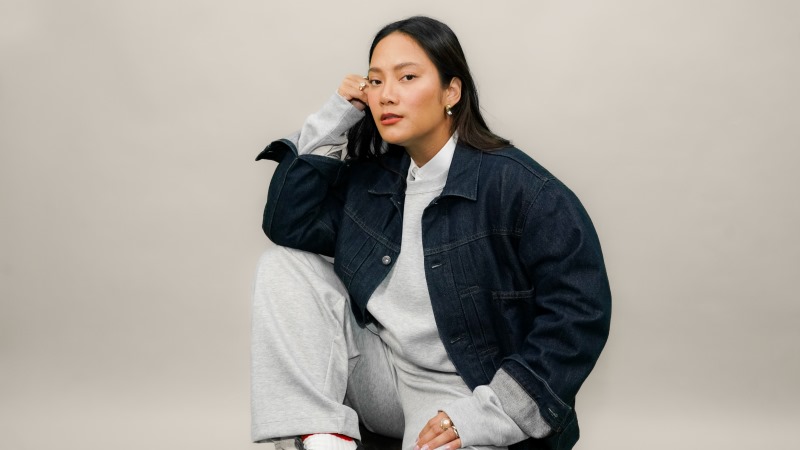
In her daily life, Tara sees freedom of expression also reflected in the way she dresses. Outfits, according to her, are not just about appearance, but part of how someone takes control of themselves.
“Now my focus is just one thing: comfort. I choose simple things, what I’m comfortable wearing, what feels most honest to myself,” she said.
Tara’s style is known for prioritizing comfort, flexibility, and ease of movement. She often combines light layering with relaxed silhouettes and easily mix-and-matched items, creating a look that feels effortless yet still personal.
This approach aligns with the LifeWear philosophy from Uniqlo, which offers functional and flexible clothing, allowing women to move more freely without losing their identity.
In this moment, Tara also shared style inspiration that reflects freedom of expression. In a light layering look, she paired a boxy denim shirt, a short-sleeve Oxford shirt, and light blue denim shorts. This style gives a casual, playful yet neat impression, while supporting freedom of movement.
In another look, Tara presented a pairing with a bolder contrast through brown barrel pants, an oversized shirt, and a red sweater as an accent. This look shows how self-expression can remain strong without sacrificing comfort.
Meanwhile, a relaxed style with layering a white shirt, an oversized sweater, a denim jacket, and loose-fit pants gives a calm, spacious feel, close to the daily life of modern women.
For Tara, comfort is a key foundation in building confidence. “If I’m comfortable, I’m more confident. It’s that simple. Because when we feel comfortable, we’re no longer trying to be the version others want,” she said.
She added that when someone wears something that feels honest to themselves, confidence comes naturally and makes them braver to live the day in their own way.
In the end, Tara’s journey reflects the spirit of today’s Kartini. Emancipation is not just about opening the path, but about the courage to walk on the path you choose yourself.
“In my opinion, today’s Kartini is a woman who dares to choose for herself. Doesn’t have to be perfect, doesn’t need to chase others’ standards. You are beautiful, you are enough,” she said.