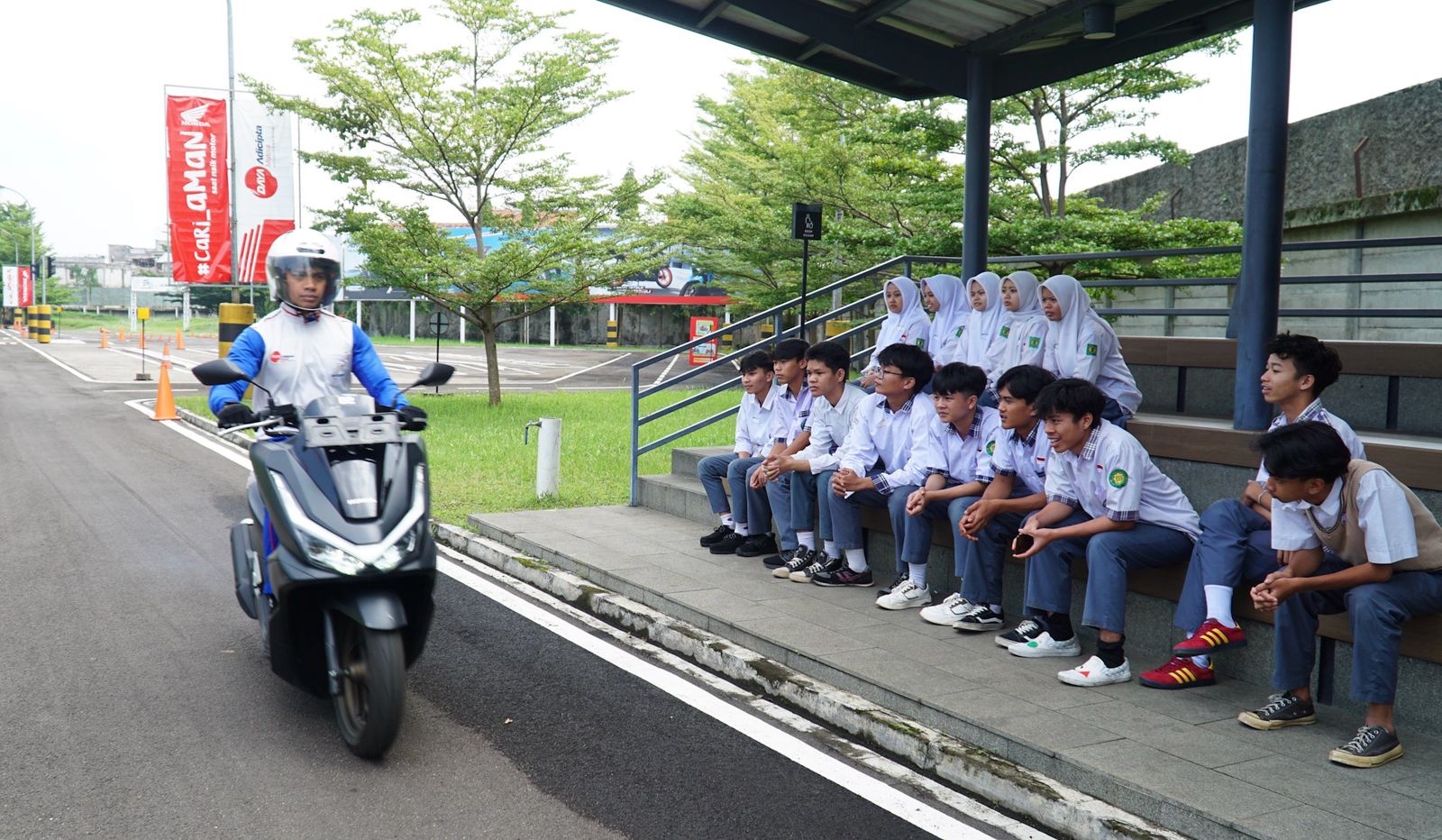
The ability to perform quick braking or reaction braking in emergency situations is one of the basic skills every motorcyclist must have. Unlike normal braking, which is done gradually to adjust speed, reaction braking is performed quickly when a rider faces a sudden potential danger on the road.
This technique is crucial because improper braking can increase the risk of accidents, such as wheel lock-up, skidding, loss of balance, or collisions. Therefore, understanding and practicing reaction braking is an important part of building safe and skilled riding abilities.
Here are some basic steps to perform reaction braking correctly:
1. Stay Calm and Focused
When facing an emergency situation, avoid panic. Keep the motorcycle straight, maintain a stable body position, and focus your gaze forward to read road conditions and determine the correct braking action.
2. Quickly Release the Throttle
Immediately release the throttle before braking to optimally reduce vehicle speed and make braking more effective.
3. Use Both Front and Rear Brakes Together
Apply both brakes proportionally with gradual pressure. The front brake provides the main braking force, while the rear brake helps maintain vehicle balance.
4. Utilize ABS Feature If Available
On motorcycles equipped with an Anti-lock Braking System (ABS), riders can brake more effectively without worrying about wheel lock-up. However, basic braking techniques must still be well understood.
5. Maintain Body Position
During hard braking, keep your body stable and slightly shift your weight backward to help maintain the motorcycle’s balance.
6. Pay Attention to Road Conditions
Avoid sudden braking on slippery, sandy, or potholed roads. Adjust your braking technique to the road surface conditions to minimize the risk of skidding.
7. Practice Regularly
Reaction braking needs to be practiced regularly in a safe area so that riders become accustomed to responding to emergency situations correctly and without panic.
Besides mastering braking techniques, riders also need to avoid common mistakes such as pulling the brakes abruptly, panicking when the wheels lock, or braking hard while the motorcycle is turning.
Safety Riding Development Section Head emphasized that emergency braking skills should be an important part of every rider’s basic abilities.
“Reaction braking is not just about how fast the motorcycle stops, but how the rider is able to control the vehicle correctly in an emergency situation. With the right technique and regular practice, accident risk can be significantly minimized,” he said.
Mastering reaction braking is not only about stopping the vehicle, but also part of efforts to improve the safety of oneself and other road users. Always prioritize vigilance, maintain riding ethics, and apply the spirit of #Cari_Aman so that every journey remains safe, comfortable, and arrives safely at the destination.