Samosa Capital of India: If it is said that samosa is India’s favorite snack. Whether to satisfy a light hunger, throw a small party, or treat someone, the first name that comes to people’s minds is samosa. Then, that’s it. They go to a nearby stall or order online. With that, the samosa party begins. Eating a hot samosa with a sip of tea feels like the soul is satisfied.
Where are the most samosas eaten in India?
But do you know in which city 60 million samosas are eaten daily in India? That city is not just crazy about samosas, it is insanely obsessed. Even foreign tourists visiting that city cannot stop themselves from tasting a samosa. That is why that city is called not just India’s, but the world’s samosa capital. The fun part is that this same city also has the world’s largest samosa, which 4-5 people can eat together to satisfy their hunger. Let’s find out which amazing city in India this is.
According to the National Restaurant Association of India (NRSI), in terms of consumption and varieties, Delhi is the world’s samosa capital. In this city, about 60 million samosas are eaten daily, the highest in the entire world. On average, every person here orders a samosa several times a month and satisfies their hunger by enjoying this delicious dish. Areas like Chandni Chowk, Connaught Place, Lajpat Nagar, Moti Nagar, and Paharganj are samosa hubs. There, samosa sales continue 24 hours a day.
Number 1 in terms of varieties as well
Not only are the most samosas sold in Delhi, but there are also dozens of varieties of samosas available here. According to NRSI, more than 50 varieties of samosas are available in Delhi. You might be surprised to hear about so many varieties, but it is true. In Delhi, you can buy potato-pea, keema, paneer, Japanese (crispy layers), pizza, noodles, chili cheese, sweet mawa, mini, and giant samosas.
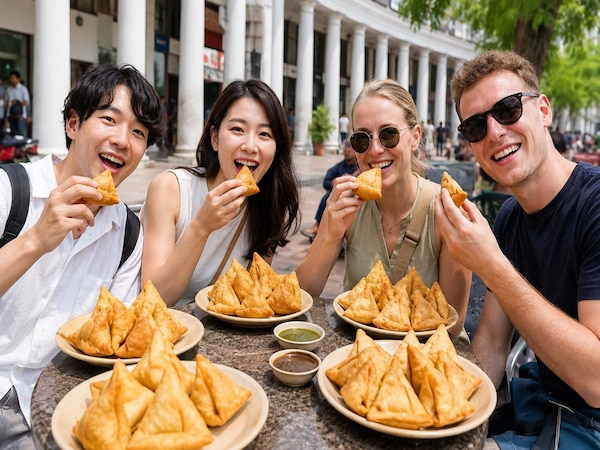
In Chandni Chowk and Connaught Place, Japanese, Korean, American, and European tourists can be seen enjoying samosa-chai in the name of India’s best street food. There, many shops serve 25-30 unique samosa flavors. For all these reasons, many international food bloggers call Delhi a “samosa heaven.”
Is the world’s largest samosa available?
Delhi also has the world’s largest samosa, which is called a giant or jumbo samosa. It is 4-5 times larger than a regular samosa. It is generously filled with potato-pea, paneer, or dry fruits. 3-4 people can easily satisfy their hunger by eating one giant samosa. It is crispy, spicy, and huge in size. This samosa is available at a restaurant in Connaught Place. It is called Delhi’s most famous giant samosa. You can buy it for 80-120 rupees per piece. Long lines form here of both tourists and locals.
In Daryaganj, a giant samosa is available, which is quite large in size. This samosa is filled with nuts and dried fruits, and tasty flavors are also added to it. This samosa is sold for 200-300 rupees per piece.
A business worth more than 20,000 crore rupees
The special thing is that the samosa is not just limited to eating and drinking. It is also making a significant contribution to the economy of Delhi and the country. The samosa market across India is worth more than 20,000 crore rupees. In Delhi alone, thousands of street vendors, small shops, and QSR outlets are open selling samosas. If estimated, the average monthly income of a samosa vendor can range from 50,000 rupees to 1 lakh rupees. This snack provides direct and indirect employment to millions of people, supporting their families’ livelihoods.
This is why whenever a foreigner comes to visit India, the first thing they ask is where to find the best samosa.