-
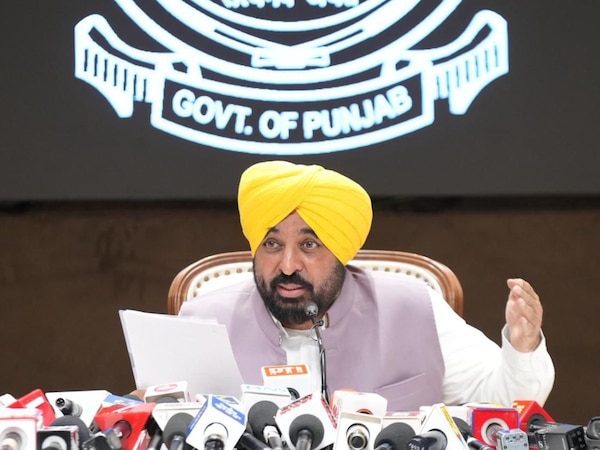
In Punjab, the Bhagwant Mann government has made a historic decision by imposing a ban on arbitrary fee hikes in schools. The Chief Minister stated that a cap of 5% has been placed on annual fee increases. Schools that have charged more than 5% in the past three years will have to refund the excess fees. Additionally, strict penalties and provisions for canceling school recognition have been introduced.
The Mann government will present this toughest law in the country against arbitrary fee increases by private schools in the upcoming assembly session. This law will apply to all private schools in Punjab. Importantly, this 5% cap applies not only to tuition fees but also to all mandatory expenses and funds collected by schools, closing all loopholes that institutions often use to burden parents with extra costs. Blaming the unchecked fee hikes on amendments made by the previous Congress government in 2019, the Chief Minister claimed that the new law will restore accountability in the education sector, protect parents from exploitation, and permanently eliminate the mental distress faced by children and families over school fees.
On ‘X’, Mann wrote that after the tragic incident in Amritsar, he received hundreds of calls from parents over the past 24 hours regarding arbitrary fee increases by private schools. Considering the future of our children and the distress parents are facing, your government has made a very important and strict decision. No private school in Punjab will now be allowed to increase annual fees by more than 5%. Schools that have raised fees by more than 15% in the last three years must immediately refund the extra amount collected from parents. To implement this decision effectively, we will soon bring an ordinance. The 5% cap will apply not only to tuition fees but will also cover all other mandatory funds and expenses collected by schools. This will be the strictest regulation of its kind in the country, and no school will be given any exemption. Exploitation of parents and students in the name of education in Punjab will no longer be tolerated.
Speaking to the media, the Chief Minister said that the fee structure of private unaided schools currently falls under the ‘Punjab Regulation of Fees of Unaided Educational Institutions Act, 2016’, which was amended in 2019, but previous governments failed to implement the law effectively. This allowed schools to openly burden parents with fee increases.
The original 2016 act clearly stipulated that fee increases should not exceed 8% of the previous year’s fees, but amendments made by the previous government weakened this system. The 2019 amendment allowed schools to increase fees beyond the set limit through a ‘disclosure mechanism’, which required schools to publicly display proposed fee increases on school notice boards, school websites, and the school education department’s website before the admission process began.
The Chief Minister said that all pending complaints related to fee increases will now be investigated and acted upon. He stated that the regulatory body will closely monitor excessive fee hikes and ensure that any fee increase is justified based on actual expenses or developmental activities and does not result in profiteering. This body will also ensure that funds collected from students are not used for any other purpose.
The proposed ordinance is based on the ‘Punjab Regulation of Fees of Unaided Educational Institutions Act, 2016’, which regulates the fee structure in private unaided schools in Punjab. Although this act allows schools to set their own fees, it clearly prohibits profiteering and the collection of capitation fees.
Parents already have the legal right to challenge fee increases before the district-level regulatory body. Under the current law, complaints must be investigated within 15 days of receipt, and a decision must be made within 60 days. The regulatory body has powers equivalent to a civil court when investigating cases. This body is headed by the district’s Deputy Commissioner (DC) or Additional Deputy Commissioner (ADC) and includes the District Education Officer (Secondary) as a member secretary, along with two nominated members.
The law also grants the regulatory body significant monitoring powers. This body is authorized to ensure that the fee structure of schools remains within reasonable limits, prevent profiteering, investigate excessive fee increases, determine whether increases are justified due to higher expenses or developmental activities, and ensure that money collected from students is not used for non-educational
Amritsar
Amritsar is a historic city in the Indian state of Punjab, best known as the spiritual and cultural center of Sikhism. Its most famous site is the Golden Temple (Harmandir Sahib), a stunning gurdwara built in the 16th century around a sacred pool, which was later rebuilt in the 18th century after being destroyed by Afghan invaders. The city also holds deep historical significance as the site of the 1919 Jallianwala Bagh massacre, a tragic event in India’s struggle for independence.Punjab
Punjab is a region in South Asia, divided between India and Pakistan, known for its rich cultural heritage and as the birthplace of Sikhism. Historically, it was a major center of the Indus Valley Civilization, later shaped by the Mughal Empire and the rise of the Sikh Empire under Maharaja Ranjit Singh in the 19th century. Today, it is celebrated for its vibrant traditions, including Bhangra music, Punjabi cuisine, and the iconic Golden Temple in Amritsar.