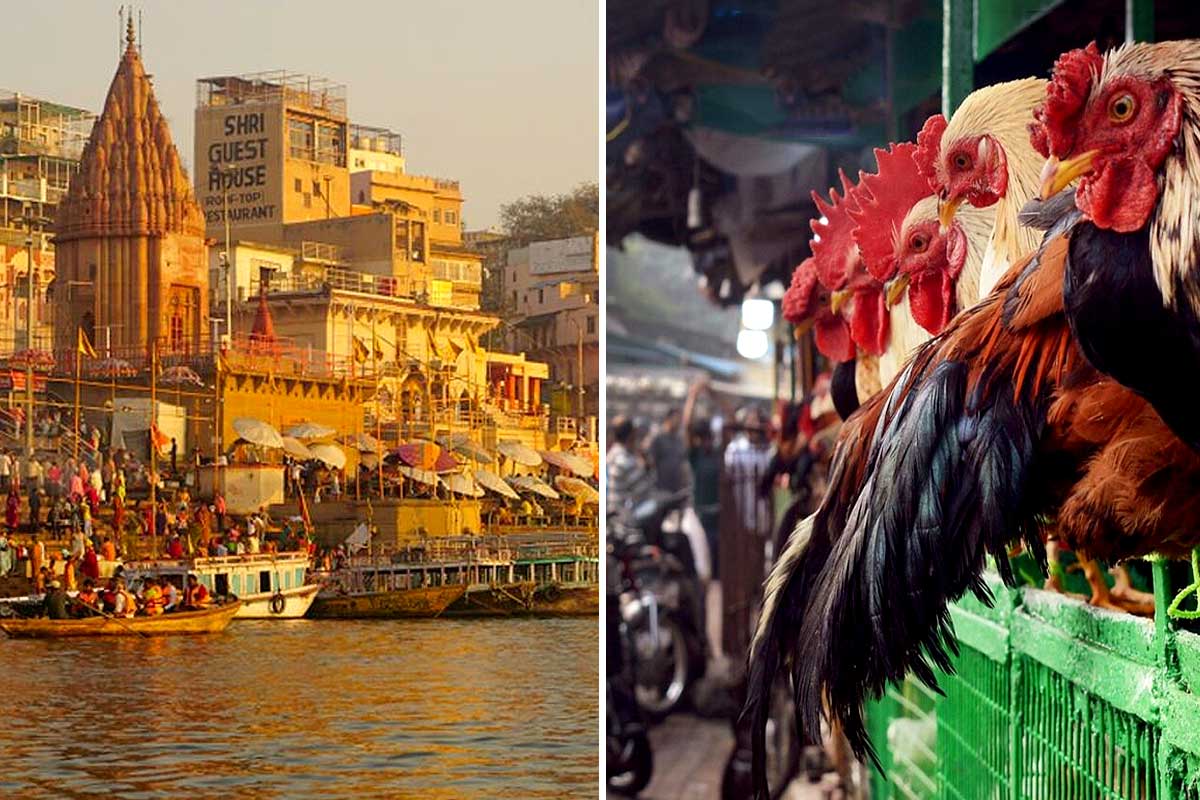
Recently, the Varanasi Municipal Corporation held a meeting led by the Mayor. There, the proposal to remove fish and meat shops from the city was finalized.
In the film ‘Joy Baba Felunath’ directed by Satyajit Ray, Feluda said that Varanasi is the second home for Bengalis. On one hand, Bengalis would settle in the city of Kashi Vishwanath for scholarship and spiritual practice, and on the other, there was a tradition of Bengali widows becoming residents of Kashi. Although not in as large numbers as before, a few thousand Bengalis still live in this historic city. Now, there will be no fish shops there. Meat shops will also be moved outside the main city. The Varanasi Municipal Corporation has already sealed this proposal. Fish and meat traders and connoisseurs in the city are worried.
Recently, the Varanasi Municipal Corporation held a meeting led by the Mayor. There, the proposal to remove fish and meat shops from the city was finalized. Top officials of the corporation claim that the work will begin within the next few days. Municipal Commissioner Himanshu Nagpal informed that five locations have been identified for the initial phase of the project. To minimize inconvenience to residents, these locations have been chosen outside the city but near its boundaries.
According to the plan, the meat and fish shops currently operating within the city limits will be relocated to specific areas in Ramnagar, Sujabad, Ganeshpur, Abaleshpur, and Shivpur. Officials claim that this step aims to improve city management, cleanliness, and traffic systems. Varanasi Municipal Corporation officials believe that relocating fish and meat shops outside densely populated areas will streamline municipal services.
Notably, the Prime Minister himself is the Member of Parliament for Varanasi city. The Kashi Vishwanath Temple and the Ganga ghats have already been renovated. Organized morning and evening aartis have begun. The appearance of one of India’s most important pilgrimage sites has virtually changed. Ancient Kashi or modern Varanasi has become even more attractive for tourists. Now, the local municipal corporation has decided to make the city of Vishwanath free of non-vegetarian food.
Varanasi
Varanasi, one of the world’s oldest continuously inhabited cities, is a major spiritual hub in India, located on the banks of the Ganges River. Revered in Hinduism, Buddhism, and Jainism, its history spans over 3,000 years, serving as a center of learning, culture, and pilgrimage. The city is famous for its ghats, where ritual bathing and cremation ceremonies take place, reflecting its deep connection to life, death, and spiritual liberation.
Kashi Vishwanath Temple
The Kashi Vishwanath Temple is a revered Hindu temple dedicated to Lord Shiva, located in Varanasi, India, on the banks of the Ganges River. Its history dates back thousands of years, with the current structure built in 1780 by Queen Ahilya Bai Holkar of Indore, though the original temple has been destroyed and rebuilt multiple times by various rulers, including Mughal emperor Aurangzeb. It is one of the twelve Jyotirlingas, making it a major pilgrimage site where devotees believe a visit can grant liberation from the cycle of rebirth.
Ganga ghats
The Ganga ghats are a series of steps leading down to the Ganges River, primarily located in Varanasi, India. These ancient riverfront sites have been a center of Hindu spiritual life for millennia, serving as places for ritual bathing, prayer, and cremation ceremonies. Their history is deeply intertwined with the city’s religious significance, with many ghats being built and renovated by various rulers and dynasties over centuries.
Ramnagar
Ramnagar is a historic town located on the eastern bank of the Ganges River, opposite the holy city of Varanasi in India. It is best known for the Ramnagar Fort, built in the 18th century by the Maharaja of Banaras, which houses a museum displaying vintage cars, royal artifacts, and a unique collection of medieval weapons. The town is also famous for its vibrant Ramlila performances during the Dussehra festival, a tradition dating back over 200 years.
Sujabad
Sujabad is a historic neighborhood in the city of Multan, Pakistan, known for its rich cultural heritage and association with Sufi traditions. It is named after the saint Syed Muhammad Sujabad, whose shrine remains a spiritual landmark in the area. The site reflects centuries of Islamic influence and serves as a center for religious gatherings and local festivities.
Ganeshpur
Ganeshpur is a village or locality found in several parts of India, most notably in the state of Maharashtra, often associated with temples dedicated to Lord Ganesha. The name itself reflects its cultural significance, as “Ganeshpur” means “town of Ganesha,” indicating a historical connection to the worship of the elephant-headed deity. While specific historical records vary by location, these places typically developed as religious settlements, with local legends linking their origins to ancient Hindu traditions and the establishment of temples centuries ago.
Abaleshpur
Abaleshpur is a village in the Indian state of West Bengal, located within the Howrah district. Historically, it is part of the region’s rural landscape, with its development closely tied to agriculture and local zamindari estates during the British colonial period. Today, it remains a small community where traditional Bengali culture and rural life continue to thrive.
Shivpur
Shivpur is a neighborhood in the city of Varanasi, Uttar Pradesh, India, known for its religious and cultural significance. Historically, it is believed to be associated with Lord Shiva, reflecting the deep-rooted Hindu traditions of the region. Today, it is a residential and commercial area that blends ancient spiritual heritage with modern urban life.