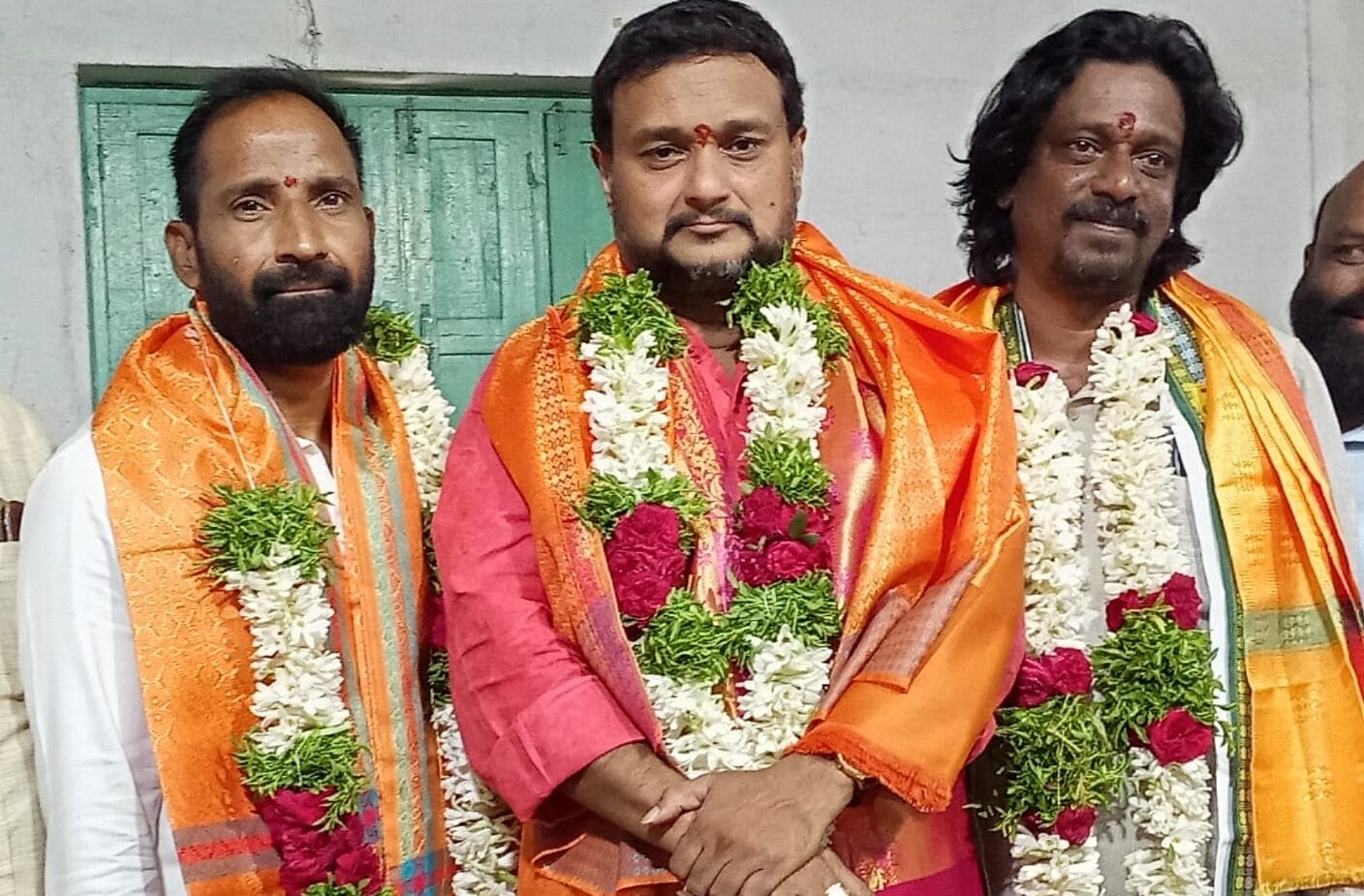
G. Arvind Kumar Goud has been appointed as the new chairman of Singhavahini Sri Mahankali Temple.
Hyderabad, with the aim of celebrating the sacred Bonalu festival, the Telangana state festival held with grandeur in the month of Ashadha, with splendor this year as well, the new management committee of the historic Singhavahini Sri Mahankali Temple at Lal Darwaza in the old city has elected G. Arvind Kumar Goud as its Chairman.
According to information provided by the temple committee, during an executive meeting held today at the Shivaparvati Function Hall at Lal Darwaza under the chairmanship of temple committee president G. Kashinath Goud, the office bearers unanimously elected G. Arvind Kumar Goud as the new president. Additionally, Posani Satish Mudiraj was chosen as General Secretary and Harish Goud as Treasurer.
New president G. Arvind Goud stated that the Bonalu festival will be celebrated in the old city on the upcoming 9th of August, and on Monday, the 10th of August, a grand procession of the mother goddess’s pots will be taken out. He mentioned that in the next meeting soon, the names of other committee office bearers will be announced to ensure the smooth and successful conduct of Bonalu. On the occasion, former temple committee chairman Lakshminarayana Goud, K. Venkatesh, Badrinath Goud, C. Shivakumar Yadav, Posani Surender Mudiraj, along with other committee members and local residents, were present.
Singhavahini Sri Mahankali Temple
The Singhavahini Sri Mahankali Temple is a prominent Hindu temple located in Hyderabad, India, dedicated to the goddess Mahankali, a fierce form of the Divine Mother. Its history traces back to the early 19th century, when it was built by the Nizam’s courtiers, and it is particularly famous for its annual Bonalu festival, during which the goddess is worshipped with vibrant processions and offerings. The temple’s name, meaning “the one who rides a lion,” reflects the goddess’s iconography as a powerful deity mounted on a lion.
Lal Darwaza
Lal Darwaza, meaning “Red Gate,” is a historic gateway located in Ahmedabad, India, built in the 15th century during the reign of Sultan Mahmud Begada. It served as one of the principal entrances to the royal citadel, reflecting the city’s rich Islamic architectural heritage. Today, it stands as a notable landmark, surrounded by bustling markets and bearing witness to Ahmedabad’s layered history.
Shivaparvati Function Hall
Shivaparvati Function Hall is a popular event venue, often used for weddings, receptions, and cultural celebrations, particularly within Hindu communities. Named after the divine couple Shiva and Parvati, the hall reflects traditional Indian aesthetics and is designed to host large gatherings with modern amenities. While specific historical details about the venue itself may be limited, its name and function are deeply rooted in the cultural and religious heritage of India.
Singhavahini Sri Mahankali Temple
The Singhavahini Sri Mahankali Temple, located in Secunderabad, India, is a prominent Hindu temple dedicated
Singhavahini Sri Mahankali Temple
The Singhavahini Sri Mahankali Temple is a prominent Hindu temple located in Hyderabad, India, dedicated to the goddess Mahankali, a fierce form of Shakti. Its history dates back to the early 19th century, when it was established by the local Marwari community, and the temple’s name “Singhavahini” refers to the goddess riding a lion. It remains a significant spiritual and cultural hub, especially during the annual Bonalu festival.
Lal Darwaza
Lal Darwaza, meaning “Red Gate,” is a historic gateway located in Ahmedabad, India, built in 1414 by Sultan Ahmad Shah I as part of the Bhadra Fort complex. It served as the main entrance to the royal citadel and was originally adorned with red sandstone, reflecting the architectural style of the Gujarat Sultanate. Today, it stands as a prominent landmark, symbolizing the city’s medieval heritage and strategic importance.
Shivaparvati Function Hall
Shivaparvati Function Hall is a wedding and event venue located in India, typically associated with hosting religious and cultural ceremonies. Its name honors the Hindu deities Shiva and Parvati, reflecting a spiritual theme often incorporated into its services. While specific historical details about the hall may vary by location, it generally serves as a modern space rooted in traditional Indian customs for celebrations like weddings and festivals.