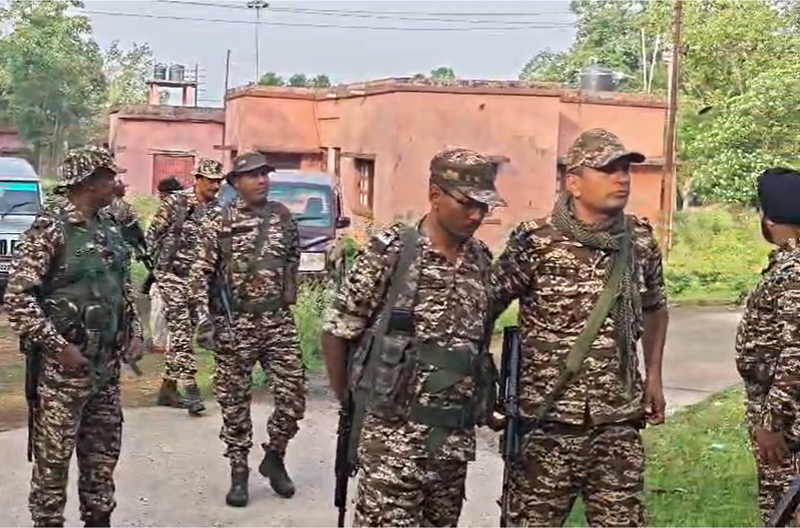
A primary health center in Puncha block, Purulia turned into a battlefield following the death of a child bitten by a snake, with allegations of negligence in treatment. An angry crowd surrounded the female doctor on duty, dragged her to the block health officer’s quarters, and staged a massive protest. The situation escalated so far that central forces had to be deployed on site. The agitated crowd then blocked the Manbazar-Lalpur road, demanding the removal of the Block Medical Officer and Health Manager and punishment for the doctor on duty. Senior health department officials rushed from the district headquarters. The Deputy Chief Health Officer of the district stated that after receiving the complaint, all information has been collected. The family of the deceased child has also filed a complaint. The entire matter will be reported to the Chief Health Officer of the district. According to sources from the district health department, the Block Medical Officer of Health of Puncha block primary health center has been issued a show-cause notice. The blockade was lifted after about five and a half hours following the intervention of senior officials.
It was reported that on Friday night, a seven-year-old child from Hathihar village in Puncha block was bitten by a snake while sleeping on a bed. The child’s father said that he was sleeping on the bed with one son and one daughter. Suddenly, his son woke up and said he had been bitten by a snake. Within ten minutes of speaking, he took his child from home and reached the Puncha block primary health center. The allegation is that no treatment was provided there. The complaint states that the child was left at the hospital for two long hours from 11 PM to 1 AM without any treatment. The family claims that the child died due to the extreme negligence and carelessness of the doctor. Although the antivenom was administered much later, the patient could not be saved.
As news of the child’s death spread, family members and local residents erupted in anger. People gathered in large numbers at the hospital premises. The agitated crowd first surrounded the doctor on duty and began a massive protest. When the tension reached its peak, the female doctor was practically dragged to the BMOH’s quarters located in the hospital premises. The angry crowd questioned why the BMOH himself did not come to supervise the child’s treatment despite knowing about such a major incident. The BMOH stated that the patient arrived around 11:10 PM. He learned about it at 12:45 AM. He came immediately after knowing. The accused doctor said that family members came and said their patient had been bitten by a snake. The patient was immediately kept under observation. As soon as breathing difficulties started, saline, oxygen, and ten vials of AVS were administered. Despite this, the patient could not be saved. Local people claim there are multiple allegations against the BMOH. Despite multiple complaints against him, no action has been taken.
Puncha block
Puncha block is a community development block located in the Purulia district of West Bengal, India. Historically, this region was part of the ancient kingdom of Manbhum and later came under British administration, with its economy traditionally based on agriculture and forest resources. Today, it is known for its rural landscape, tribal communities, and efforts toward development and education.
Purulia
Purulia is a district in the Indian state of West Bengal, known for its rich cultural heritage and natural beauty. Historically, it was part of the ancient kingdom of Manbhum and later came under British rule, with its tribal communities contributing to vibrant folk traditions like the Chhau dance and Jhumur songs. Today, it attracts visitors for its scenic landscapes, temples, and the annual Purulia Chhau festival.
Manbazar-Lalpur road
The Manbazar-Lalpur road is a rural roadway in the Purulia district of West Bengal, India, connecting the town of Manbazar with Lalpur. Historically, this area was part of the ancient kingdom of Manbhum and later saw influence from the Maratha raids during the 18th century. Today, the road serves as a vital link for local communities, facilitating trade and access to nearby cultural sites such as the historic Panchkot Raj palace ruins.
Puncha block primary health center
Puncha Block Primary Health Center is a rural healthcare facility located in the Purulia district of West Bengal, India. Established as part of India’s primary healthcare network, it serves the local population with essential medical services, including maternal and child care, immunization, and treatment for common illnesses. The center plays a vital role in addressing the health needs of the Puncha block community, particularly in an area where access to advanced medical facilities is limited.
Hathihar village
Hathihar village, located in the Vaishali district of Bihar, India, is historically significant as the birthplace of the 24th Jain Tirthankara, Lord Mahavira, according to some traditions. It is home to ancient Jain temples and archaeological remains that reflect its cultural and religious heritage. The village continues to be an important pilgrimage site for Jains and a place of historical interest in the region.
Block Medical Officer of Health (BMOH) quarters
The Block Medical Officer of Health (BMOH) quarters refer to residential accommodations historically provided for public health officials at the block level in India. These quarters were part of the colonial and post-independence healthcare infrastructure, housing officers responsible for overseeing disease control, sanitation, and primary health services in rural areas. Today, many of these buildings remain as heritage structures or continue to serve as government residences.
District headquarters
A district headquarters is the administrative center of a district, serving as the seat of local government and key public services. Historically, these locations were established to centralize governance, often evolving from colonial administrative posts or traditional regional capitals. Today, they typically house the district magistrate’s office, courts, and other civic facilities, acting as a hub for regional coordination and development.
Chief Health Officer of the district
The “Chief Health Officer” is not a specific place or cultural site, but rather a public health official role. This position typically involves overseeing health policies, disease prevention, and emergency response within a district. Historically, such roles emerged in the 19th and 20th centuries as governments formalized public health systems to manage epidemics and improve community well-being.