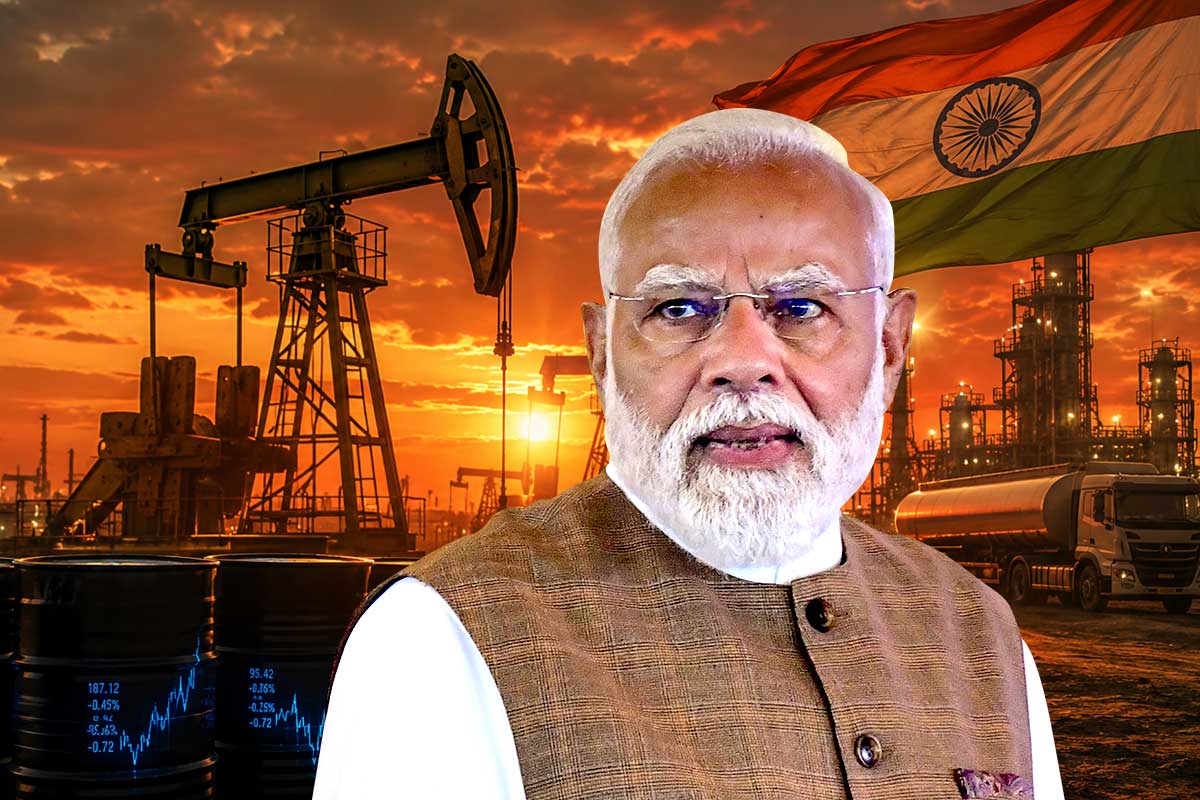
The prolonged conflict in West Asia has caused global fuel concerns. In this situation, the central government stated on Monday that there is no fuel shortage in India. The government has also made it clear that India is prepared to handle any kind of problem. If the conflict stops, the supply will return to normal within four to five days.
A meeting of the parliamentary standing committee on transport, tourism, and culture was held on Monday. Senior officials from the Ministry of Ports, Shipping and Waterways were present. There was a long discussion about the emerging crisis in West Asia. According to sources, central officials told the committee that despite growing instability, there is no crisis in the country’s fuel supply. Government representatives said that India currently has fuel reserves for more than 78 days, which will provide significant protection during prolonged problems.
According to sources, the issue of fertilizer imports was also raised in the meeting. This is because India imports more than 30 percent of its fertilizers through the Strait of Hormuz. Government officials assured that alternative arrangements and routes have been opened to maintain the fertilizer supply. Sources said that to deal with the crisis, the central government’s strategy currently depends on three things: maintaining strategic reserves, diversifying import sources, and ensuring coordination among the ministries of shipping, fuel, trade, and diplomacy.
Meanwhile, due to the Iran war and the Hormuz crisis, the price of crude oil has increased worldwide. In this situation, oil companies have been pressuring the government to increase the price of fuel in the country for a long time. After the election season ended, the government decided to increase the price, and it is being raised in phases. However, increasing fuel prices not only raises transportation costs but also has a major impact on the overall cost of living. Along with fuel, the prices of milk and bread have already increased.
Strait of Hormuz
The Strait of Hormuz is a narrow, strategically vital waterway connecting the Persian Gulf to the Gulf of Oman and the Arabian Sea. Historically a key trade route for centuries, it has been a focal point for geopolitical tensions due to its role as a chokepoint for nearly a fifth of the world’s oil transit. Its modern strategic importance was cemented in the 20th century with the rise of global oil dependence, making it a site of frequent international disputes and naval presence.
West Asia
West Asia is a historically rich and culturally diverse region that served as the cradle of some of the world’s earliest civilizations, including Mesopotamia and the Persian Empire. It has been a crossroads for trade, religion, and conflict, with major cultural sites like the ancient city of Persepolis in Iran and the Dome of the Rock in Jerusalem. Today, the region continues to shape global geopolitics while preserving its deep historical and religious heritage.
Strait of Hormuz
The Strait of Hormuz is a narrow waterway connecting the Persian Gulf to the Gulf of Oman, making it a strategically vital passage for global oil shipments. Historically, it has been a key trade route for centuries, used by ancient empires like the Persians and Portuguese for commerce and military control. Today, it remains a geopolitical flashpoint due to its role in transporting about 20% of the world’s petroleum.
Persian Gulf
The Persian Gulf is a vital body of water in Western Asia, bordered by Iran, the Arabian Peninsula, and the Tigris-Euphrates river system. Historically, it has been a crucial maritime trade route for millennia, connecting ancient civilizations like Mesopotamia and the Indus Valley, and later fueling the global oil economy in the 20th century. Its strategic importance continues to shape regional geopolitics and cultural exchange today.
Gulf of Oman
The Gulf of Oman is a significant body of water connecting the Arabian Sea to the Strait of Hormuz, bordered by Oman, the United Arab Emirates, and Iran. Historically, it has been a vital maritime trade route for centuries, linking the Indian Ocean with the Persian Gulf and facilitating the exchange of goods like spices, pearls, and textiles. Today, it remains strategically important for global oil shipments and regional commerce.
Arabian Sea
The Arabian Sea is a region of the northern Indian Ocean, bordered by the Arabian Peninsula, Iran, Pakistan, and India. It has been a vital maritime trade route for millennia, linking the Middle East, Africa, and South Asia through ancient networks like the spice and silk trades. Historically, its ports facilitated the spread of cultures, religions, and goods, from the rise of the Indus Valley Civilization to the age of European colonialism.