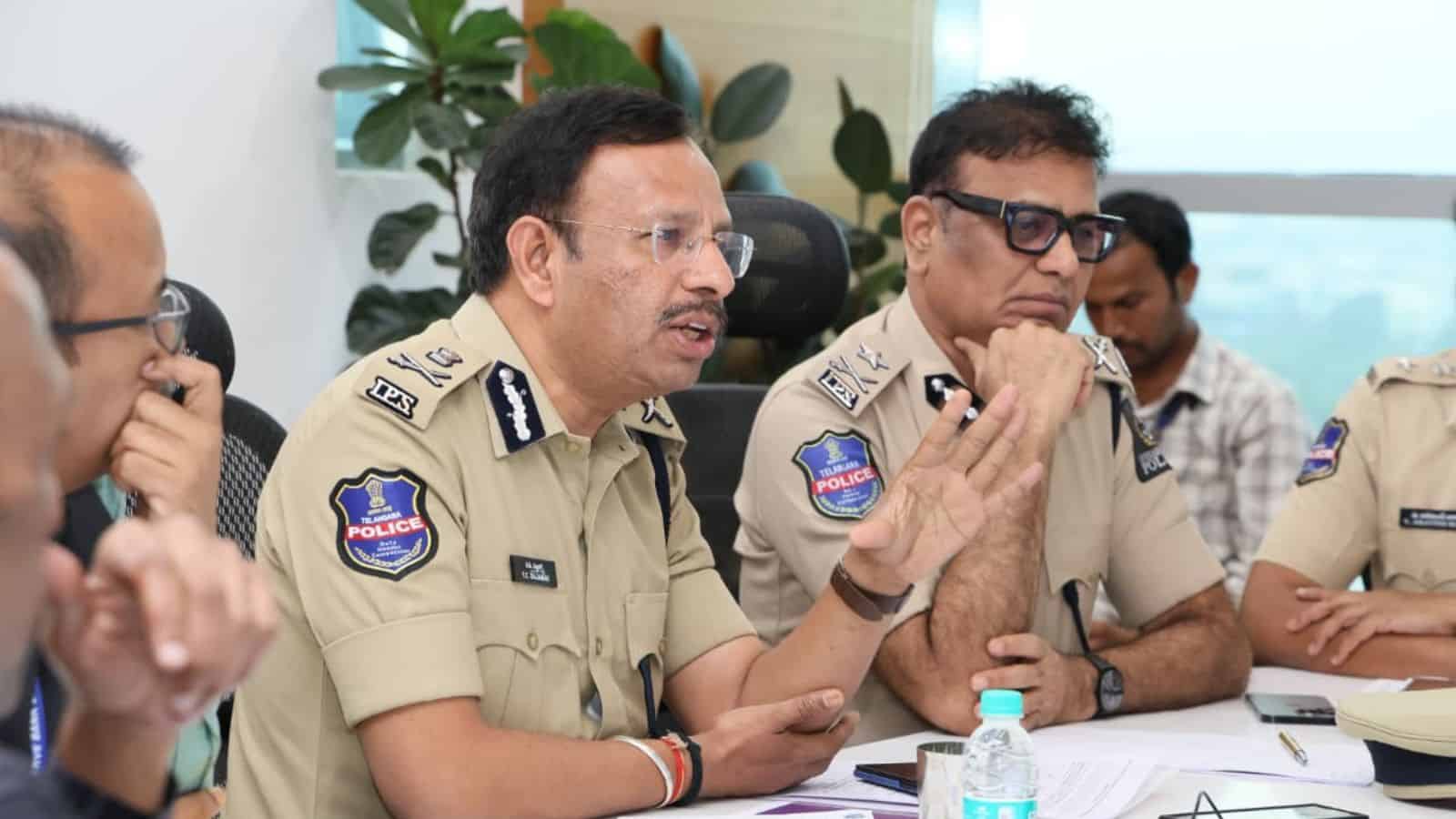
Hyderabad: In a paradigm shift in strategy against organized cybercrime, Hyderabad City Police have asked banks to abandon the practice of targeting customer base expansion and instead focus on having “zero mule accounts,” as per recent findings from the anti-fraud Operation Octopus.
The idea was pitched to bankers at a high-level bankers’ coordination meeting, which was held on April 23. The proposal by the Police Commissioner involved setting up a twin challenge where the success or failure would hinge upon a bank branch’s ability to prevent cyber fraud and opening of mule accounts.
The meeting had participation from 75 representatives from 45 banks across Hyderabad. The police have arrested several officials of various banks involved in facilitating fraud through mule accounts.
The police said that banks’ negligence towards Know Your Customer (KYC) norms and their preoccupation with targets made them easy prey for organized fraudsters.
An official from the Reserve Bank of India and the top brass of Hyderabad police were present in the meeting.
The police also highlighted the growing role of transnational syndicates operating from countries such as Cambodia, Vietnam and the UAE, which rely on local intermediaries and, in some cases, insider collusion to siphon off funds from Indian victims.
Hyderabad banks to shift focus from volume to vigilance
Hyderabad banks have been directed to adopt zero tolerance towards cybercrime, strengthen due diligence, and deploy real-time monitoring tools such as Mule Hunter to detect suspicious activity. Strict disciplinary action, including blacklisting across the banking sector, was recommended against staff found complicit in fraudulent account openings.
In addition, branches have been asked to actively warn customers during high-risk transactions such as premature fixed deposit closures and large fund transfers, while promoting awareness through SMS alerts and in-branch campaigns.
The Hyderabad Commissioner also emphasized empathetic handling of victims, urging bank staff to guide them towards the national cybercrime helpline (1930) and official reporting platforms.
Hyderabad
Hyderabad is a major city in southern India known for its rich history as a former princely state under the Nizams, who ruled from the 18th century until India’s independence. It is famous for landmarks like the Charminar and Golconda Fort, which reflect its Islamic architectural heritage and role as a center of pearl and diamond trade. Today, Hyderabad is a bustling hub of information technology and culture, blending its historical legacy with modern development.
Reserve Bank of India
The Reserve Bank of India (RBI) is the nation’s central banking institution, established on April 1, 1935, under the Reserve Bank of India Act. It was originally set up as a privately owned bank but was nationalized in 1949 following India’s independence, making it a fully government-owned entity. The RBI plays a crucial role in regulating the country’s monetary policy, issuing currency, and maintaining financial stability.
Operation Octopus
“Operation Octopus” is a notable drug enforcement operation conducted by the United States Drug Enforcement Administration (DEA) in the 1980s. It targeted the Medellín Cartel in Colombia, aiming to dismantle their cocaine trafficking networks and arrest key leaders. The operation was significant in the broader War on Drugs, leading to major seizures and disrupting cartel operations during that era.
Cambodia
Cambodia is a Southeast Asian nation known for its rich history, most famously as the heart of the powerful Khmer Empire, which built the magnificent Angkor Wat temple complex in the 12th century. After a period of French colonial rule, Cambodia gained independence in 1953, but later suffered under the brutal Khmer Rouge regime in the 1970s. Today, it is a constitutional monarchy with a vibrant culture, though it continues to grapple with the legacy of its turbulent past.
Vietnam
Vietnam is a Southeast Asian country known for its rich history, stunning landscapes, and vibrant culture. Its history includes ancient kingdoms, centuries of Chinese rule, French colonization, and the Vietnam War, which ended in 1975 with reunification. Today, Vietnam is a rapidly developing nation, famous for its bustling cities like Hanoi and Ho Chi Minh City, as well as natural wonders like Ha Long Bay and terraced rice fields.
UAE
The United Arab Emirates (UAE) is a federation of seven emirates on the Arabian Peninsula, formed in 1971 after the British withdrawal from the region. Historically a land of pearl diving, fishing, and desert trade, its modern transformation began with the discovery of oil in the 1950s, fueling rapid development into a global hub for business, tourism, and luxury. Today, the UAE is known for its futuristic cities like Dubai and Abu Dhabi, blending traditional Bedouin culture with cutting-edge architecture and innovation.
Mule Hunter
The “Mule Hunter” is a famous bronze sculpture located in Prescott, Arizona, created by artist Solon Borglum in 1915. It depicts a rugged frontiersman leading a pack mule, symbolizing the vital role of mule pack trains in the American West during the late 19th century. The statue honors the perseverance of early settlers and miners who relied on these animals to traverse the region’s challenging terrain.
National Cybercrime Helpline (1930)
The National Cybercrime Helpline (1930) is a dedicated telephone service in India established by the Ministry of Home Affairs to assist citizens facing online fraud and cybercrime. Launched as part of the government’s efforts to combat rising digital threats, the helpline provides immediate support, guidance, and a mechanism for reporting cyber incidents. It plays a crucial role in raising awareness and facilitating timely action against cybercriminals.