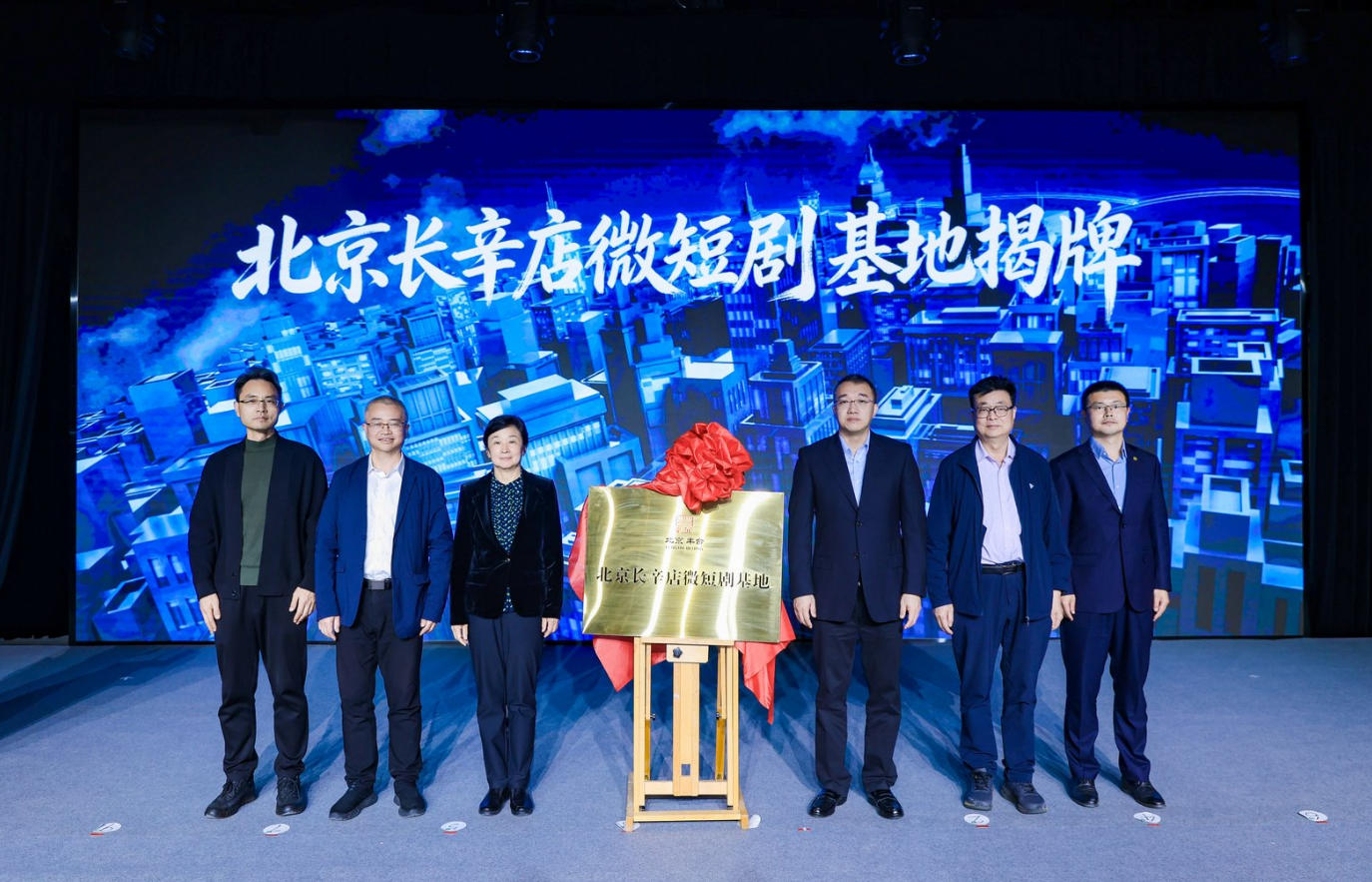
On April 22, the Beijing Changxindian Micro-Short Drama Base was officially inaugurated in the Changxindian National Trend Fashion District, providing a “Fengtai solution” for industry development.
The base is jointly built and operated by the Fengtai District Cultural Tourism Group and the Beijing Diantong Telephone Technology Development Company. It will integrate the resource advantages of both parties, aiming to become the leading brand for legal micro-short dramas nationwide. It will continuously strengthen the dimensions of “legal + AIGC + youth innovation + traditional culture + going global,” telling China’s stories well, spreading Fengtai’s voice, and building a nationally influential micro-short drama industry ecosystem, making Changxindian a new cultural landmark for the capital.
At the event, the Fengtai District Legal Micro-Video, Micro-Film, and Micro-Short Drama Collection and Exhibition Campaign was officially launched, along with the creation of a legal micro-short drama collaborative service platform. This platform is supported by units including the People’s Court News Media General Association, the Supreme People’s Procuratorate Film and Television Center, the Ministry of Public Security News Media Center, the Legal Daily Film and Television Center, the Law Press, and the China Behavior Law Society. It will provide creators with an authoritative material library, professional content guidance, one-stop compliance review, and official distribution channels for full-chain support. Focusing on upholding and developing the “Fengqiao Experience” in the new era, and highlighting Fengtai District’s “legal deputy village heads,” anti-fraud propaganda, and grassroots social governance cases, it aims to build a legal content ecosystem where “people tell stories about things around them.” Leveraging the delegation of approval authority at the municipal level, Fengtai will open a green channel for legal-themed content review, explore the creation of legal micro-short drama content and compliance guidelines, and strive to become a base for legal micro-short drama compliance services and industry standard cultivation.
It is reported that Fengtai District is taking the opportunity of the urban renewal of Changxindian Old Town to develop a spatial development pattern of “one core, three clusters, and one district.” Plans include building core functional modules such as the Smart Chain Enterprise Service Port, AIGC Intelligent Computing Center, Script Incubation Laboratory, Enterprise Headquarters Cluster Area, and Brand Ecosystem Co-Creation Space, as well as a “Changxindian Film-Friendly District.”
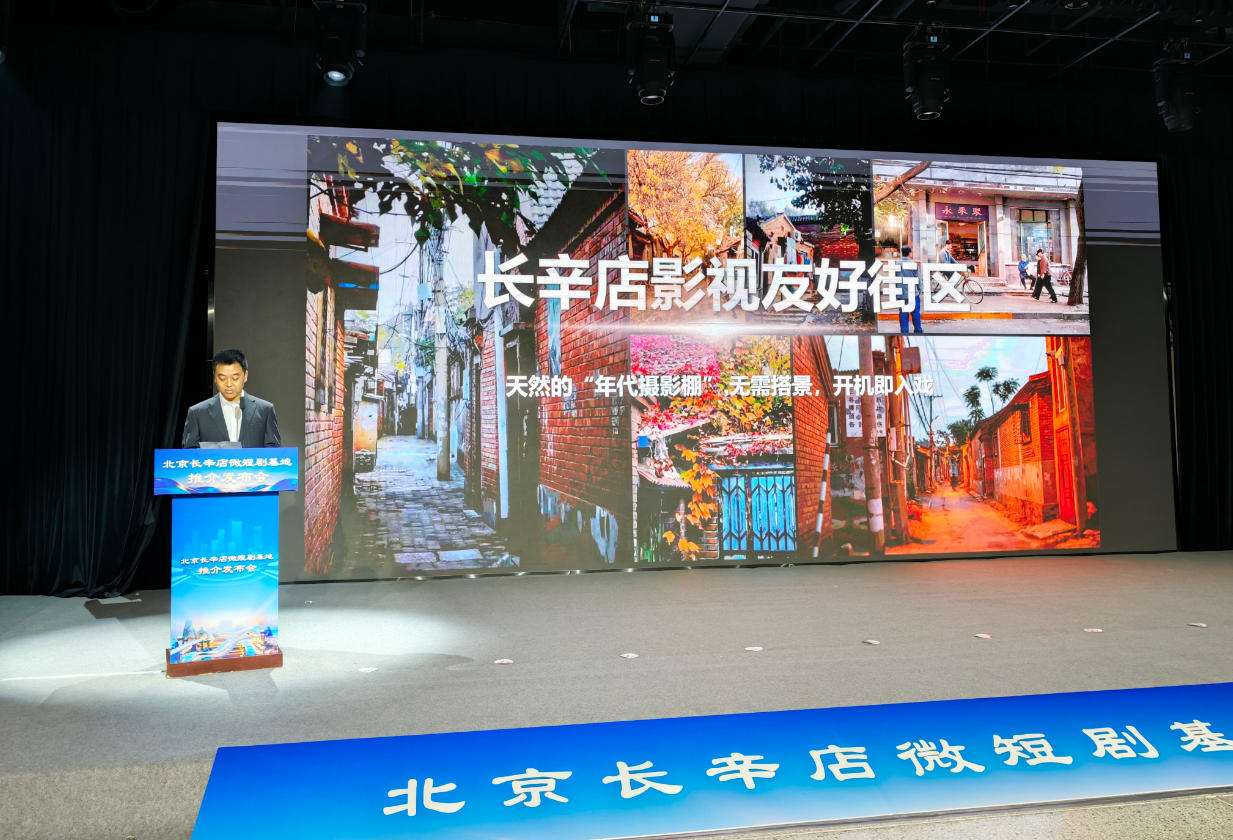
As the local administrative unit, the Changxindian Subdistrict Office leverages the century-old historical texture of Changxindian Old Town, its original era-style streetscapes, and its red cultural heritage. Together with the Fengtai District Cultural Tourism Group, it creates a natural period film set where “no set construction is needed; you start acting as soon as filming begins.” It simultaneously coordinates the vacating of street venues, optimizes supporting business facilities, and improves the city appearance and environment, providing efficient local coordination services for film crews and laying a solid foundation for the industry’s deep-rooted development.
The base will provide one-stop, full-cycle services for入驻 enterprises, including business registration, policy consultation, financial matchmaking, scene coordination, and distribution promotion. From script incubation to filming and production, from post-production special effects to compliance review, from distribution and monetization to cultural export, it aims to address industry pain points such as “difficulty finding venues, difficulty finding funding, difficulty passing review, and difficulty going global.”
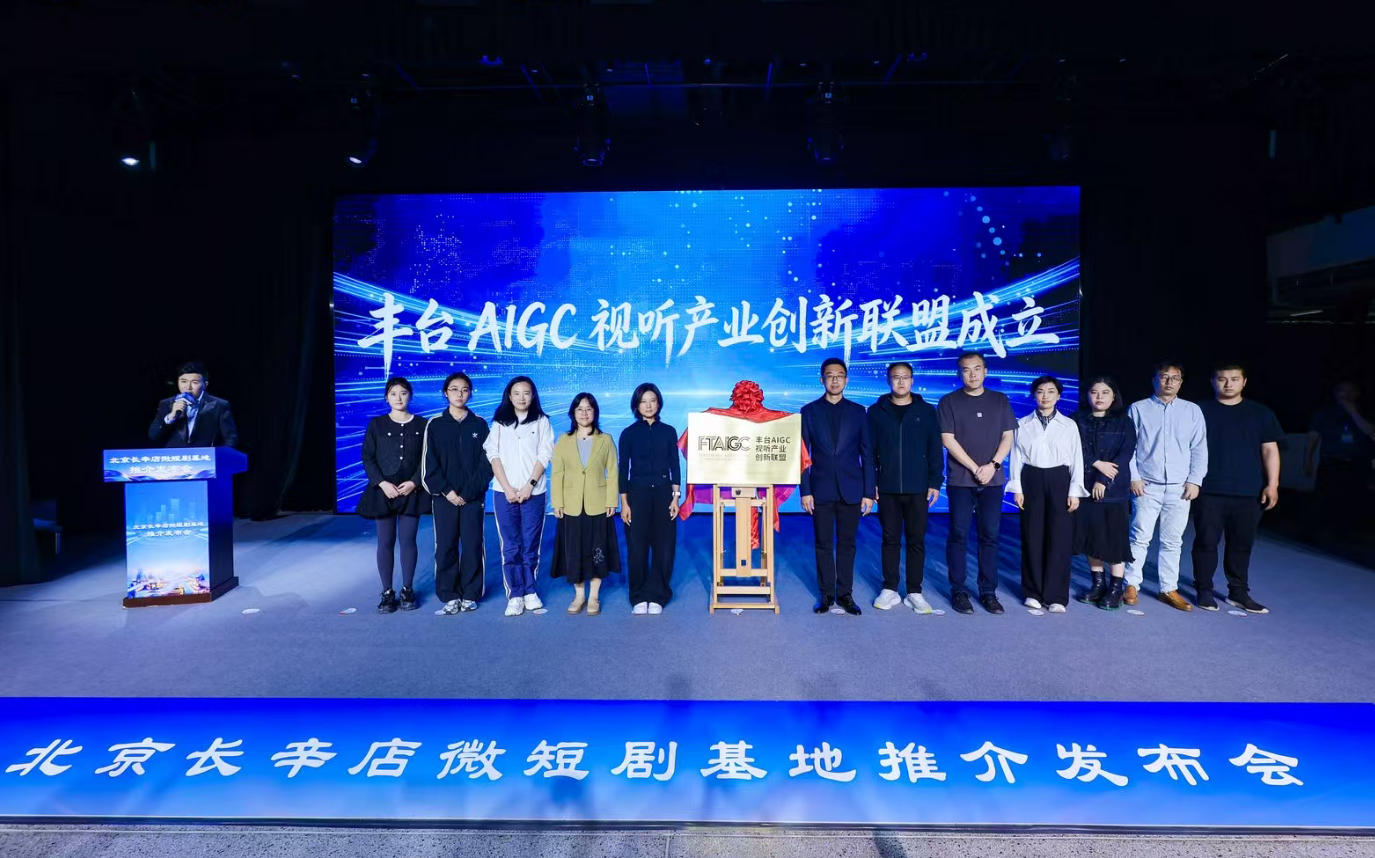
One of the most influential outcomes of this launch event is the formal establishment of Beijing’s first district-level AIGC Audiovisual Industry Innovation Alliance. Initiated by the Fengtai District Culture and Tourism Bureau and the Fengtai District Cultural and Creative Industry Promotion Center, the alliance will leverage AIGC technology as a core driver to promote the intelligent upgrade of the entire process of micro-short drama creation, filming, production, and distribution, providing strong support for the development of the digital audiovisual industry.
The base plans to rely on the computing resources of the Yuanboyuan Science and Innovation Bay and the financial-grade data security system of Lize Financial Business Zone to build an AIGC audiovisual public technology service platform open to the entire industry. This will provide入驻 enterprises with affordable, stable, and secure computing support, effectively