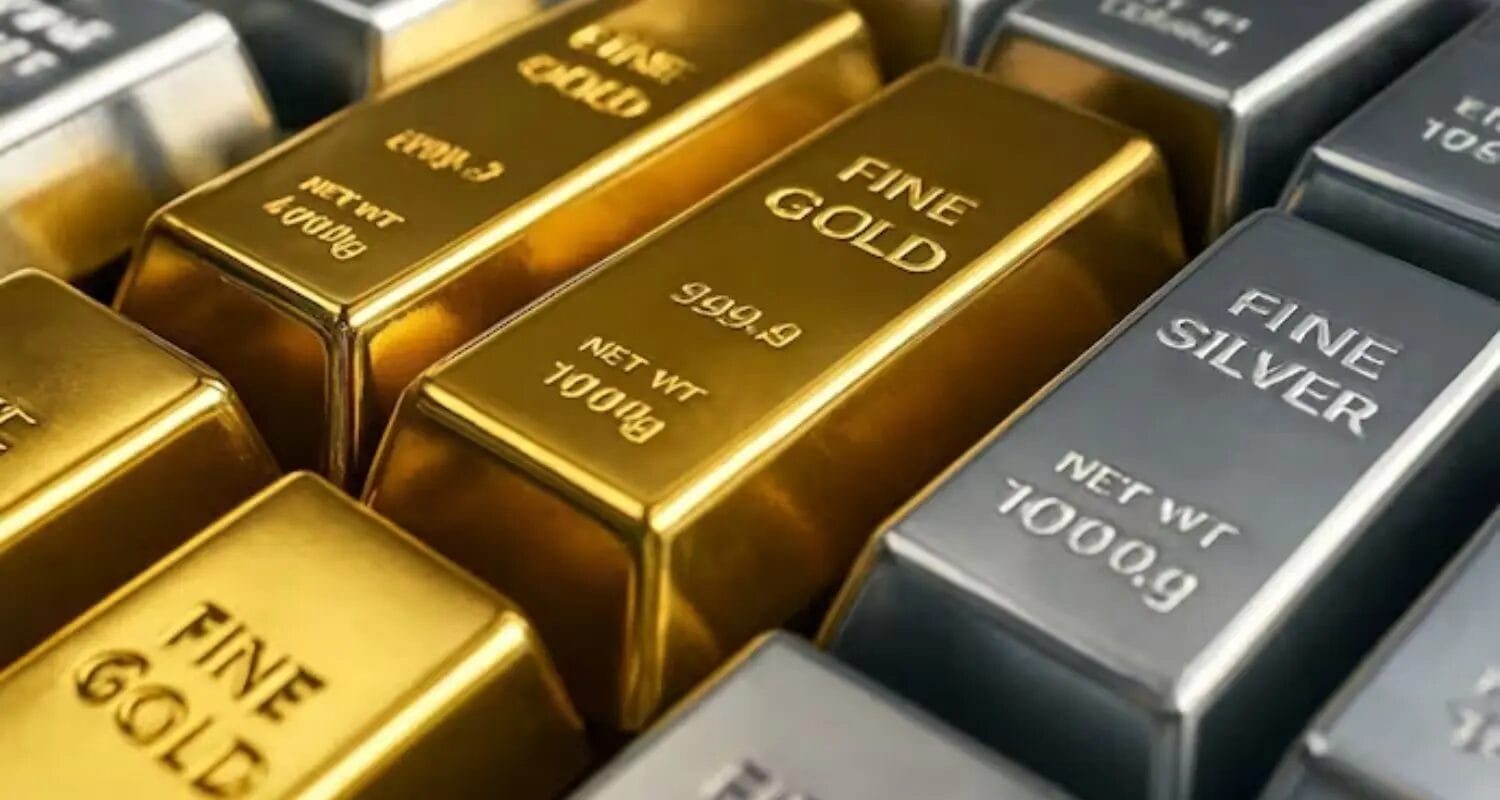
New Delhi, Gold prices in the national capital fell by 1,100 rupees on Monday, settling at 158,800 rupees per 10 grams. This decline occurred amid weakness in global markets, rising crude oil prices, and growing concerns over inflation.
Local bullion traders reported that 99.9 percent pure gold dropped by 1,100 rupees from Friday’s closing price of 159,900 rupees per 10 grams to 158,800 rupees per 10 grams (including all taxes). Similarly, silver prices also faced pressure. Silver fell by 5,000 rupees to 255,700 rupees per kilogram (including all taxes), down from its previous session close of 260,700 rupees per kilogram. According to analysts, this decline in precious metals is an extension of the recent weakness. Investors are now focusing more on the impact of rising energy prices on inflation rather than on safe-haven investments.
A research analyst said, “Better-than-expected economic data from the US has increased concerns about inflation and interest rates. This has reduced the appeal of safe-haven options like gold and silver.” He added that recent events in West Asia, especially related to Israel, have also increased market volatility, affecting investor sentiment. In the international market, spot gold fell about one percent to $4,291.79 per ounce, while silver dropped 1.34 percent to $66.93 per ounce.
Precious metals may see fluctuations before Federal Reserve decisions
Meanwhile, in the global market, crude oil prices rose about five percent to $97.44 per barrel. The head of products and family office said, “Strong US employment data suggests that interest rates may remain high for a longer period. This perception has strengthened the dollar, making gold and silver less attractive investment options.”
He stated that precious metals may continue to fluctuate in the near term ahead of US inflation data and upcoming Federal Reserve decisions. However, he noted that in the long term, gold will remain a reliable hedge against inflation for investors.