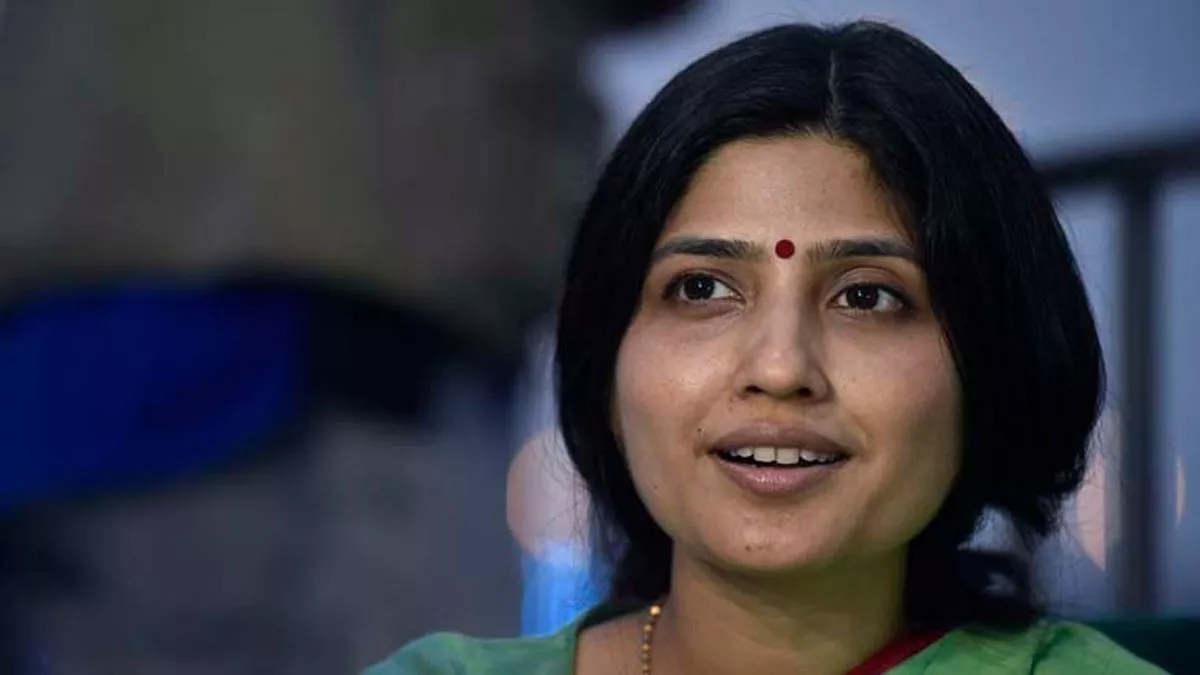
Samajwadi Party (SP) MP Dimple Yadav alleged that the Bharatiya Janata Party (BJP) wants to empower itself through delimitation while wearing the mask of women’s reservation.
Participating in the Lok Sabha discussion on the ‘Constitution (131st) Amendment Bill 2026’ related to the Women’s Reservation Act, the ‘Delimitation Bill, 2026’, and the ‘Union State Law (Amendment) Bill, 2026’, Dimple also claimed the government is rushing the bill because it does not want delimitation based on caste census data.
Dimple said, “The SP wants separate reservation for OBC (Other Backward Classes) and minority women to be included in this…” The SP MP said the government’s aim is to conduct delimitation based on the 2011 census before the caste census data comes out.
Taking a dig, Dimple said that when the BJP brought the women’s reservation bill in 2023, its government, despite having a full majority, became dependent on allies, and now that it has brought this bill again, its government is set to go in 2029. Dimple accused the ruling BJP, “You are wearing the mask of women’s reservation and want to empower yourselves through delimitation.”
Lok Sabha
The Lok Sabha is the lower house of India’s bicameral Parliament, located in New Delhi. Established by the Constitution of India in 1952, it is the primary legislative body where members are directly elected by the people. It holds significant power, including overseeing the government and approving the national budget.
Women’s Reservation Bill
The Women’s Reservation Bill, officially the Constitution (108th Amendment) Bill, is a proposed legislation in India intended to reserve one-third of all seats for women in the Lok Sabha (the lower house of Parliament) and state legislative assemblies. First introduced in 1996, it faced decades of political debate and delay before finally being passed by both houses of Parliament in September 2023. Its implementation is a historic step aimed at promoting gender equality and increasing women’s political representation in the world’s largest democracy.
Constitution (131st) Amendment Bill 2026
The “Constitution (131st) Amendment Bill 2026” is not a physical place or cultural site; it is a proposed piece of legislation in India. If enacted, it would amend the Constitution of India, likely to address a specific legal or policy issue, though its exact provisions are not publicly known as of the current date. Its “history” would be its legislative journey through Parliament, including its introduction, debates, and potential passage.
Women’s Reservation Act
The Women’s Reservation Act, officially the Constitution (One Hundred and Sixth Amendment) Act, 2023, is a landmark Indian law that reserves one-third of seats in the Lok Sabha (lower house of Parliament) and state legislative assemblies for women. Its history spans nearly three decades of advocacy and political debate, with the bill first introduced in 1996 before finally being passed in 2023. This legislation aims to significantly enhance women’s political representation and participation in India’s governance.
Delimitation
Lok Sabha
The Lok Sabha is the lower house of India’s bicameral Parliament, located in New Delhi. Established by the Constitution of India in 1950, it succeeded the Imperial Legislative Council and is the primary legislative body where members are directly elected by the people. It holds significant powers, including approving the national budget and making laws for the country.
Women’s Reservation Bill
The Women’s Reservation Bill, officially the Constitution (108th Amendment) Bill, is a proposed legislation in India intended to reserve one-third of all seats for women in the Lok Sabha (the lower house of Parliament) and state legislative assemblies. First introduced in 1996, it faced decades of political debate and delays before finally being passed by both houses of Parliament in September 2023. Its implementation is a landmark step aimed at enhancing women’s political representation and participation in India’s governance.
Constitution (131st) Amendment Bill 2026
The “Constitution (131st) Amendment Bill 2026” is not a physical place or cultural site; it is a proposed piece of legislation in India. If enacted, it would amend the Constitution, likely to address a specific policy, legal framework, or right, but its precise historical context and purpose are not defined as this is a hypothetical bill from a future year.
Women’s Reservation Act
The Women’s Reservation Act, officially the Constitution (One Hundred and Sixth Amendment) Act, 2023, is a landmark Indian law that reserves one-third of seats in the Lok Sabha (India’s lower house of Parliament) and state legislative assemblies for women. Its history spans nearly three decades of advocacy and debate, with the bill first introduced in 1996, facing numerous political hurdles before finally being passed by Parliament in September 2023. This act aims to significantly enhance women’s political representation and participation in India’s governance.
Delimitation Bill, 2026
The “Delimitation Bill, 2026” is not a specific place or cultural site; it is a proposed piece of legislation. In general, a delimitation bill is a legal process to redraw the boundaries of electoral constituencies, typically to reflect changes in population data from a census. If enacted in 2026, such a bill would aim to ensure equal representation in a governing body, but its specific history and impact would depend entirely on the country and political context in which it is proposed.
Union State Law (Amendment) Bill, 2026
The “Union State Law (Amendment) Bill, 2026” is not a physical place or cultural site, but a proposed piece of legislation. As a hypothetical bill from the future, it has no verifiable history; its name suggests it would be a legal amendment pertaining to the Union State, a supranational entity between Belarus and Russia established through a 1999 treaty. Therefore, it represents a political and legal concept rather than a location for cultural or historical visitation.
Constitution of India
The Constitution of India is the supreme legal document that establishes the country as a sovereign, socialist, secular, democratic republic. It was adopted by the Constituent Assembly on 26 November 1949 and came into effect on 26 January 1950, marking India’s transition to an independent republic. Drafted under the chairmanship of Dr. B.R. Ambedkar, it is one of the world’s longest and most detailed constitutions, enshrining fundamental rights, duties, and the framework of governance.
Parliament
The term “Parliament” most commonly refers to the Palace of Westminster in London, the meeting place of the UK’s House of Commons and House of Lords. The current Gothic Revival building was constructed between 1840 and 1870 after a fire destroyed much of the old palace, though the site has been a center of political power since the 11th century. It is a UNESCO World Heritage Site, famous for its iconic clock tower, Big Ben, and its role in shaping parliamentary democracy worldwide.