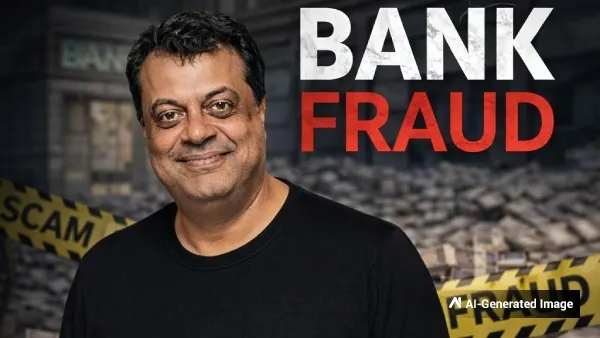
Chandigarh Fraud Case: A major banking scam in Chandigarh has been the talk of the town lately. The person identified by police as the main conspirator is Vikram Wadhwa. The Crime Branch of Chandigarh Police has arrested 52-year-old Vikram Wadhwa, who has been remanded to five days of police custody for further investigation.
Vikram is accused of playing a key role in financial irregularities involving approximately ₹590 crore related to departments of the Haryana government and about ₹190 crore linked to the Chandigarh Municipal Corporation and CREST. Who exactly is Vikram Wadhwa?

Who Is Vikram Wadhwa?
Vikram Wadhwa is originally from Malout in Punjab. In the 1990s, he came to Chandigarh in search of better work. Initially, he worked as a caretaker at a guest house, where his salary was around ₹1,500 per month. Gradually, he stepped into the real estate sector and within a few years established a strong foothold in the property business. Over time, Wadhwa purchased properties in several sectors of Chandigarh and also acquired a farmhouse in New Chandigarh. According to police, he has also been involved in the hotel business and real estate development.
IDFC First Bank Scam: How Did the Alleged Scam Begin?
The investigation has revealed that this entire matter began around 2022. Wadhwa stated during interrogation that he was introduced to bank employee Ribhav Rishi through Ribhav’s father, Rakesh Kumar Rishi. Ribhav Rishi worked at the Chandigarh branch of IDFC First Bank. According to Wadhwa, Rishi told him that accounts of several government departments from Haryana and Chandigarh were with this bank and that he monitored these accounts.
Haryana Corruption Case: The Alleged Proposal to Invest Money
Wadhwa told investigators that Ribhav Rishi proposed to him that the crores of rupees lying in government accounts be invested in real estate projects. It is alleged that under the scheme, this money was first sent to accounts of some private companies and later transferred further through different accounts. The names of companies that have surfaced include entities like Capco Fintech Services, RS Traders, and Swastik Desh Projects.
Wadhwa claims he was assured that reverse entries of the money would be made into the government accounts if needed, and bank statements would be managed in such a way that no one would suspect anything.
Allegations of Getting Government Department Accounts Transferred
The investigation has also revealed that Wadhwa contacted some government departments and persuaded them to transfer their accounts to IDFC First Bank. It is reported that during 2023-24, funds related to government institutions like Chandigarh Smart City Limited, Chandigarh Municipal Corporation, and CREST were allegedly transferred through various accounts.
According to police, this money was used to invest in real estate projects in Chandigarh, Mohali, Kharar, and surrounding areas.
How Was the Scam Exposed?
The case came to light when the Chandigarh Municipal Corporation began reconciling funds in early 2026 after the closure of Chandigarh Smart City Limited. During the inquiry, officials discovered that fixed deposits of approximately ₹116.84 crore shown in the records did not even exist in the bank’s system. As the investigation progressed, suspicions emerged regarding the embezzlement of large sums from the accounts of several government departments in Haryana as well.
Investigation into ₹590 Crore
An investigation by the Haryana State Vigilance and Anti-Corruption Bureau revealed that around ₹590 crore was withdrawn from the accounts of at least eight government departments, including the Development and Panchayats Department and the Haryana State Pollution Control Board.
It is reported that this money was supposed to be deposited as fixed deposits at the Sector 32, Chandigarh branch of IDFC First Bank but was allegedly withdrawn through 12 suspicious accounts.
Several Arrests So Far?
Several people have been arrested in this case so far. These include a total of 11 individuals