MP Transfer Policy 2026: Draft of New Transfer Policy Prepared, Know the Rules and Conditions
Bhopal.
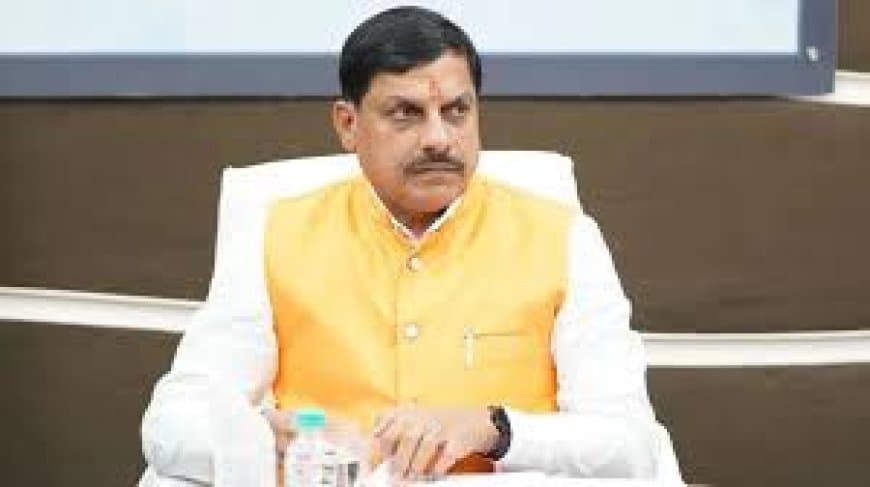
The wait for transfers of government employees and officers in Madhya Pradesh is about to end soon. On the instructions of Chief Minister Dr. Mohan Yadav, the General Administration Department (GAD) has begun preparing the draft of the new transfer policy for the year 2026. This new policy could be presented for Cabinet approval by the end of April, after which the long-standing freeze on transfers in the state will be lifted for a fixed period.
Transfer cycle to begin from May
The state government is going to open the freeze on transfers for a limited window this year as well, as it does every year. According to information received, the transfer cycle will begin from the start of May and last for about a month. The department has accelerated its preparations following signals from Chief Minister Dr. Mohan Yadav. It is believed that the process of administrative reshuffling at the district and state level will begin as soon as the Cabinet gives the green light.
Check on uncontrolled transfers
To ensure administrative work is not affected and transparency is maintained in transfers, the government has set a strict limit. According to the proposed draft, transfers in any department cannot exceed 10 percent of its total cadre strength. This step has been taken so that the manpower balance in departments is maintained and reshuffling is done only when necessary. This will also curb allegations of a ‘transfer industry’.
Increased power for in-charge ministers
The most significant change in this year’s policy is going to be regarding the powers of in-charge ministers. According to sources, in-charge ministers may be given broad authority to finalize transfer lists in the districts under their charge. Transfer lists will not be considered final without the approval of the ministers. The aim of this step is to improve political and administrative coordination at the district level, ensuring a balance between the demands of local public representatives and administrative necessities.
Collector’s role crucial for third and fourth category employees
The new policy attempts to simplify and localize the process for lower-category employees (third and fourth class). Proposals for the transfer of these employees will first be prepared at the district collector level. The process will proceed only after the collector’s recommendation. This will allow for a better understanding of local-level problems and the employee’s family circumstances.
Preparation to remove long-stationed officers
Last year, there were relatively few transfers in the state, due to which many officers and employees have been posted in the same place for years. Public representatives had also strongly demanded the removal of the transfer freeze in meetings with the Chief Minister. In such a situation, it is hoped that this time there will be major relief for those employees who wish to be transferred due to family or health reasons.
Madhya Pradesh
Madhya Pradesh is a large state in central India, historically known as the “Heart of India” due to its geographical and cultural significance. Its history is rich and ancient, featuring sites from prehistoric cave paintings at Bhimbetka to the medieval temples of Khajuraho and the forts of the Malwa and Gond kingdoms. Today, it is renowned for its wildlife sanctuaries like Kanha and Bandhavgarh, as well as its vibrant tribal heritage.
Bhopal
Bhopal is the capital city of India’s Madhya Pradesh state, historically founded in the 11th century and later ruled by the Begums (female Muslim rulers) of the princely state of Bhopal from the 18th to 20th centuries. It is known for its mix of natural beauty, with numerous lakes and hills, and its cultural landmarks like the Taj-ul-Masajid, one of Asia’s largest mosques. The city is also infamously associated with the 1984 Bhopal gas tragedy, one of the world’s worst industrial disasters.
General Administration Department (GAD)
The General Administration Department (GAD) is a key bureaucratic institution within the Government of Myanmar, primarily responsible for local governance and administration across the country. Historically, it evolved from the colonial-era “Home Ministry” and has been a central pillar of state control, managing everything from civil services and security to general administration in townships and villages. Its role and influence have been significant in implementing government policies at the grassroots level throughout Myanmar’s modern history.
Cabinet
The term “Cabinet” most commonly refers to a private room or a body of government advisors. Historically, it originated in 17th-century England as a small, private council where the monarch consulted with trusted ministers, which evolved into the modern executive decision-making body in many parliamentary systems. In a different context, a “cabinet of curiosities” was a Renaissance-era collection of rare and exotic objects, a precursor to modern museums.
Chief Minister Dr. Mohan Yadav
“Chief Minister Dr. Mohan Yadav” is not a place or cultural site, but a person—the current Chief Minister of the Indian state of Madhya Pradesh. He assumed office in December 2023, following a career in politics and as a Member of the Legislative Assembly (MLA) from the Ujjain South constituency.
district collector
A district collector is a senior administrative officer in India, historically established under British rule to oversee revenue collection and general administration of a district. Today, the role has evolved into the chief executive of a district, responsible for implementing government policies, maintaining law and order, and coordinating disaster management and development projects.
in-charge ministers
“In-charge ministers” is not a specific place or cultural site. The term generally refers to government officials, often cabinet members, who are assigned responsibility for a particular ministry or department (e.g., the Minister in Charge of Finance).
Therefore, it does not have a physical location or a singular history to summarize. The history would instead pertain to the specific ministry or the political system of a given country.
public representatives
“Public representatives” is not a specific place or cultural site, but a general term for elected or appointed officials who serve in government. Historically, the concept dates back to ancient democratic and republican systems, like those in Athens or Rome, where citizens chose individuals to advocate for their interests. In modern times, this system is foundational to representative democracies worldwide, where representatives are elected to legislative bodies to create laws and govern on behalf of the public.